Oily skin is more prone to acne because excess oil mixes with dead cells to clog pores, and creates conditions in which inflammation develops. The way to control it isn't to dry it out, but a simple routine: a gentle cleanser twice a day, a light non-comedogenic moisturiser, sunscreen, and a proven ingredient such as salicylic acid or niacinamide. Over-washing and over-exfoliating irritate the skin and make spots worse.
The Arabic pages that rank for this search suggest honey and lemon masks and frequent washing, without explaining the link between oil and spots or why drying the skin backfires. This article connects the understanding to the routine.
What is skin oil, and why does it cause spots?
The oil your skin's glands produce, called sebum, is different in make-up from the lipids that build the skin barrier. A 2025 review shows that surface sebum is made mostly of triglycerides, wax esters and squalene, while the barrier is made mostly of ceramides and cholesterol:
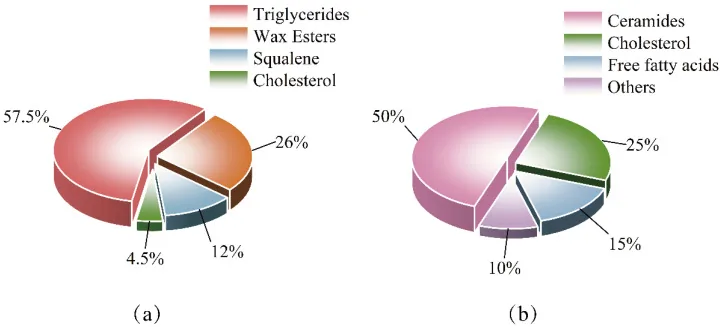
That's why skin can be oily and dry at the same time (see dry skin with acne): plenty of oil on the surface doesn't mean the barrier is intact. When excess oil mixes with dead cells inside the follicle opening, a blockage forms, which is where blackheads and whiteheads start, followed by inflamed spots. Oily skin itself is covered in oily skin problems.
Cleanser: gentle, and twice a day
Washing twice a day with a gentle cleanser removes excess oil without harming the barrier; pharmacy ranges such as Bioderma Sébium are one option. A harsh cleanser or washing too often irritates the skin, so redness and spots increase. If you have a lot of spots, a cleanser containing salicylic acid or benzoyl peroxide may help, but stop if dryness or stinging develops. Rinse with lukewarm rather than hot water, and pat rather than rub dry.
Many people with oily skin wash three or four times a day because their skin feels greasy again within hours. That feeling is normal and doesn't mean the skin is dirty; blotting papers or a quick splash of water are kinder ways to deal with midday shine.
The right ingredient: salicylic acid as an example
Salicylic acid is oil-soluble, so it gets into pores. In a 2025 study of forty-two people with oily or combination skin and mild to moderate acne, forehead oil fell gradually over twenty-one days with a salicylic acid gel:
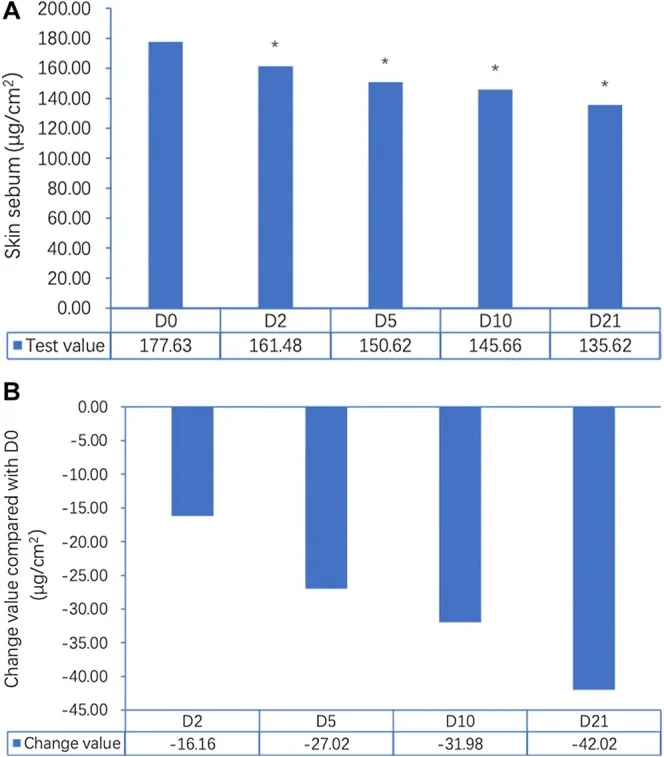
The study was short and had no comparison group, but it fits with salicylic acid's well-known role. Other ingredients are compared in best serum for acne.
Pores and shine
Oily skin's pores look larger because oil fills them and reflects light. In a 2026 Chinese pilot study of forty-two people with oily skin, the appearance of pores reduced over sixty days with a cream containing a fermented ingredient:
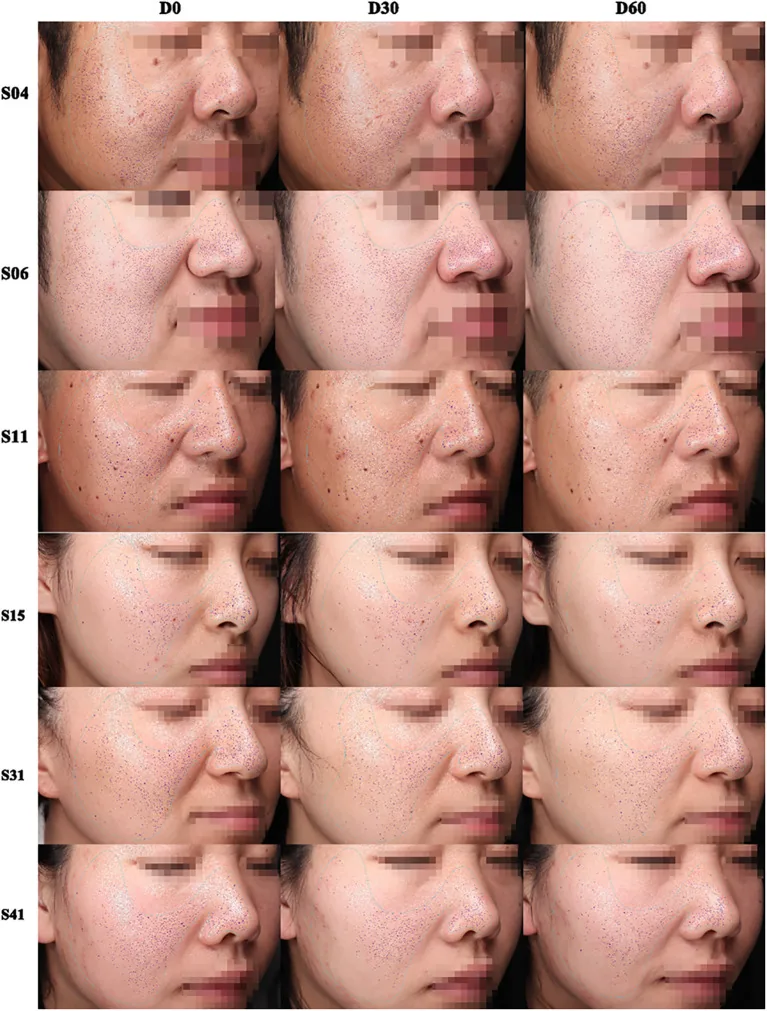
The study had no comparison group, and some of its authors were employed by the manufacturer, so it doesn't prove the product works, but it illustrates that pores look smaller when there's less oil sitting in them.
A suggested routine
| Step | Morning | Evening |
|---|---|---|
| Cleanser | Gentle | Gentle, removes sunscreen |
| Treatment | Usually nothing | Salicylic acid, niacinamide or your dermatologist's treatment |
| Moisturiser | Light, non-comedogenic | Light, non-comedogenic |
| Protection | Light or gel sunscreen | — |
flowchart TD
  A[Oily skin with spots] --> B{Mostly blackheads and whiteheads?}
  B -->|Yes| C[Salicylic acid or a retinoid]
  B -->|No| D{Red, inflamed spots?}
  D -->|Yes| E[Benzoyl peroxide or medical treatment]
  D -->|No| F[Gentle cleanser and light moisturiser]
  C --> G{Dryness or stinging?}
  E --> G
  G -->|Yes| H[Use less often and moisturise more]
Sunscreen and make-up on oily skin
Many people with oily skin skip sunscreen because it feels heavy or makes them shine, but sun exposure darkens the marks acne leaves, especially in olive and brown skin. Gel, fluid or matte sunscreens labelled non-comedogenic are made for oily skin and are worth trying until you find one you'll wear daily. The same applies to make-up: look for water-based or oil-free, non-comedogenic products, and remove them fully every evening. Heavy, oil-based foundations and concealers layered over spots can contribute to a form of acne caused by cosmetics, which often improves simply by changing products.
When a routine isn't enough
A good routine controls mild acne in many people, but it isn't a cure for moderate or severe acne. If you have many inflamed spots, deep painful lumps, or marks and pits forming, prescription treatments such as topical retinoids, combination gels or oral treatments may be needed, and starting them early limits scarring.
Hormones, diet and stress
Androgen hormones, present naturally in women and men, stimulate the oil glands, which is why oil and spots increase at puberty, before periods, and with polycystic ovary syndrome. Some high-glycaemic foods and dairy may worsen acne in some people, but the evidence is mixed and doesn't justify a strict diet. Stress and poor sleep worsen spots for many people. These are factors to ease, not treatments in themselves; the routine and appropriate treatment remain the foundation.
Honey masks for oily, acne-prone skin
Honey is a gentle humectant that rinses off easily, and it may suit a short mask for oily skin dried out by acne treatment. But a randomised trial of medical honey found it didn't treat acne, as covered in honey for acne. If you want to use it, use it on its own, without lemon or cinnamon.
Common mistakes
Washing more than twice a day, harsh soaps, gritty scrubs, skipping moisturiser for fear of oil, alcohol wipes, and lemon or cinnamon masks all irritate the skin, and irritated skin becomes inflamed and leaves more marks. So does squeezing spots. Other common mistakes are switching products every week before they've had time to work, layering heavy, oily make-up, and not cleaning phone screens and pillowcases, which add friction and blockage over time. The American Academy of Dermatology's tips for managing acne make the same points: be gentle, be patient, and don't pick.
mindmap
  root((Oily skin and acne))
    Cause
      Excess oil
      Blocked pores
      Inflammation
    Routine
      Gentle cleanser
      Light moisturiser
      Sunscreen
    Ingredients
      Salicylic acid
      Niacinamide
      Retinoid
    Avoid
      Over-washing
      Over-drying
      Scrubbing
Frequently asked questions
Why is oily skin more prone to acne?
Because excess oil mixes with dead cells and blocks the follicle opening, creating an environment where acne bacteria multiply and inflammation develops. But not all oily skin gets acne; genetics and hormones play a big part.
Does washing my face more often reduce oil and spots?
No. Washing twice a day with a gentle cleanser is enough. Frequent washing and harsh soaps irritate the skin and weaken its barrier, and can increase spots and irritation rather than reduce them.
Does oily, acne-prone skin need moisturiser?
Yes, especially alongside acne treatments that dry the skin. Choose a light gel or lotion labelled non-comedogenic.
What is the best ingredient for oily skin and acne?
Salicylic acid gets into pores and reduces blockage and oil, niacinamide calms inflammation and helps regulate oil, and retinoids prevent blockage. The choice depends on your type of spots and how well your skin tolerates it.
When to see a clinician
See a dermatologist if your spots are deep, painful or numerous, if they leave dark marks or pits, or if they haven't improved after several weeks of a consistent routine. See one too if your spots come with irregular periods or excess facial or body hair, because a hormonal cause may need assessment.
Related articles
Further reading
- Acne: Tips for managing — American Academy of Dermatology
- A Comprehensive Review: The Bidirectional Role of Sebum in Skin Health — Bioengineering
- Clinical Efficacy of a Salicylic Acid-Containing Gel on Acne Management and Skin Barrier Function — Journal of Cosmetic Dermatology
Medical disclaimer: This article is for health education only and is not a substitute for professional medical advice. If you have a skin condition that concerns you, please consult a dermatologist.