The main benefit of moisturising is protecting the skin barrier and reducing water loss, so roughness, flaking, tightness and itching ease, and the skin tolerates drying acne and pigmentation treatments. A moisturiser doesn't treat acne, prevent wrinkles or reduce oil, but it's the foundation that makes those treatments possible. Most people need one, including those with oily skin, in a texture that suits their skin type.
The Arabic pages that rank for this search list many benefits of moisturising, some exaggerated, and mix up drinking water with hydrating the skin. This article separates what the studies support from marketing promises.
Why does skin need moisturising?
The outer layer of the skin works like a brick wall: the cells are the bricks, and natural lipids such as ceramides are the mortar between them. When that mortar weakens, because of soap, dry air, age or some skin conditions, water evaporates faster and irritants get in more easily. A weak barrier is linked to many conditions, including dryness, eczema, acne and psoriasis, as a 2026 review illustrates:
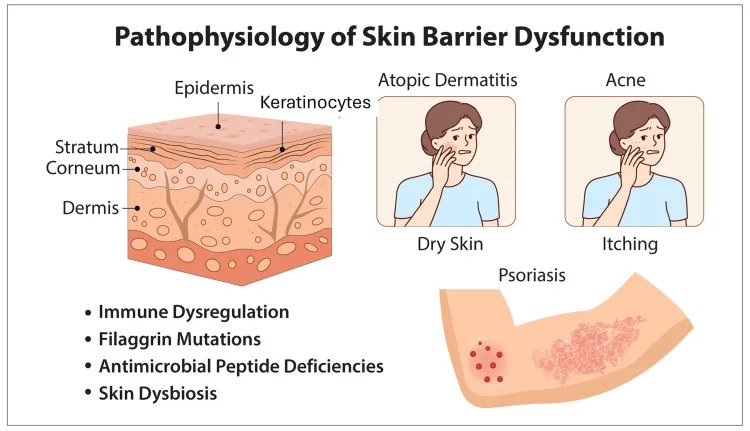
That review concerns a commercial product, and the manufacturer funded its medical writing, but the illustration sums up a widely accepted idea: an intact barrier protects the skin, and moisturiser helps repair it.
How does a moisturiser work?
Moisturisers usually combine three kinds of ingredient. Humectants, such as glycerin and hyaluronic acid, draw water into the outer layer. Emollients, such as ceramides and light oils, fill the gaps between cells so the skin feels smoother. Occlusives, such as petroleum jelly, form a film that slows evaporation. In a 2025 randomised trial of fifty-four volunteers, petrolatum and olive oil both increased skin hydration and reduced redness, and petrolatum alone also reduced water loss:
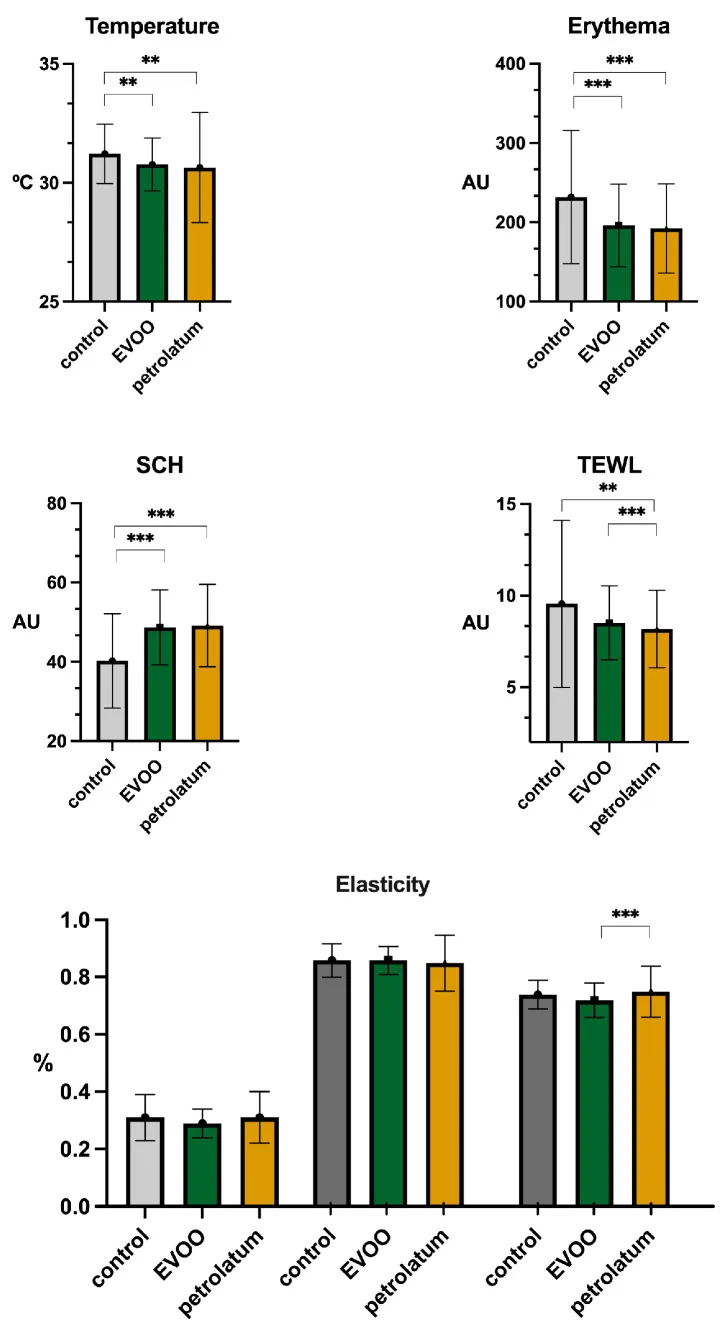
That's why moisturiser goes on damp skin after washing, to lock in the water already there. A good everyday product usually contains all three types in a balance that suits its intended skin type: lighter for oily skin, richer for dry.
Moisturising alongside acne and pigmentation treatment
Retinoids, benzoyl peroxide and acids are effective treatments, but they dry and irritate the skin, and many people stop them for that reason. A moisturiser makes it possible to keep going. In a 2026 Indian study that reviewed the records of more than a thousand acne patients whose skin was irritated by retinoids, redness, dryness and roughness eased within weeks of using a moisturiser with sunscreen:
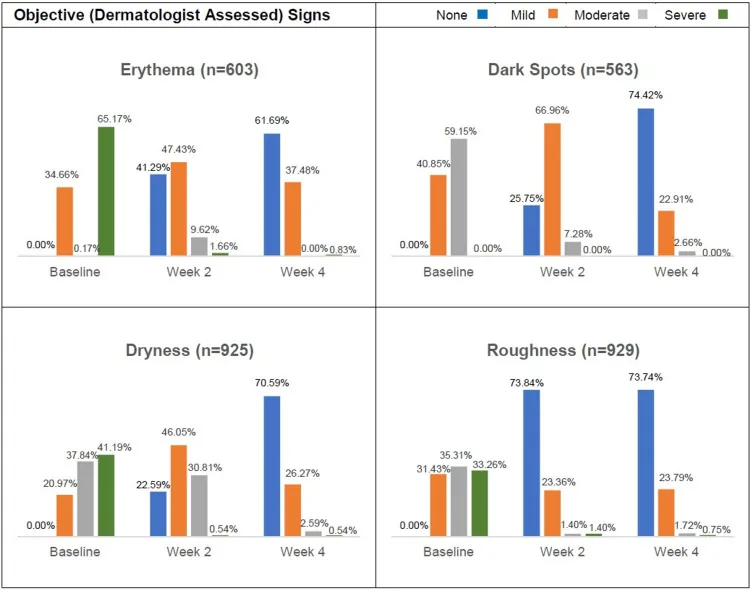
The study was retrospective, had no comparison group, and the product is made by a pharmaceutical company, so it doesn't prove that this product is better than others. It is, however, consistent with what dermatologists see in practice: moisturising reduces the irritation of acne treatments, which helps people stick with them long enough to work.
Does drinking water hydrate your skin?
The idea that drinking eight glasses of water a day replaces moisturiser is popular, but skin doesn't work that way. The water you drink reaches the deeper layers through the bloodstream, while the outer layer loses water to the air depending on the state of its barrier. So you can drink plenty and still have dry skin if your soap is harsh or the air is dry. Drink what your body needs, and moisturise your skin from the outside.
When skin needs more moisturising
Some situations raise the skin's need for moisture, and adjusting your routine for them prevents a lot of discomfort. In winter and with indoor heating, the air holds less water and the skin loses it faster, so a richer cream than you use in summer often helps. After sun exposure, skin can feel tight and flaky; a plain, fragrance-free moisturiser is soothing, though it doesn't repair sun damage. With age, the skin produces fewer natural lipids, so dryness becomes more common even in people who had oily skin when younger. With frequent handwashing, hands need moisturiser after each wash, not just at night. And for anyone with eczema, moisturising every day, even when the skin looks clear, is a core part of keeping flares down rather than an optional extra. In each case, the principle is the same: match the texture to how dry the skin is, and apply it consistently.
What moisturiser doesn't do
| Claim | Reality |
|---|---|
| It treats acne | No, but it helps you tolerate acne treatment |
| It prevents wrinkles | It only temporarily hides lines caused by dryness |
| It reduces oil | No strong evidence |
| Drinking water replaces it | No; water doesn't replace surface water loss |
| It lightens skin | No, unless it contains a lightening ingredient |
Which moisturiser suits you?
| Skin type | Suitable texture | Note |
|---|---|---|
| Oily or acne-prone | Gel or light lotion | Non-comedogenic |
| Dry | Rich cream | With ceramides or petrolatum |
| Sensitive | Simple fragrance-free cream | Few ingredients |
| Combination | Light lotion, cream on dry areas | You may need two products |
For more on dryness, read dry skin treatment; for oily skin, read oily skin problems. The American Academy of Dermatology's tips for relieving dry skin also favour ointments and creams over lotions when skin is very dry.
flowchart TD
  A[Choosing a moisturiser] --> B{Oily skin or spots?}
  B -->|Yes| C[Light non-comedogenic gel or lotion]
  B -->|No| D{Dryness, tightness and flaking?}
  D -->|Yes| E[Rich cream with ceramides]
  D -->|No| F{Stinging with products?}
  F -->|Yes| G[Simple fragrance-free cream]
  F -->|No| H[Medium-weight lotion]
How and when to apply it
Apply it within a few minutes of washing your face or bathing, while the skin is still slightly damp, and again before bed. A small amount used regularly works better than a thick layer once a week. In the morning, apply sunscreen over your moisturiser, or choose a moisturiser with sunscreen if your skin doesn't tolerate two layers. If you use a treatment such as a retinoid, your dermatologist may suggest applying moisturiser before or after it to reduce irritation.
mindmap
  root((Moisturising))
    Helps
      Skin barrier
      Less roughness and itch
      Tolerating acne treatment
    Doesn't
      Treat acne
      Prevent wrinkles
      Lighten skin
    Ingredients
      Humectants
      Emollients
      Occlusives
Frequently asked questions
What are the benefits of moisturising the skin?
Moisturising strengthens the skin barrier and reduces water loss, so roughness, flaking, tightness and itching ease and the skin feels smoother. It also helps the skin tolerate drying acne and pigmentation treatments, and reduces irritation in sensitive skin.
Does oily skin need moisturiser?
In most cases, yes, especially alongside acne treatments that dry the skin. Oil isn't the same as water, so oily skin can still lack water in its outer layer. A light moisturiser without heavy oils, labelled non-comedogenic, suits it.
Can drinking water replace moisturiser?
No. Drinking enough water matters for your health, but it doesn't make up for water lost from the skin's surface to soap and dry air. What protects the outer layer is a moisturiser that holds water in it.
Does moisturiser prevent wrinkles?
Moisturiser makes fine lines caused by dryness temporarily less visible, but it doesn't prevent wrinkles. The most important thing for slowing wrinkles is daily sunscreen, followed by ingredients such as retinoids.
When to see a clinician
See a dermatologist if dryness or itching persists despite several weeks of regular moisturising, if redness, cracking or oozing appears, if itching keeps you awake, or if every moisturiser you try causes stinging or spots. The cause may be eczema, an allergy or another condition that needs treatment beyond moisturiser.
Related articles
Further reading
- Dermatologists' top tips for relieving dry skin — American Academy of Dermatology
- Effects of Extra Virgin Olive Oil and Petrolatum on Skin Barrier Function and Microtopography — Journal of Clinical Medicine
- Real-World Evaluation of the Episoft® AC Moisturizer With Broad-Spectrum Sunscreen in the Management of Retinoid-Induced Dermatitis — Cureus
Medical disclaimer: This article is for health education only and is not a substitute for professional medical advice. If you have a skin condition that concerns you, please consult a dermatologist.