
Treating skin problems starts with naming the problem precisely, because acne, pigmentation, dryness, oiliness, inflammation and signs of ageing each have a different cause and a different treatment. What they share is three steps: gentle cleansing, a moisturiser suited to your skin type, and daily sunscreen. A targeted treatment is then added for each problem, and the commonest mistake is using products for a problem you don't actually have.
The Arabic pages that rank for this search offer long lists of masks and recipes for every skin type, without helping you identify your problem first. This guide links each problem to its distinguishing sign and to the article that explains its treatment in detail.
Know your skin type first
Skin type isn't a problem, but it determines what your skin will tolerate. The basic types are normal, oily, dry and combination, and any of them can also be sensitive. In a Japanese study published in 2026 of forty-three women, each type formed its own cluster when skin oil and moisture were measured:
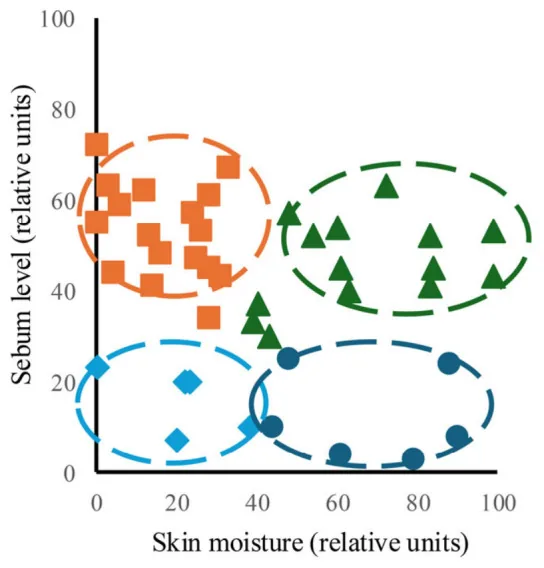
The practical message: oily skin needs light hydration rather than drying out, dry skin needs a richer moisturiser and less cleansing, and combination skin may need a different product for the centre of the face. Oily skin is covered in oily skin problems, and dry skin in dry skin treatment.
A simple home test helps: wash with a gentle cleanser, leave your face bare for an hour, and notice where it shines or feels tight. Skin type can also shift with season, hormones and age, so what suited you five years ago may not suit you now.
Acne: blockage and inflammation
Acne starts with pores blocked by oil and dead cells, which may then become inflamed. It shows as blackheads or whiteheads, red spots, or deep painful lumps. Treatment depends on type and severity: ingredients such as salicylic acid, benzoyl peroxide and retinoids for mild acne, and medical treatment for moderate and severe acne. In a clinical trial published in 2025, inflamed spots improved gradually with a multi-acid chemical peel:
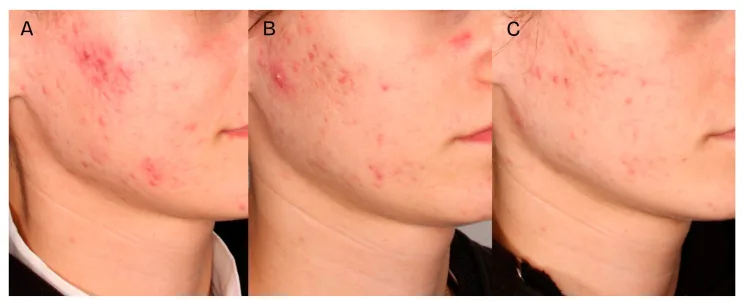
The study had no comparison group, but it illustrates that improvement is measured in weeks and months, not days. For the full picture, read the acne guide. Acne that leaves dark marks or pitted scars deserves earlier medical treatment, because preventing scars is easier than treating them.
Pigmentation and melasma: uneven colour
Pigmentation is brown patches with different causes: marks left by spots, freckles, sun spots, or melasma linked to hormones and sun. Sunscreen is the foundation of treatment for all of them, with studied lightening ingredients such as niacinamide and azelaic acid added, or medical treatment for melasma. In a 2025 randomised trial of sixty women with melasma, pigmentation lightened with a niacinamide-containing serum to a degree close to hydroquinone, though the study was funded by a cosmetics company:
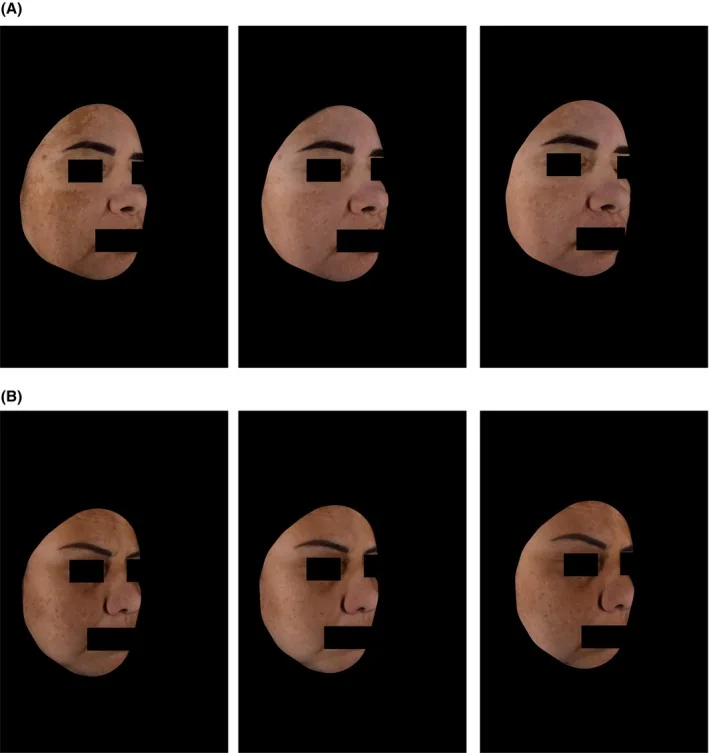
To work out which type of pigmentation you have and how to treat it, read the fastest way to remove facial pigmentation.
Quick guide: the problem, its sign and its treatment
| Problem | Distinguishing sign | Foundation of treatment |
|---|---|---|
| Acne | Blackheads, whiteheads or inflamed spots | Salicylic acid, benzoyl peroxide or a retinoid; medical treatment if severe |
| Pigmentation and melasma | Brown patches that worsen with sun | Sunscreen and a studied lightener |
| Dryness | Tightness, flaking and roughness | Gentle cleanser and a rich moisturiser |
| Oiliness and pores | Shine and enlarged pores | Gentle cleanser, light moisturiser, niacinamide |
| Sensitivity and inflammation | Redness and stinging with products | Simplify the routine and find the cause |
| Wrinkles and sagging | Lines and loss of firmness | Sunscreen and a retinoid; procedures as appropriate |
If redness and stinging are the problem, read facial skin inflammation; for lines and ageing, read the facial wrinkles guide.
flowchart TD
  A[A skin problem] --> B{Spots or blackheads?}
  B -->|Yes| C[Acne - treat by severity]
  B -->|No| D{Brown patches?}
  D -->|Yes| E[Pigmentation - sunscreen and a lightener]
  D -->|No| F{Redness and stinging with products?}
  F -->|Yes| G[Sensitivity or inflammation - simplify]
  F -->|No| H{Tightness or shine?}
  H -->|Tightness| I[Dryness - rich moisturiser]
  H -->|Shine| J[Oiliness - light hydration]
The basic routine that suits everyone
In the morning: a gentle cleanser, or just water if your skin is dry, then a moisturiser suited to your type, then a broad-spectrum sunscreen, reapplied if you stay in the sun. In the evening: remove sunscreen and make-up with a gentle cleanser, then your targeted treatment if you have one, then moisturiser. This simple routine alone improves a lot of dryness and sensitivity, and makes any treatment you add later easier to tolerate and less irritating.
Mistakes that make skin problems worse
The things that most often make skin problems worse are using too many products and changing them every week, combining several exfoliants or acids, home mixtures with lemon or baking soda, and creams of unknown content that may contain steroids. A simple rule: one new product at a time, several weeks before judging it, and a monthly photo in the same light so you can see the change.
It also helps to be wary of anything promising to fix "all skin problems". A product that suits acne-prone skin may be too drying for sensitive skin, and a rich cream that comforts dry skin may clog oily skin. The more specific the problem you're treating, the more likely the treatment is to work.
mindmap
  root((Skin problems))
    Foundation
      Gentle cleansing
      Moisturising
      Sunscreen
    Common problems
      Acne
      Pigmentation
      Dryness
      Oiliness
      Inflammation
      Wrinkles
    Mistakes
      Too many products
      Home mixtures
      Unknown creams
Frequently asked questions
What are the most common skin problems?
The most common are acne, pigmentation and melasma, dryness, excess oil and enlarged pores, sensitivity and inflammation, and signs of ageing such as wrinkles and sagging. Each has a different cause and a different treatment.
Is there one treatment for all skin problems?
No. What treats acne can increase dryness, and what lightens pigmentation can irritate sensitive skin. The only common ground is gentle cleansing, moisturising and sunscreen; a targeted treatment is then added for each problem.
How do I know my skin type?
Wash your face with a gentle cleanser and leave it bare for an hour. If your whole face shines, your skin is probably oily; if it feels tight and flaky, it's dry; if only your forehead and nose shine, it's combination. Stinging and redness with products are signs of sensitive skin.
When do I need a dermatologist for skin problems?
When spots are deep and inflamed or leave marks, when a spot changes or bleeds, when a problem hasn't improved after several weeks of a simple, consistent routine, or when inflammation or itching is severe.
When to see a clinician
See a dermatologist if spots are deep and painful or leave pits or marks, if a new spot changes in shape or colour, bleeds or won't heal, if redness and itching are severe or come with blisters or swelling, or if a problem hasn't improved after several weeks of a consistent routine. See one too before using any cream of unknown content.
Related articles
- Acne guide
- The fastest way to remove facial pigmentation
- Oily skin problems
- Facial skin inflammation
Further reading
- 10 skin care secrets for healthier-looking skin — American Academy of Dermatology
- Skin Microbiota Diversity Is Associated with Biophysical Properties Across Healthy Human Skin Types — Microorganisms
- Evaluation of the Efficacy of a Serum Containing Niacinamide, Tranexamic Acid, Vitamin C, and Hydroxy Acid Compared to 4% Hydroquinone in the Management of Melasma — Journal of Cosmetic Dermatology
Medical disclaimer: This article is for health education only and is not a substitute for professional medical advice. If you have a skin condition that concerns you, please consult a dermatologist.