Uriage's Hyséac range is designed for oily, acne-prone skin, and its main active ingredients are exfoliating acids such as glycolic, lactic, malic and salicylic acid, along with the thermal water the brand is known for. These products usually help blackheads, whiteheads, oily skin and mild spots, and support medical treatment, but they don't treat moderate or severe acne on their own, and we found no independent published trials of the products themselves.
The Arabic pages that rank for this search are pharmacy listings describing the products and how to apply them, without explaining what their ingredients do or who they suit. This article does that from published research. We have no connection with the manufacturer.
Hyséac products by need
| Product | What it does, per retailers | Suits |
|---|---|---|
| Hyséac cleansing gel | Gentle, soap-free cleansing | Daily cleansing of oily skin |
| Hyséac 3-Regul | A cream with an exfoliating acid complex | Mild spots and shine |
| Hyséac K18 | A cream with a higher proportion of exfoliating acids | Blackheads and rough texture |
| Hyséac Mat | A gel-cream that reduces shine | People bothered by shiny skin |
| Hyséac Hydra | A soothing moisturiser | Skin dried out by medical treatment |
Ingredient lists differ between countries and versions. The brand's website sometimes lists only an "AHA and BHA complex", while some pharmacies list glycolic acid, salicylic acid and zinc lactate. Read the label on the pack itself.
Exfoliating acids: the heart of the range
Alpha-hydroxy acids (AHAs), such as glycolic, lactic and malic acid, are water-soluble and loosen the bonds between dead cells on the surface, exfoliating it and smoothing texture. A 2018 review shows their structures:
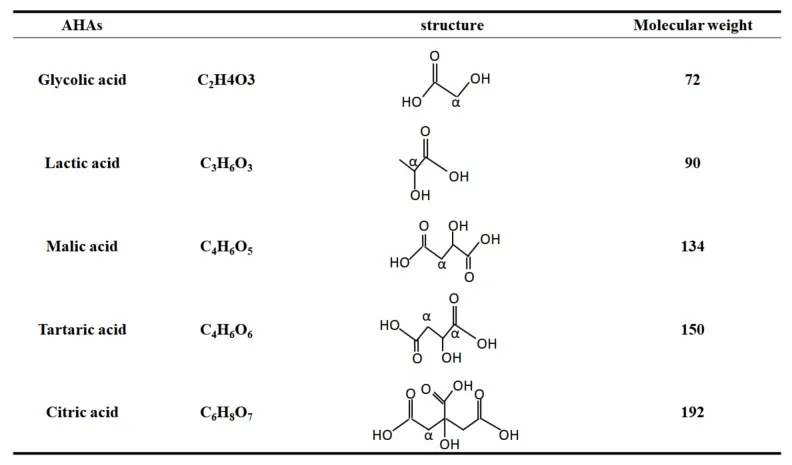
Salicylic acid, by contrast, is oil-soluble, so it gets into pores and loosens the blockage inside them, which is why it's often paired with AHAs in creams for oily skin. Salicylic acid is explained in detail in Stridex pads. Glycolic acid has the smallest molecule of the AHAs, which is one reason it penetrates well and also one reason it can sting.
Glycolic acid also has an antibacterial effect. In a 2020 laboratory study, glycolic acid sharply reduced the number of live acne bacteria in a dish in an acidic environment, with a stronger effect at higher concentrations:
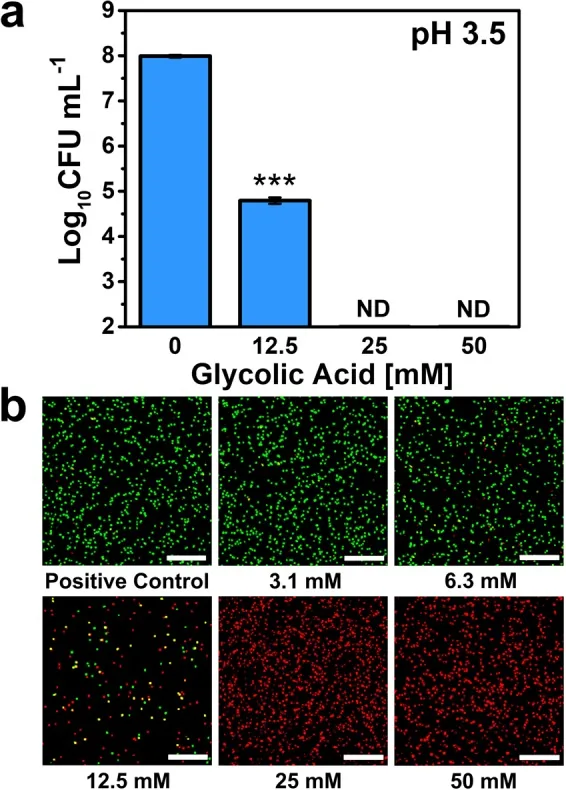
This is a laboratory result, and the effect depends on the product's acidity and concentration, both of which are usually not stated on commercial creams.
Thermal water: what does it do?
Uriage builds its products on thermal water from a spring in the French Alps. In a 2019 laboratory study, Uriage thermal water reduced biofilm formation by strains of acne bacteria and Staphylococcus in a dish:
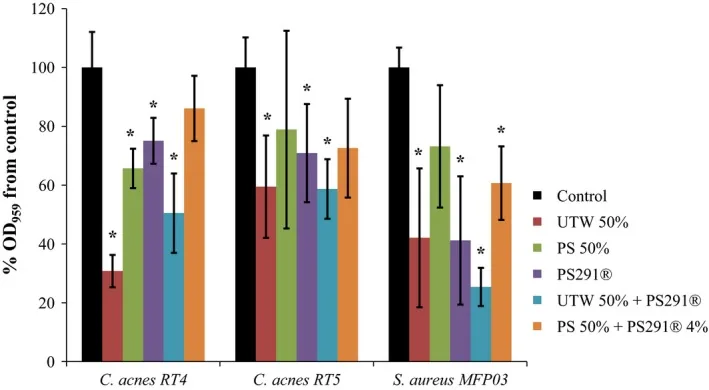
One of the researchers is employed by Uriage, and the experiment was done in dishes, so it doesn't show an effect on spots on the face. Thermal water soothes and hydrates, but it isn't an acne treatment on its own.
flowchart TD
  A[Oily skin with spots] --> B{Blackheads and rough texture?}
  B -->|Yes| C[One exfoliating cream, a few times a week]
  B -->|No| D{Many or deep inflamed spots?}
  D -->|Yes| E[See a dermatologist]
  D -->|No| F[Gentle cleanser, moisturiser and sunscreen]
  C --> G{Redness or stinging?}
  G -->|Yes| H[Use it less often or switch to a gentler cream]
Exfoliating acids on darker skin
Brown and olive skin, common in the Middle East, is more prone to dark marks after any inflammation, whether from spots themselves or from irritating products. So a strong exfoliating cream that causes redness and burning can leave marks worse than the spots you set out to treat. Start with the gentlest formula, watch for any redness lasting more than a day, and don't apply it to broken or sunburnt skin. AHAs also fade mild dark marks over time, but daily sunscreen is the foundation for preventing new ones; treating marks is covered in red acne marks.
Uriage or Bioderma?
Many people ask which is better. The two ranges are built on the same idea: a gentle cleanser, creams with exfoliating acids, a soothing moisturiser and a product for shine. The real difference is in the formula and how your skin tolerates it, not the name. The most accurate comparison comes from reading the active ingredient on the label, as explained in Bioderma for acne. If one range irritates your skin, switching to the other at the same strength rarely helps; switching to a gentler active usually does.
What to expect in the first weeks
Exfoliating creams often cause mild tingling and some flaking at first, which usually settles as the skin adjusts. Blackheads and rough texture tend to improve before inflamed spots do, and some people notice a few more small spots early on as blocked pores clear. What isn't normal is persistent burning, redness that lasts all day, or raw, shiny patches; those are signs of irritation, and the cream should be used less often or stopped. Keep the rest of your routine very simple during this period, so it's clear what's causing any reaction. And give any change several weeks: judging a cream after a few days usually means replacing something that hadn't had a chance to work, and constantly switching products is one of the commonest reasons people feel nothing works for their skin.
How to use them safely
Start with one exfoliating cream, on clean, dry skin, a few times a week, then increase as your skin tolerates it. Wear sunscreen every morning, because exfoliating acids make skin more sensitive to the sun. Don't combine K18 with 3-Regul, or either with a retinoid, benzoyl peroxide or an in-clinic peel, without asking your dermatologist. If your skin is dry or sensitive, start with just the cleanser and moisturiser, as explained in dry skin with acne.
mindmap
  root((Uriage Hyséac))
    Ingredients
      Alpha-hydroxy acids
      Salicylic acid
      Thermal water
    Suits
      Blackheads and whiteheads
      Shine
      Mild spots
    Watch for
      Sun sensitivity
      Stacking exfoliants
      Not a substitute for a dermatologist
Frequently asked questions
Is Uriage good for acne?
Uriage's Hyséac range offers supporting products for oily skin and mild spots, and its main active ingredients are exfoliating acids such as glycolic and salicylic acid. They may help blackheads, whiteheads and mild spots, but they don't treat moderate or severe acne on their own, and we found no independent published trials of them.
What's the difference between Hyséac 3-Regul and Hyséac K18?
Both are exfoliating creams for oily skin. Retailers describe K18 as containing a higher proportion of exfoliating acids, so it's aimed at blackheads and rough texture and may irritate more, while 3-Regul is an all-round cream for mild spots and shine. Read the ingredients on the pack, because formulas vary.
Does thermal water treat acne?
Thermal water soothes and hydrates the skin, and a laboratory study found that Uriage thermal water reduced biofilm formation by acne bacteria in dishes, but there's no evidence that it treats spots on the face by itself.
Can I use Uriage alongside my dermatologist's treatment?
Hyséac's cleanser and soothing moisturiser can support medical treatment. But don't combine the exfoliating creams with a retinoid, benzoyl peroxide or isotretinoin without asking your dermatologist, because the combination increases dryness and irritation.
When to see a clinician
See a dermatologist if spots are red and numerous or deep and painful, if they leave dark marks or scars, if they haven't improved after several weeks of a consistent routine, or if strong redness, burning or peeling follows any exfoliating cream. Dermocosmetics support treatment; they don't replace it when it's needed.
Related articles
Further reading
- Dual Effects of Alpha-Hydroxy Acids on the Skin — Molecules
- pH-Dependent Antibacterial Activity of Glycolic Acid: Implications for Anti-Acne Formulations — Scientific Reports
- Acne: Diagnosis and treatment — American Academy of Dermatology
Medical disclaimer: This article is for health education only and is not a substitute for professional medical advice. If you have a skin condition that concerns you, please consult a dermatologist.