Stridex pads are cotton pads soaked in salicylic acid, an ingredient that dissolves in oil so it can get inside pores and loosen what is blocking them. That makes them a good fit for oily skin, blackheads, whiteheads and small spots. But they dry the skin, they stack up with other treatments, and they don't reach deep or hormonal spots.
Searching for this product in Arabic turns up almost no explanatory pages at all — mostly shop listings and machine translations. This article fills that gap in both languages.
How does salicylic acid work?
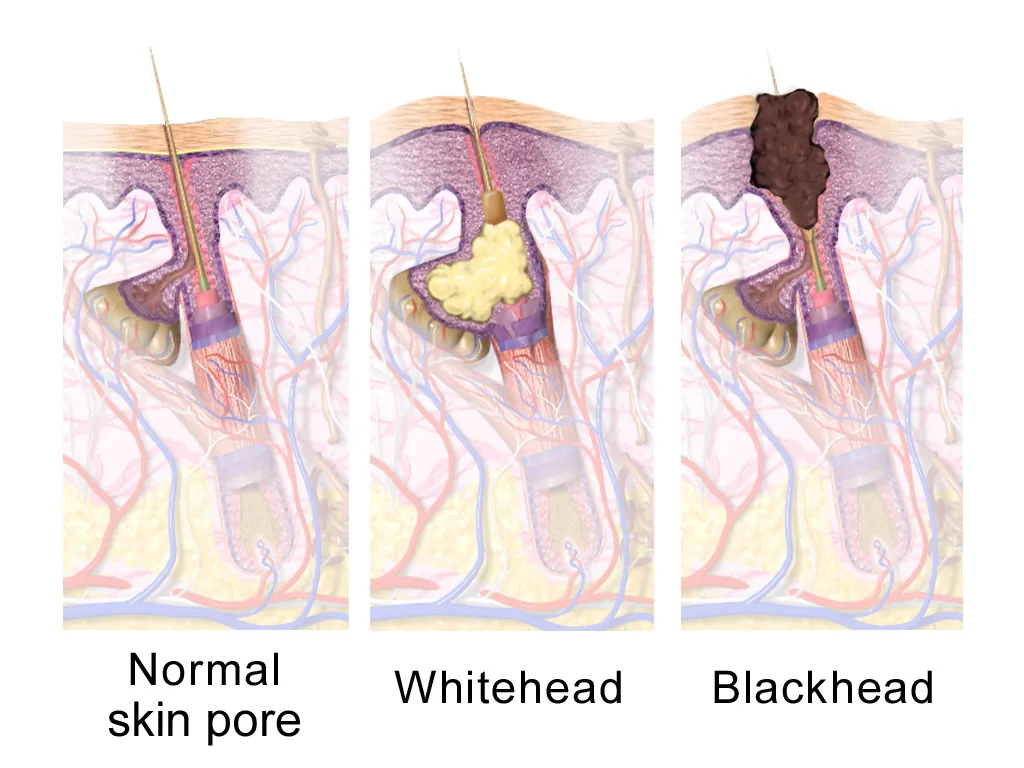
Salicylic acid is a beta-hydroxy acid. Its advantage over fruit acids is that it dissolves in oil, so rather than sitting on the skin's surface it moves into sebum-filled pores and loosens the bonds between the dead cells blocking them.
The diagram below shows what happens inside the pore — a normal pore, then a closed whitehead, then an open blackhead. That blockage is exactly what salicylic acid targets.
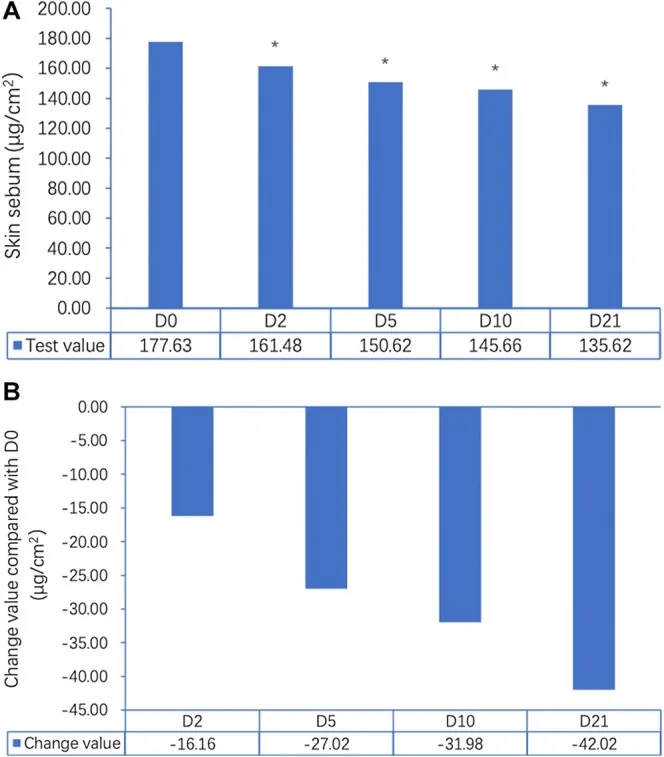
In a 2025 prospective study of a salicylic acid gel in people with oily or combination skin and mild-to-moderate acne, sebum levels fell steadily over three weeks, as the chart shows.
In the same study, clinician-rated acne severity also fell gradually over the three weeks:
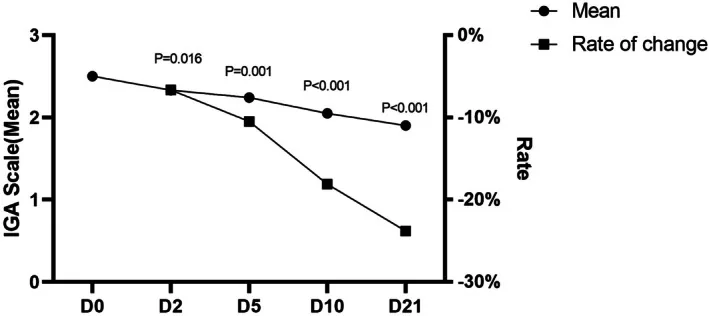
The study was small, short and of a gel rather than pads, so its results shouldn't be pinned on any particular product. What it does illustrate is the mechanism: salicylic acid works on oil and blockage, not on bacteria or deep inflammation.
Salicylic acid or glycolic acid?
People often lump salicylic acid together with fruit acids such as glycolic acid because both "exfoliate". The difference is practical. Glycolic acid is water-soluble, so it works on the surface, improving texture and dullness; salicylic acid is oil-soluble, so it reaches inside the pore. That is why salicylic acid suits oily skin and clogged pores, while glycolic acid suits rough, dull texture. Using both on the same night doubles the irritation long before it doubles the benefit.
What to expect over the first weeks
Pores and blackheads change slowly, because the blockage you can see formed weeks earlier. Most people notice skin feeling less oily before they see fewer blackheads. A little tightness or flaking at first is common; stinging that persists, visible redness or raw patches mean the product is too strong or used too often for your skin, and it is time to step back rather than push through.
Who are Stridex pads for?
| Situation | Suitable? | Why |
|---|---|---|
| Blackheads, whiteheads and oily skin | Usually yes | Loosens blockages inside pores |
| Occasional small spots | Sometimes | Reduces the blockage that precedes them |
| Many red, inflamed spots | Not enough alone | Inflammation needs another treatment |
| Deep, painful or hormonal spots | No | Can't reach that deep |
| Dry skin or eczema | With great care | Increases dryness and irritation |
The small grey dots either side of the nose are often mistaken for blackheads, but they are sebaceous filaments, a normal part of the pore. The difference is explained in getting rid of blackheads on the nose.
In clinic, Stridex-type pads are most useful for people whose main complaint is a shiny T-zone with clustered blackheads and the odd small bump. They are least useful — and most often misused — by people with red, tender breakouts who rub harder and more often in the hope of drying them out.
Red or green? Reading the label
Stridex pads come in versions distinguished by the colour of the tub: some contain a higher concentration of salicylic acid, some are gentler for sensitive skin, some contain alcohol and some don't. Don't go by colour; read the label. The strongest version isn't the best, just the most drying, and alcohol-free versions are kinder to the skin barrier.
The product label itself warns about excessive drying, that using another topical acne medication at the same time can increase dryness and irritation, that pads should be kept away from the eyes and lips, and that they shouldn't be used by anyone allergic to salicylic acid.
This flowchart shows how to decide:
flowchart TD
  A[Considering Stridex pads] --> B{Blackheads, whiteheads and oily skin?}
  B -->|Yes| C{Already using another topical acne treatment?}
  C -->|Yes| D[Check with your doctor before combining]
  C -->|No| E[A version suited to your skin - go gently]
  B -->|No| F{Deep painful or many inflamed spots?}
  F -->|Yes| G[Medical assessment - pads aren't enough]
  F -->|No| H{Dry or sensitive skin?}
  H -->|Yes| I[Probably not for you - ask about a gentler option]
  H -->|No| E
Pads versus a salicylic acid wash or serum
Pads aren't the only way to use salicylic acid, and they aren't always the best one. A wash is rinsed off, so it is gentler and suits larger areas like the back and chest. A leave-on serum or gel spreads more evenly and is easier to control on sensitive patches. Pads sit in between: convenient, quick, and good for a targeted T-zone sweep, but easy to overuse because each wipe feels so light. Whichever format you choose, the active ingredient and its strength matter more than the delivery. Salicylic acid also turns up in leave-on creams such as La Roche-Posay Effaclar Duo, which pair it with niacinamide.
Common mistakes with Stridex pads
- Scrubbing the face hard with the pad; the acid works by contact, not friction.
- Combining it with other exfoliants, acids and retinoids on the same night, so irritation builds up.
- Using it on cracked or sunburnt skin.
- Skipping moisturiser; oily skin needs a light moisturiser too, and dryness can increase oil production.
- Expecting results in days; pores take weeks to change.
- Forgetting sunscreen; exfoliated skin is more easily irritated by the sun.
If you are pregnant or breastfeeding, check with your doctor before using any salicylic acid product.
Frequently asked questions
Do Stridex pads remove blackheads?
They help reduce them with regular use, because salicylic acid dissolves in sebum and loosens blockages inside the pore. But they won't clear a blackhead in a day, and the grey sebaceous filaments on the nose aren't blackheads at all and won't disappear for good.
What's the difference between red and green Stridex?
The colours distinguish versions: some have a higher concentration of salicylic acid and some are gentler for sensitive skin, some contain alcohol and others don't. The strongest isn't the best for everyone; it is the most drying. Read the label and pick the gentler one if your skin is sensitive.
Can I use Stridex with other acne treatments?
The product label itself warns that using another topical acne medication at the same time can increase dryness and irritation, and advises only one unless directed by a doctor. Combining it with retinoids or benzoyl peroxide is a decision to make with your doctor.
Is Stridex suitable for dry or sensitive skin?
With caution. Salicylic acid is drying, and the versions with alcohol are harsher. Dry skin or skin with eczema can burn. If you need it, choose the gentlest alcohol-free version, and see your doctor if painful redness or peeling appears.
When to see a clinician
See a dermatologist if your spots are deep and painful, many and inflamed, or leaving scars, if blackheads and pores haven't improved after several weeks of regular use, or if painful redness, peeling or burning follows the pads. The same applies if you are pregnant or breastfeeding before you start. For recurring whiteheads, see what causes whiteheads, and for enlarged pores, treating enlarged pores.
Related articles
- What causes whiteheads
- Getting rid of blackheads on the nose
- Treating enlarged pores
- Pimple drying lotion
- Oily skin: what controls it
Further reading
- When (and how) to use Maximum 2% Salicylic Acid by Stridex — Skinsort
- Stridex Alcohol Free Maximum Pads — Stylevana
- How to Use Stridex — Stridex
- OTC Medication Information: Stridex Maximum — OTC Labels
Medical disclaimer: This article is for health education only and is not a substitute for professional medical advice. If you have a skin condition that concerns you, please consult a dermatologist.