
Treating a dark neck starts with finding the cause, because "a dark neck" is at least three different conditions: a build-up of dead skin that wipes off with alcohol, acanthosis nigricans linked to insulin resistance, or pigmentation from perfume and sun. The first clears in minutes, the second needs treatment of its cause in the body alongside a prescription cream, and the third fades once the trigger stops and the skin is protected.
The Arabic pages that rank for this search recommend banana, turmeric, baking soda and daily scrubbing, and mention acanthosis nigricans in passing. But they don't mention the simple test that reveals the first type, or what trials say about treating the second. This article sorts the types and says what works for each.
The first test: an alcohol wipe
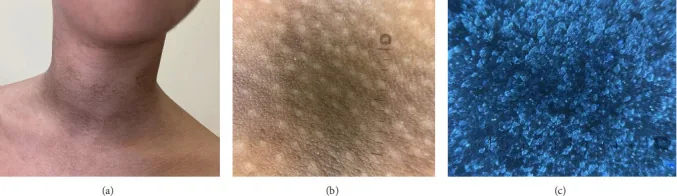
Sometimes the "darkness" is a layer of accumulated dead skin and secretions that ordinary washing hasn't removed, known as terra firma-forme dermatosis. It looks like mottled brown patches, is common in children and teenagers, and can appear even with regular bathing. The figure from a 2025 case report shows this pattern on a child's neck, and what the dermatoscope shows:
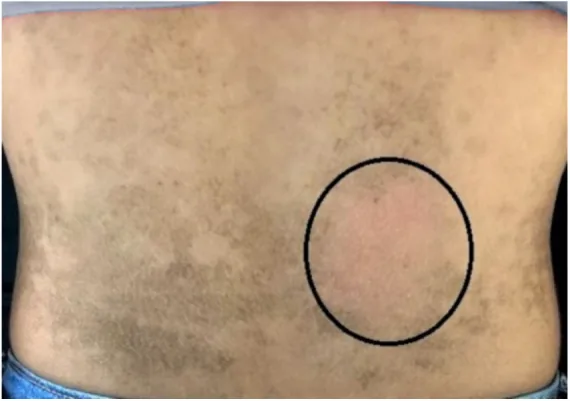
Diagnosis and treatment happen in one step: wiping the area with a cotton pad soaked in rubbing alcohol removes the layer, as in this image from a 2020 article, where the wiped circle on the back has returned to normal skin colour:
Do it gently, and don't repeat it on inflamed or broken skin. If the colour doesn't change, the darkening is in the skin rather than on it.
This condition is worth knowing about because it is so often mistaken for something serious, or for poor hygiene, when it is neither. Children are sometimes scrubbed harshly or put on lightening creams for a problem that a single gentle wipe would have solved.
Acanthosis nigricans: thick, velvety darkening
If the skin of the neck is thicker, velvety to the touch, and darker at the back and sides, and sometimes in the armpits too, the first possibility is acanthosis nigricans. It is commonly linked to insulin resistance and obesity, and can be associated with polycystic ovary syndrome and some medicines. Its most important treatment is in the body, not the cream: improving insulin resistance through weight, activity and whatever treatment your doctor decides gradually lightens it.
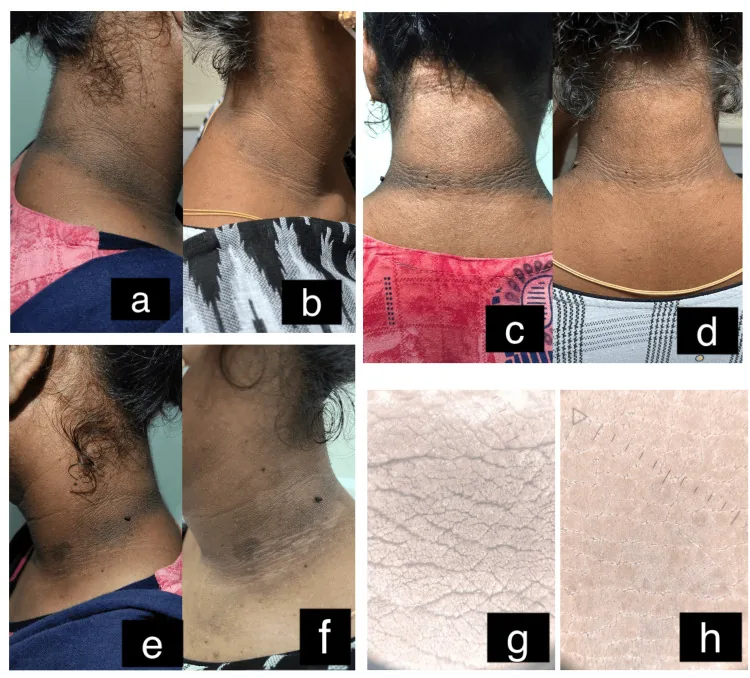
A 2025 systematic review of seven randomised trials of topical treatments for acanthosis nigricans found prescription tretinoin was the most effective at reducing darkness, especially on the neck, while urea and salicylic acid reduced thickness with mild side effects. In a 2025 randomised trial of thirty-eight patients, acanthosis nigricans on the neck improved with both fractional laser and retinoic acid peels, with greater improvement after laser:
Procedures improve the appearance, but darkening comes back if insulin resistance stays the same. Why this darkening appears in folds and over joints is explained in dark knees and elbows. If the darkening extends to the underarms, the other causes there are covered in cream for dark underarms.
It also helps to know that acanthosis nigricans is often the first visible sign of insulin resistance, appearing before any blood test is abnormal enough to be called diabetes. That makes it useful rather than just a cosmetic nuisance: it is the skin flagging something worth checking. Many people find that once they address weight, activity and sleep, the neck softens and lightens alongside other improvements, which is a better outcome than any cream alone.
Perfume and sun staining
Spraying perfume on the neck and then going into the sun can leave brown streaks or patches where the perfume ran, because some of its ingredients react with light. Contact allergy to fragrance or to necklaces can also cause gradual pigmentation. And the neck is often forgotten when sunscreen goes on. These causes are explained in what causes darkening of the face and neck, and the treatment is to stop the trigger and protect the neck from the sun.
A simple habit change helps more than any cream here: spray perfume on clothing rather than skin, take necklaces off when they irritate, and extend sunscreen from your face down to your collarbones every morning.
The types compared
| Type | Feel and look | The test | What helps |
|---|---|---|---|
| Build-up | Mottled brown patches | Wipes off with alcohol | Gentle regular cleansing |
| Acanthosis nigricans | Thick and velvety at back and sides | Doesn't wipe off | Treat insulin resistance; prescription tretinoin or urea; procedures |
| Perfume and sun staining | Streaks or patches where perfume went | Doesn't wipe off | Keep perfume off the skin; sunscreen |
| Contact allergy | Darkening after earlier itching | Doesn't wipe off | Identify and avoid the substance |
flowchart TD
  A[A dark neck] --> B{Wipes off with alcohol?}
  B -->|Yes| C[Build-up - gentle cleansing]
  B -->|No| D{Thick and velvety at back and sides?}
  D -->|Yes| E[Acanthosis nigricans - blood sugar check and prescription treatment]
  D -->|No| F{After perfume, a necklace or sun?}
  F -->|Yes| G[Stop the trigger and protect the neck]
  F -->|No| H[Assessment by a dermatologist]
What does harm
Hard scrubbing with a loofah or pumice, baking soda and lemon all irritate the thin skin of the neck, and irritation increases pigmentation instead of reducing it. If your neck needs a peel, have it in clinic under supervision rather than with strong exfoliants at home. Unknown lightening creams may contain steroids or mercury; read Pakistani whitening creams.
mindmap
  root((Dark neck))
    Wipes off
      Build-up
    In the skin
      Acanthosis nigricans
      Perfume and sun
      Contact allergy
    Harmful
      Hard scrubbing
      Lemon and baking soda
      Unknown creams
Frequently asked questions
How do I lighten a dark neck?
Start by finding the cause. If the darkness comes off when you wipe it with a cotton pad soaked in rubbing alcohol, it is a build-up that gentle cleansing removes. If the skin is thick and velvety, it is usually acanthosis nigricans, which needs an insulin check and prescription treatment. Protection from sun and perfume helps every type.
Is a dark neck a sign of diabetes?
It can be. Acanthosis nigricans, a thick, velvety darkening of the neck and armpits, is strongly linked to insulin resistance and obesity, and can come before diabetes. So it is worth a blood sugar test, but it isn't a diagnosis of diabetes on its own.
What is the best cream for a dark neck?
It depends on the cause. For acanthosis nigricans, a review of randomised trials found prescription tretinoin was the most effective at reducing darkness, while urea and salicylic acid soften thickened skin. Darkening from perfume or sun fades by stopping the trigger and protecting the skin.
Do home remedies lighten a dark neck?
There's no good evidence that home remedies treat a dark neck, and some, such as lemon and baking soda, can irritate the thin skin there and make darkening worse. The exception is a build-up, which cleansing removes, but that isn't lightening so much as clearing what has accumulated.
When to see a clinician
See a dermatologist if the darkening is thick and velvety or has spread to the armpits, or if it has appeared alongside weight gain, irregular periods or extra hair growth, as these are signs worth checking with blood sugar and hormone tests. Seek prompt assessment if darkening appears suddenly and spreads quickly, or comes with unexplained weight loss or marked tiredness, as that needs a full examination.
Related articles
- What causes darkening of the face and neck
- Dark knees and elbows: pigment or thickened skin?
- Tretinoin for hyperpigmentation
- Pakistani whitening creams
- Neck wrinkles in pictures
Further reading
- Acanthosis nigricans: Diagnosis and treatment — American Academy of Dermatology
- The efficacy of topical treatments for acanthosis nigricans: a systematic review of randomized controlled trials — Frontiers in Medicine
- Terra firma-forme dermatosis: an underdiagnosed condition — Anais Brasileiros de Dermatologia
Medical disclaimer: This article is for health education only and is not a substitute for professional medical advice. If you have a skin condition that concerns you, please consult a dermatologist.