
Whether cosmetic surgery in Turkey goes well is decided by questions you ask before booking, not by the country itself. Have you met the surgeon who will operate at least twice? Is your return flight set by the safe window for flying after surgery? And who looks after you if the wound becomes infected once you are home? Those three are missing from the booking pages that dominate this search.
One thing to be clear about: InJasmine is a dermatology clinic that consults and refers; we do not perform cosmetic surgery. What follows is what I see when patients come back from abroad with a wound that hasn't healed or a scar that has darkened, and what I advise people who ask me before they travel.
Why Turkey leads cosmetic tourism
The familiar reasons: lower prices than Western Europe or the Gulf, a very large number of clinics, and packages that bundle hotel and transfers. Turkey has highly skilled surgeons and a national plastic surgery society that works with its British counterpart. Travel guides describe the market as having a well-regulated top tier and a less-regulated lower tier.
The data from the other side is worth reading too. The British Association of Aesthetic Plastic Surgeons (BAAPS) has reported a marked rise over three years in people needing NHS hospital treatment after cosmetic surgery abroad, with most of the corrective operations it tracked involving procedures done in Turkey. BAAPS and the Turkish Society of Plastic, Reconstructive and Aesthetic Surgeons (TSPRAS) have issued joint guidance for patients, noting that the reports point to poor practice and avoidable harm rather than unavoidable risk.
The practical meaning: Turkey is neither "safe" nor "dangerous" as a whole. The gap between one clinic and the next is what decides your outcome.
What complications do patients come home with?
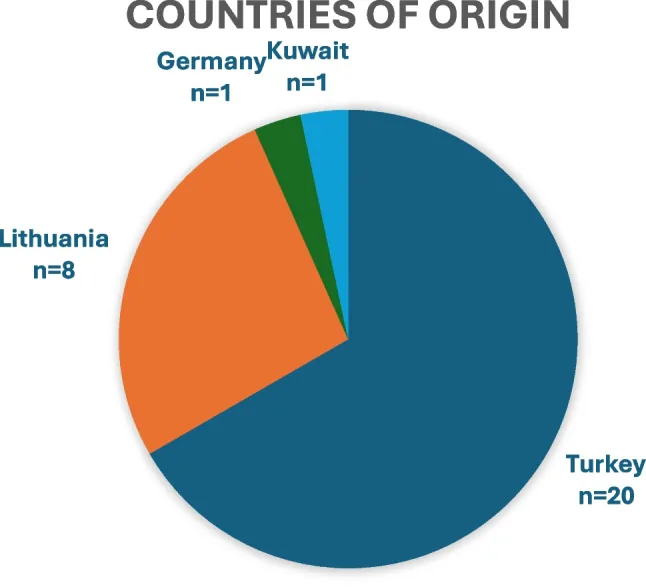
A plastic surgery unit in Ireland followed patients who arrived with complications after procedures performed abroad. Turkey was the most frequent destination among its cases, as the chart below shows.
In the same study, abdominoplasty was the most common procedure, wound breakdown was the most common complication, and bacteria resistant to some commonly used antibiotics were identified. This chart shows the spread of procedure types.
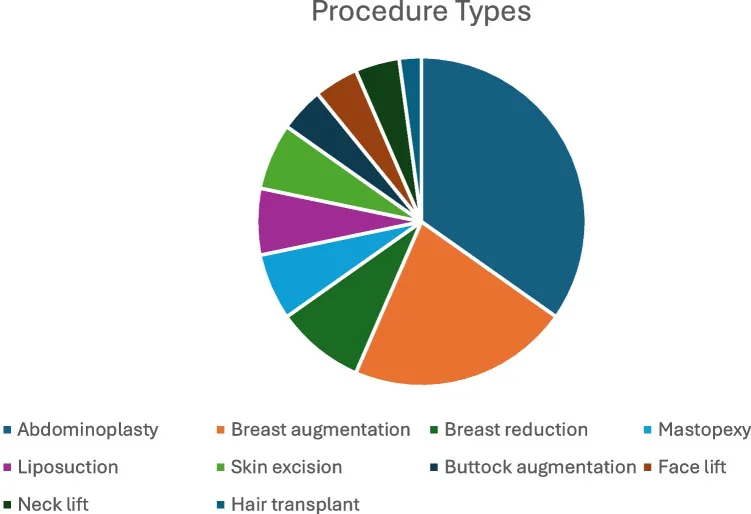
Why does this matter to you? Because the commonest problem is not a disaster in the operating theatre. It is a wound that opens or becomes infected days later — when you are already home and far from your surgeon. If your trip is for excess skin after weight loss, the timing and skin preparation it needs are covered in excess skin removal.
Before you book: the questions that protect you
The NHS advises meeting the surgeon rather than sales staff, having two consultations with the surgeon treating you before any surgery, asking about their training and experience with your specific procedure, and making sure they speak a language you understand. I have combined that with what I would add from clinic:
| Question | Why it matters | An answer that should worry you |
|---|---|---|
| Will I meet the operating surgeon before the day? | The person who operates should assess you | "They'll see you on the morning" |
| Will there be at least two consultations? | Time to think and ask questions | Booking and paying after one call |
| How many procedures do you suggest on this trip? | Combining lengthens anaesthesia and recovery | A "three for one" bundle |
| When can I fly? | Clot risk after surgery | A return flight two days later |
| Who follows me up at home? | Most complications appear later | "Just message us on WhatsApp" |
| Does insurance cover complications? | Travel insurance usually doesn't | No clear answer |
This flowchart shows when travelling is a considered decision:
flowchart TD
  A[Considering cosmetic surgery in Turkey] --> B{Met the operating surgeon twice?}
  B -->|No| C[Don't book yet]
  B -->|Yes| D{Return date within the safe flying window?}
  D -->|No| C
  D -->|Yes| E{Follow-up plan and a local doctor at home?}
  E -->|No| C
  E -->|Yes| F[A considered decision - proceed with the surgeon]
Flying after surgery: when is it safe?
Flying after major surgery raises the risk of blood clots, which can be life-threatening. The NHS sets out how long to avoid flying:
| Procedure | Period to avoid flying |
|---|---|
| Breast surgery, liposuction | 5–7 days |
| Facial cosmetic procedures, tummy tuck | 7–10 days |
It also advises resting after surgery and avoiding alcohol, sun exposure, swimming and sightseeing, and not planning a holiday straight afterwards. A package that combines your operation with sightseeing tours in the same week runs directly against that advice. Travel insurance, the NHS notes, does not normally cover you if things go wrong in surgery — so check what the clinic's own insurance covers, and how you would get home in an emergency.
What a dermatologist adds, before and after
This is the part booking pages never mention, and it is what I deal with in clinic:
- Active acne or isotretinoin treatment: tell your surgeon beforehand. Timing surgery around this medicine is an individual decision made between the two doctors.
- A tendency to keloids or raised scars: mention any previous thick scars. They can change where the incision goes and how it is cared for.
- Post-inflammatory pigmentation: olive and brown skin tends to darken along scars, and sun in the first months makes it worse. Strict sun protection starts the day you land, and how darkened marks are managed is covered in treating facial scars.
- Smoking: it slows wound healing and raises the risk of the wound opening — the most common complication in the study above.
Back home: when do you need a doctor straight away?
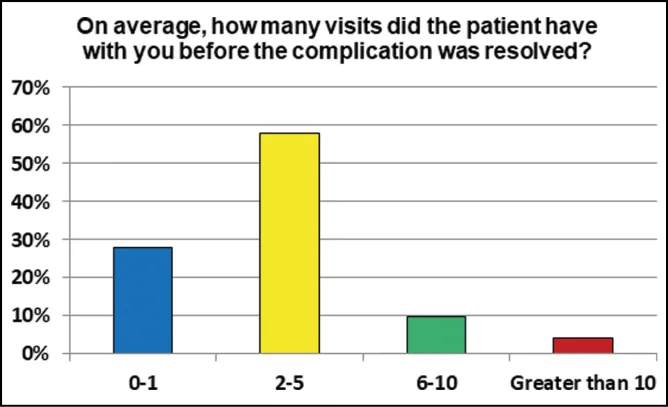
A survey of American Society for Aesthetic Plastic Surgery members found that most patients returning with complications needed several visits before the problem was resolved, as the chart below shows. Follow-up, in other words, is not a detail.
This flowchart shows what cannot wait:
flowchart TD
  A[Home after surgery abroad] --> B{Breathlessness, chest pain, or a swollen painful leg?}
  B -->|Yes| C[Emergency care now - possible clot]
  B -->|No| D{Fever, pus, spreading redness or the wound opening?}
  D -->|Yes| E[See a local doctor the same day]
  D -->|No| F[Remote follow-up with the surgeon as planned]
Keep your operation report, your medication names, and the type and size of any implant. Those papers save a local doctor hours of guesswork.
Frequently asked questions
When can I fly home after cosmetic surgery in Turkey?
The NHS advises avoiding flying for 5 to 7 days after procedures such as breast surgery and liposuction, and 7 to 10 days after facial cosmetic procedures or a tummy tuck, because air travel combined with major surgery raises the risk of blood clots. Book your return around your surgeon's advice, not around the package.
Is cosmetic surgery in Turkey safe?
No surgery is risk-free, in Turkey or anywhere else. Turkey has excellent surgeons and weak clinics side by side, and the difference shows up in specific questions: did you meet the operating surgeon twice beforehand, is there a follow-up plan for when you are home, and are you combining several procedures in one trip? The answers decide your safety more than the country does.
What should I do if my wound gets infected after I come home?
Don't wait for the clinic to reply on the phone. Spreading redness, pus, a wound opening, fever or worsening pain all need a local doctor the same day. Take your operation report, your medication names and details of any implant with you; they save whoever treats you a great deal of guesswork.
Can I have more than one cosmetic procedure on the same trip?
It happens a lot because it looks economical, but combining procedures lengthens anaesthesia, increases the load on your body and complicates recovery far from home. It is a decision to discuss honestly with the surgeon based on your health, not one a discounted bundle should make for you.
When to see a clinician
Call emergency services straight away for breathlessness, chest pain, or a swollen, painful leg after you return. See a doctor the same day for fever, pus, spreading redness or a wound that opens. A scar that becomes raised or darkens, and spots or pigmentation around the surgical sites once healed, belong in a dermatology clinic. If your trip is specifically for a hair transplant, its own questions are in hair transplant in Turkey, and for rhinoplasty in what rhinoplasty costs.
Related articles
- Hair transplant in Turkey: how to choose
- Cosmetic procedures: surgical and non-surgical
- Facial cosmetic procedures
- After rhinoplasty: splint, tape and red flags
- Chin surgery recovery
Further reading
- Cosmetic surgery in Turkey: an overview — In Your Pocket
- Why Turkey is the best place for cosmetic surgery — Signal SCV
- Cosmetic surgery Turkey — Fashion Gone Rogue
- Cosmetic surgery abroad — NHS
Medical disclaimer: This article is for health education only and is not a substitute for professional medical advice. If you have a skin condition that concerns you, please consult a dermatologist.