
Excess skin removal takes away what exercise and creams cannot — but it is a trade: loose skin for a permanent scar. The right decision rests on three questions. Has your weight stabilised? Is the problem excess skin, or separated muscles underneath? And is the skin in your folds healthy enough for safe surgery?
One thing to be clear about: InJasmine is a dermatology clinic that consults and refers; we do not perform body-contouring surgery. My role is the part that comes before and after: treating fold rashes, assessing the skin, and looking after the scar.
Why doesn't skin bounce back after weight loss?
Skin has three layers: the epidermis on top; the dermis, which holds the collagen and elastic fibres that give skin its strength and recoil; and the fat layer beneath.
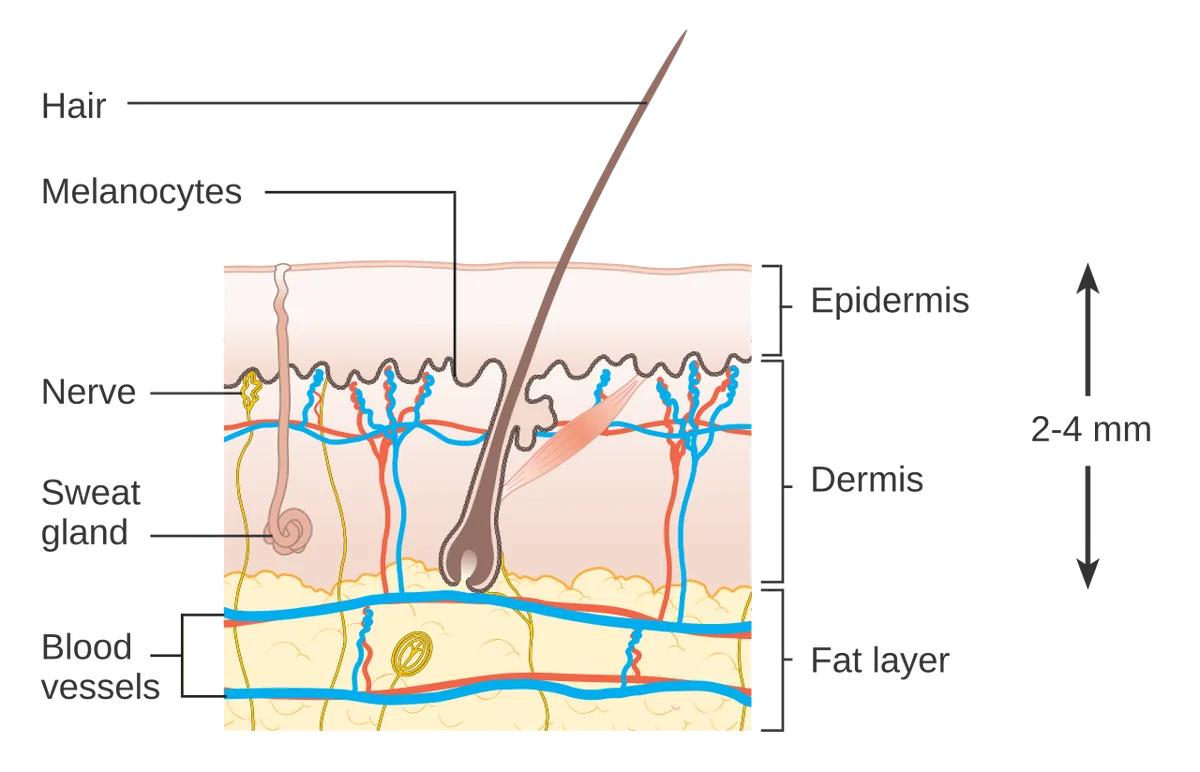
When the body is larger for years, the dermis stretches to cover it and some of its elastic fibres break — stretch marks are the visible sign of that. When the fat goes, the envelope is left larger than its contents. Skin improves somewhat in younger people and with gradual weight loss, but it does not return to how it was. That is why creams and exercise don't remove excess skin; they improve texture and firm what is underneath, and that is all.
Excess skin is not only a cosmetic issue. Large folds can rub, limit movement, make clothing difficult, and trap moisture that leads to painful rashes, sores and infections — which is often what brings people to a dermatologist first.
What does excess skin look like, and where does it collect?
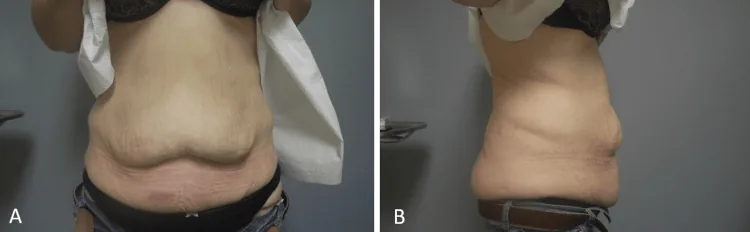
The commonest site is the abdomen, where skin hangs in a fold over the lower belly, as in this published case after bariatric surgery.
This table summarises the operations by area and where the scar usually sits:
| Area | Operation | Usual scar position |
|---|---|---|
| Abdomen | Tummy tuck (abdominoplasty) or panniculectomy | Low horizontal line, sometimes around the navel |
| Arms | Arm lift (brachioplasty) | Inner side of the upper arm |
| Thighs | Thigh lift | Inner thigh |
| Breasts | Breast lift (mastopexy) | Around the areola and below it |
| Back and lower body | Lower body lift | Circumferential, around the waist |
A panniculectomy removes the hanging apron of skin and fat; a tummy tuck also tightens the abdominal muscles. Many people need more than one operation, usually staged rather than all at once.
Skin or muscle? A difference that changes the operation
Many women assume that a bulging tummy after pregnancy or weight loss is all loose skin, when part of it is separation of the two rectus abdominis muscles from the midline (diastasis recti). A 2026 review distinguishes superficial skin-and-fat laxity from weakness of the muscular abdominal wall, and stresses that each needs a different correction.
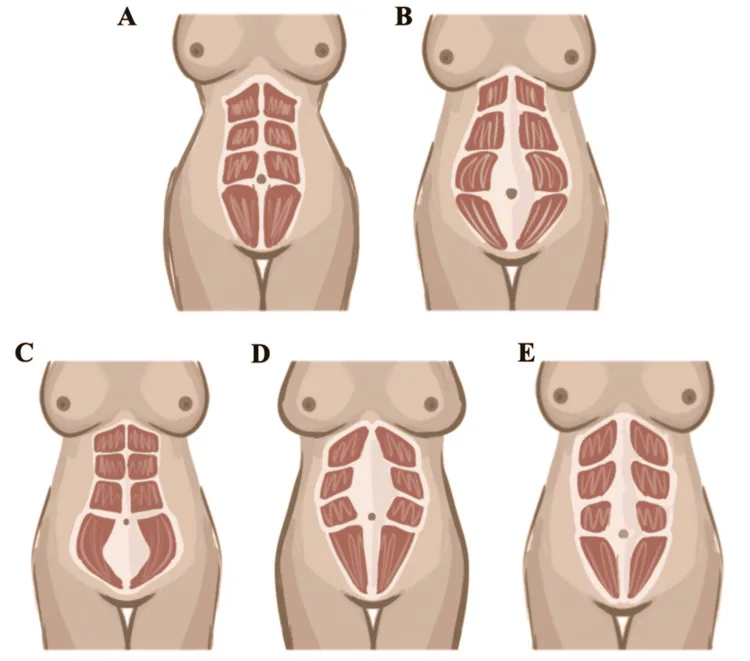
The practical point: removing skin alone won't flatten a tummy whose muscles have separated, and tightening the muscles alone won't remove a hanging fold. The surgeon examines both and plans accordingly.
This flowchart shows the sequence before surgery:
flowchart TD
  A[Excess skin after weight loss] --> B{Weight stable and close to goal?}
  B -->|No| C[Wait - surgery now leaves new loose skin later]
  B -->|Yes| D{Rash or sores under the folds?}
  D -->|Yes| E[Dermatology treatment first]
  D -->|No| F{Diabetes, smoking or chronic illness?}
  F -->|Yes| G[Optimise with your doctor before surgery]
  F -->|No| H[Surgical assessment: skin, muscle or both]
Timing: why surgeons wait for a stable weight
The American Society of Plastic Surgeons describes good candidates as adults whose weight has levelled off, who are otherwise healthy, who don't smoke and who have realistic goals. In a separate article it warns that if you are still losing weight it is not yet the time, because further loss after surgery leaves new excess skin and fluctuation increases the risk of complications.
The NHS is equally clear that a tummy tuck is not a way to lose weight and is usually recommended for people at or near a healthy BMI.
What a dermatologist adds before and after surgery
This is what the top-ranking pages skip, and it is what I see most in people who have lost a lot of weight:
- Intertrigo (fold rash): redness, itching and odour under the abdominal fold, under the breasts or between the thighs, often with yeast involved. It needs treating before surgery, because inflamed skin where the incision will go raises infection risk.
- Diabetes: a 2025 study of abdominoplasty and panniculectomy patients notes that good blood-sugar control around surgery is an important factor in reducing wound complications.
- The scar: long and permanent. It looks red or raised at first, and the NHS says it fades over roughly 12 to 18 months. Olive and brown skin is more prone to darkening or thickening, so sun protection and dermatology follow-up help. Scar treatment is covered in treating facial scars.
- Non-surgical alternatives: tightening devices and biostimulating injections can improve mild laxity, but they cannot remove a hanging fold of skin.
Risks after surgery
The NHS lists the risks of a tummy tuck as including wound-healing problems, fluid or blood collecting under the skin, numbness that can last months or longer, and thick scars, in addition to the general risks of major surgery such as blood clots and infection. It also notes that some people feel the result was not what they wanted and seek another operation.
flowchart TD
  A[After excess skin removal] --> B{Breathlessness, chest pain, or a swollen painful leg?}
  B -->|Yes| C[Emergency care now - possible clot]
  B -->|No| D{Fever, pus, the wound opening or darkening edges?}
  D -->|Yes| E[Call your surgeon urgently]
  D -->|No| F{Soft, fluid-like swelling above the scar?}
  F -->|Yes| G[Prompt review - possible fluid collection]
  F -->|No| H[Routine follow-up]
Frequently asked questions
When can I have excess skin removed after bariatric surgery or weight loss?
Once your weight has stabilised and you are close to your goal. The American Society of Plastic Surgeons advises that weight should be stable before body contouring, because further weight loss afterwards leaves new loose skin and fluctuation raises the risk of complications. Your surgeon sets the timing after reviewing your weight history and blood tests.
Will loose skin tighten on its own after weight loss?
It improves a little in younger people and when weight comes off gradually, but skin that has been stretched for years loses some of its elastic fibres and doesn't return to how it was. Exercise firms the muscle beneath and creams improve texture; neither removes a meaningful amount of skin.
Does excess skin removal leave a scar?
Yes, always. The operation trades loose skin for a scar, which the surgeon tries to place where clothing hides it. Scars look red or raised at first and fade gradually over many months; skin type and aftercare influence how they end up.
How do I treat a rash under skin folds before surgery?
Redness, itching and odour under skin folds are signs of intertrigo, often with yeast or bacteria involved. It needs diagnosing and treating by a dermatologist before surgery, because inflamed skin at the incision site raises the risk of infection afterwards.
When to see a clinician
See a dermatologist if you have redness, itching, odour or sores under your skin folds; that is treated before any surgery. After an operation, call emergency services straight away for breathlessness, chest pain or a swollen, painful leg, and call your surgeon for fever, pus or a wound that opens. A scar that becomes raised, itchy or darker once healed belongs in a dermatology clinic. If the laxity is in your face rather than your body, the logic is different and covered in facial sagging: what actually works; if you are considering surgery abroad, read cosmetic surgery in Turkey.
Related articles
- Cosmetic surgery in Turkey
- Cosmetic procedures: surgical and non-surgical
- Facial sagging: what actually works
- Treating facial scars
- Winter dry skin on the body
Further reading
- Excess skin removal — Vejthani Hospital
- Excess skin after weight loss — Baylor College of Medicine
- Plastic Surgery After Weight Loss — Duke Health
- Body contouring after major weight loss: candidates — ASPS
Medical disclaimer: This article is for health education only and is not a substitute for professional medical advice. If you have a skin condition that concerns you, please consult a dermatologist.