
Recovery after rhinoplasty is longer and quieter than most people expect: a few days of swelling, bruising and a splint, then weeks in which most of the puffiness goes, then many months while the final shape settles. The first rule is simple: your surgeon's instructions override any general advice, including this article.
One thing to be clear about: InJasmine is a dermatology clinic that consults and refers; we do not perform rhinoplasty. What follows is what I explain to patients who come back to us after their operation — how to make sense of what is happening, how to look after the skin over a healing nose, and which symptoms mean you should call your surgeon now rather than at the next appointment.
What happens in the first days after rhinoplasty?
The American Society of Plastic Surgeons explains that a splint and/or packing may be placed inside the nose, with a splint or bandages on the outside, to support and protect the new structures during initial healing. A blocked nose at this stage is expected. It comes from swelling and internal splints, not from anything having gone wrong.
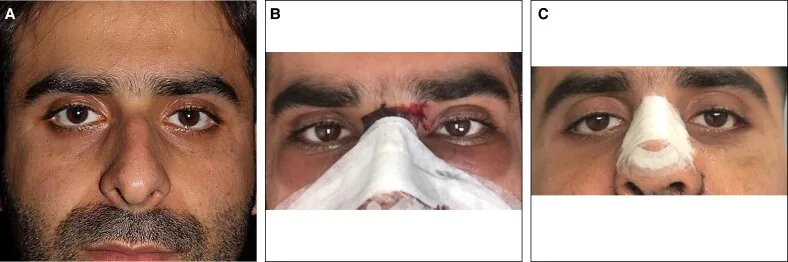
Bruising around the eyes is also common, particularly when the nasal bones have been broken and reset (osteotomies), as this published clinical photograph shows.
The instructions surgeons repeat most for this phase: sleep with your head raised, use cold compresses around the eyes rather than on the nose itself, and avoid blowing your nose, bending over and lifting anything heavy. Beyond those, there is little consensus on the details, which is why instructions differ from one surgeon to the next. Following yours precisely matters more than comparing them with what a friend was told.
Practical preparation helps more than people think. Have someone take you home and stay for the first night, set up pillows to keep your head elevated before you leave for hospital, and keep soft, easy food and your prescribed medicines within reach.
Why is the nose taped and splinted after rhinoplasty?
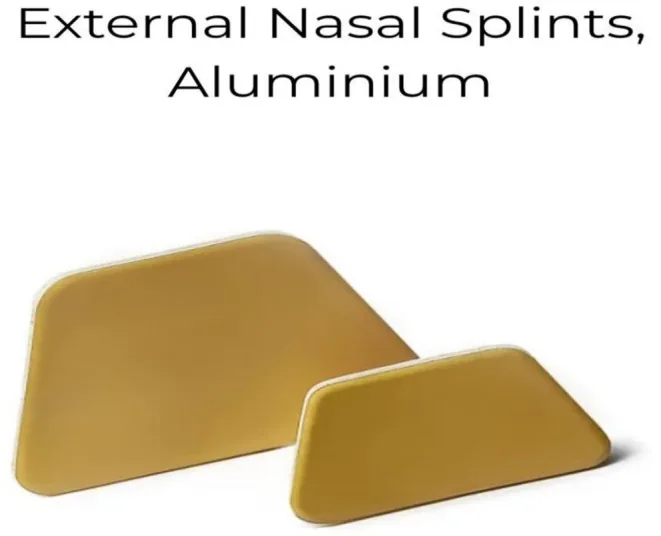
The external splint — usually a padded aluminium or thermoplastic plate fixed over tape — protects the tissues from knocks and limits swelling and blood collecting under the thin skin of the bridge.
Once the splint is removed, some surgeons ask patients to continue taping over the bridge and above the tip for a period they set, aiming to keep swelling down in those areas. Don't take tape off or reapply it yourself until your surgeon has shown you how. Tape pulled the wrong way can press on skin whose blood supply is still fragile.
This sequence summarises each stage and what is asked of you:
flowchart TD
  A[First days: splint, swelling, bruising] --> B[Head raised, cold around the eyes, no nose-blowing]
  B --> C[Splint removed in clinic at the surgeon's appointment]
  C --> D[Taping, gentle cleaning, sun protection]
  D --> E[Months: tip swelling fades gradually, shape settles]
How to clean your nose after rhinoplasty
This is the question I am asked most, and the one people most often get wrong. Bloody discharge in the first days is expected and crusts inside the nostrils are uncomfortable. The common mistake is to dig them out with cotton buds or blow hard — both can restart bleeding or disturb an internal wound.
What most surgeons agree on:
- Clean the outside only at first: a damp cotton bud around the nostril rims, never pushed inside.
- No nose-blowing until your surgeon allows it, and sneeze with your mouth open to reduce the pressure.
- Saline — a spray or rinse — is prescribed by many surgeons to moisten the inside and soften crusts, but which product and when to start belongs to their instructions, not your own judgement.
Glasses are another everyday detail that catches people out. Resting frames on a healing bridge can mark it, so ask your surgeon how to manage glasses and sunglasses after the splint comes off.
Skin after rhinoplasty: what a dermatologist adds
This is the part the top-ranking guides leave out, and it is what I actually see in clinic. The skin under tape and a splint changes for a while: sebum builds up, spots and blackheads appear, and it peels when the tape comes away.
| What you notice | Likely reason | What to do |
|---|---|---|
| Spots and oiliness under the tape | Pores blocked by sebum under the dressing | Gentle cleansing around the area, no squeezing |
| Peeling after the splint is removed | Friction from the tape and surface dryness | A light, fragrance-free moisturiser |
| Lingering redness or darker patches | Inflammation or sun exposure | Strict sun protection and a dermatology review |
| A dark, white or ulcerated patch on the bridge | Poor blood supply to the skin | Call your surgeon immediately |
Active products can wait. Exfoliating acids, scrubs, topical retinoids, chemical peels and laser on the nose are postponed until your surgeon clears them, because skin over healing tissue is more reactive than usual. The logic of managing oil and pores on the nose is covered in treating enlarged facial pores.
If you take isotretinoin for acne, or have taken it recently, tell both your surgeon and your dermatologist before the operation. A 2025 systematic review examined how this medicine relates to rhinoplasty outcomes, and the timing decision is an individual one made between the two doctors.
When does swelling go down after rhinoplasty?
According to the American Society of Plastic Surgeons, initial swelling subsides within a few weeks, but it may take up to a year for the nasal contour to fully refine, and swelling can come and go and be worse in the mornings during that first year.
The tip is the last part to settle, particularly in thicker, oilier skin. That is why a photo in week three is not a verdict, and why comparing your nose with a friend's after the "same" operation tells you very little. The differences between types of rhinoplasty, and what each can realistically achieve, are set out in the rhinoplasty guide.
Red flags: when to call your surgeon straight away
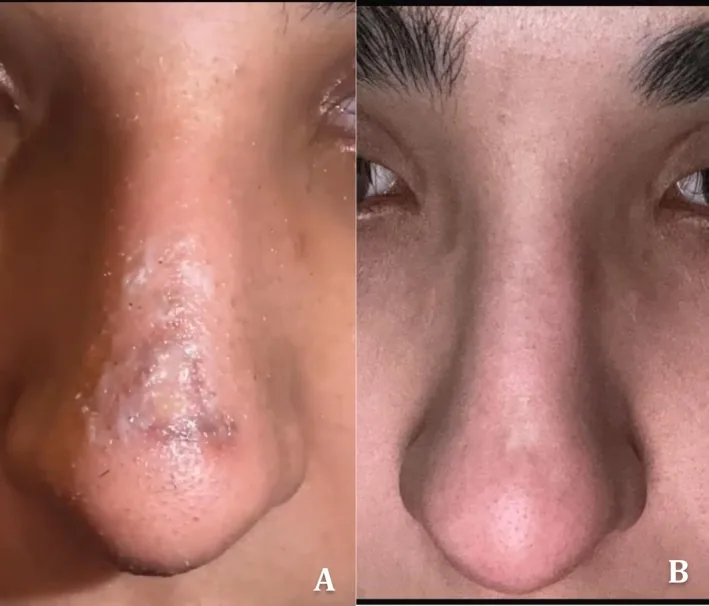
Most of what happens after rhinoplasty is expected, but a few signs cannot wait. The one that matters most for the skin is a change in colour over the bridge, as in this published case.
This flowchart separates what is expected from what is urgent:
flowchart TD
  A[Symptom after rhinoplasty] --> B{Bleeding that won't stop with pressure, or trouble breathing?}
  B -->|Yes| C[Emergency care now]
  B -->|No| D{Fever, worsening pain or spreading redness?}
  D -->|Yes| E[Call your surgeon urgently - possible infection]
  D -->|No| F{Dark, white or ulcerated patch on the bridge?}
  F -->|Yes| E
  F -->|No| G[Routine follow-up as planned]
Frequently asked questions
How do I clean my nose after rhinoplasty?
Gently, and only on the outside at first: soften dried discharge around the nostril rims with a damp cotton bud without pushing anything inside, and do not blow your nose. Many surgeons prescribe a saline spray or rinse to moisten the inside and loosen crusts, but which product and when to start is part of your surgeon's instructions, not a general article.
Why is the nose taped after rhinoplasty?
Tape and the external splint hold the tissues in their new position, protect them from knocks and limit swelling building up under the skin in the first days. Do not remove or wet them until your surgeon says so. Some surgeons ask for extra taping after the splint comes off to help reduce swelling over the bridge and tip.
When does swelling go down after rhinoplasty?
According to the American Society of Plastic Surgeons, initial swelling subsides within a few weeks, but it may take up to a year for the new contour to fully refine, and swelling can come and go and be worse in the mornings during that year. The tip usually settles last, especially in thicker skin.
How long does a rhinoplasty operation take?
It depends on what is being done: smoothing a small hump is a different operation from one that combines septal repair with tip reconstruction. Ask your surgeon how long your procedure is expected to take, what anaesthetic is planned and, most importantly, what the follow-up plan is after you go home.
When to see a clinician
Call your surgeon immediately for bleeding that does not stop with gentle pressure, a fever, pain that is getting worse rather than better, spreading redness, or any change in the colour of the skin over the bridge. Severe difficulty breathing or heavy bleeding is an emergency and should not wait for an appointment. Once the wound has settled, a dermatologist is the natural place for skin problems over the nose: persistent spots, pigmentation, a scar, or the question of when you can return to your usual routine. If you are still deciding whether to have surgery, read about what rhinoplasty costs and what that price should include.
Related articles
- Rhinoplasty: types and what can be achieved
- What rhinoplasty really costs
- Treating enlarged facial pores
- Cosmetic procedures: surgical and non-surgical
- Hair transplant in Turkey: how to choose
Further reading
- Rhinoplasty Aftercare — 111 Harley Street
- What to expect after rhinoplasty — Karidis
- What patients can expect after rhinoplasty — Skin Inc
- Rhinoplasty recovery — American Society of Plastic Surgeons
Medical disclaimer: This article is for health education only and is not a substitute for professional medical advice. If you have a skin condition that concerns you, please consult a dermatologist.