
Whether a hair transplant in Turkey is worth it is decided before you fly, not in the operating room. Three questions settle it: what is causing your hair loss, is there enough donor hair to move, and who will actually perform the surgery? Most of what ranks for this search compares prices and hotel packages and skips all three.
One thing to be clear about up front: InJasmine is a dermatology clinic that consults and refers; we do not perform hair transplants. My role is to diagnose why your hair is thinning, judge whether surgery makes sense for you at all, and help you put the right questions to whichever centre you choose.
Why do so many people go to Turkey for hair transplants?
The stated reasons are cost and volume of experience. Istanbul has a very large number of dedicated hair transplant centres, and many sell all-inclusive packages covering the procedure, hotel and transfers at prices well below Western Europe, the UK or the Gulf. That is real, and plenty of people come home with good results.
There is another side. The International Society of Hair Restoration Surgery (ISHRS) explains that licensing restrictions in Turkey created a black market in which unlicensed technicians perform transplants in private clinics. It describes a "bait and switch": the clinic is marketed on a doctor's name and credentials, and someone else does the surgery. It also warns that cheap, illegal procedures carry risks of misdiagnosis, missed hair disorders and related systemic disease, and unnecessary or ill-advised surgery.
A low price does not tell you which kind of clinic you are dealing with. Nor, for that matter, does a high one. If your trip is for another kind of cosmetic surgery, the questions about flying and aftercare at home are covered in cosmetic surgery in Turkey.
A transplant does not treat the cause of hair loss
This is the most important point in the article, and it is missing from the top search results. A transplant moves follicles from the back and sides of the scalp, where hair is genetically resistant to pattern loss, into thinning areas. It does not stop the underlying process, and it does nothing when the cause is something else entirely.
This flowchart shows when a transplant is even a question worth asking:
flowchart TD
  A[Hair loss or thinning] --> B{Has the cause been diagnosed?}
  B -->|No| C[Dermatology assessment, blood tests if needed]
  B -->|Yes| D{Stable genetic pattern hair loss?}
  D -->|No: iron, thyroid, post-partum, alopecia areata| E[Treat the cause - no surgery]
  D -->|Yes| F{Dense, stable donor area?}
  F -->|No| G[Transplant usually unsuitable]
  F -->|Yes| H[Transplant is an option to discuss]
In clinic, the women I see asking about transplants most often have diffuse shedding that is not genetic at all: depleted iron stores, a thyroid disorder, or shedding after childbirth, illness or a crash diet. These usually improve once the cause is treated. Surgery in those situations wastes both money and follicles you may need later.
Is a hair transplant suitable for women?
Genetic hair loss in women looks different from the male pattern. It rarely produces a bald front; instead there is widening of the parting and diffuse thinning across the crown, progressing in stages as the image below shows.
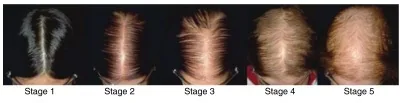
The surgical problem is that diffuse thinning can extend into the donor zone, leaving no truly "permanent" follicles to relocate safely. So in women a transplant remains an option for selected situations — a naturally high hairline, a scar, or pattern loss with a genuinely dense donor area. Otherwise, medical treatment comes first. If your scalp is also flaky or itchy, start by understanding that in causes of a dry scalp.
The donor area is an account you can't top up
Follicles taken from the back of the head do not grow back where they were removed. Every graft extracted is spent from a finite reserve your scalp has to rely on for life, because pattern hair loss carries on after the transplant.
When too many grafts are taken in one session — often to deliver on a promise of high density — the result is what surgeons call overharvesting: a visibly thinned, moth-eaten donor area that is very hard to repair.
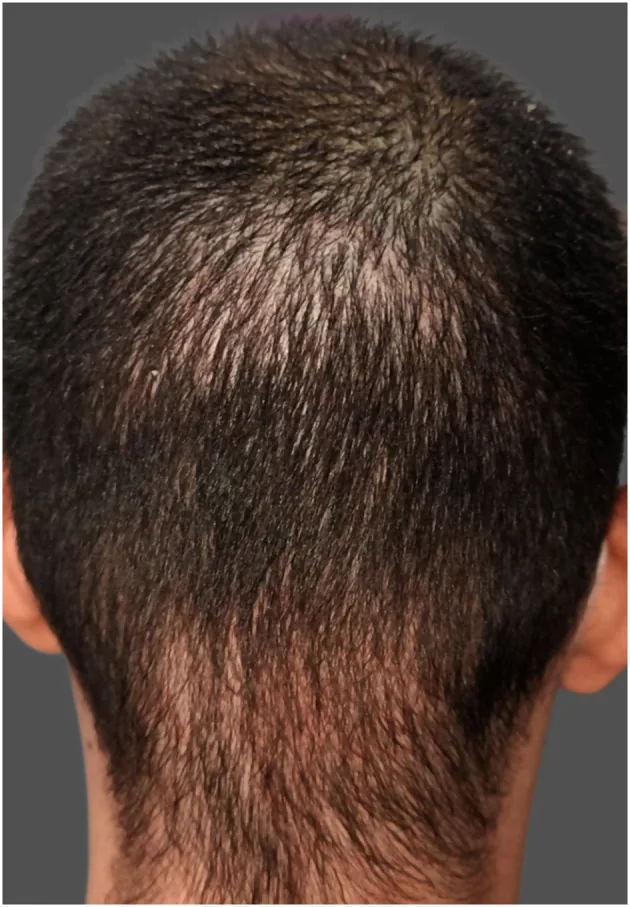
This is why I am wary of offers built around a very large graft count in a single day. The number is not a bonus; it is a withdrawal from an account nobody can pay back into.
How to vet a hair transplant clinic in Turkey
The ISHRS suggests specific questions to ask before booking. I have combined them with what I would add from clinical practice:
| Question | Why it matters | An answer that should worry you |
|---|---|---|
| Who will assess my hair loss and diagnose its cause? | The plan should rest on a diagnosis | "Everyone is a candidate" without an exam |
| Who will make the incisions and extract grafts by hand? | The core of the ISHRS warning | "Our team", with no named doctor or role |
| Will anyone unlicensed take part in the surgery? | Unlicensed staff means no accountability | Evasion |
| Is everyone covered by malpractice insurance? | Your recourse if something goes wrong | "That isn't necessary" |
| How many grafts do you propose, and why? | Protects your donor area | A big number before seeing your scalp |
| What happens if I have a complication at home? | Most recovery happens after you fly back | No remote follow-up plan |
The answer you want is a named doctor who performs the surgical steps personally — and who will tell you "no" if you are not a candidate. A clinic that turns nobody away is not really assessing anybody.
What complications should you know about?
A transplant is genuine surgery, even under local anaesthetic. A 2026 review of follicular unit excision complications covers, among others, forehead and periorbital swelling in the first days, folliculitis, temporary shedding around the transplanted area, donor overharvesting, recipient-site necrosis, and an unnatural hairline.
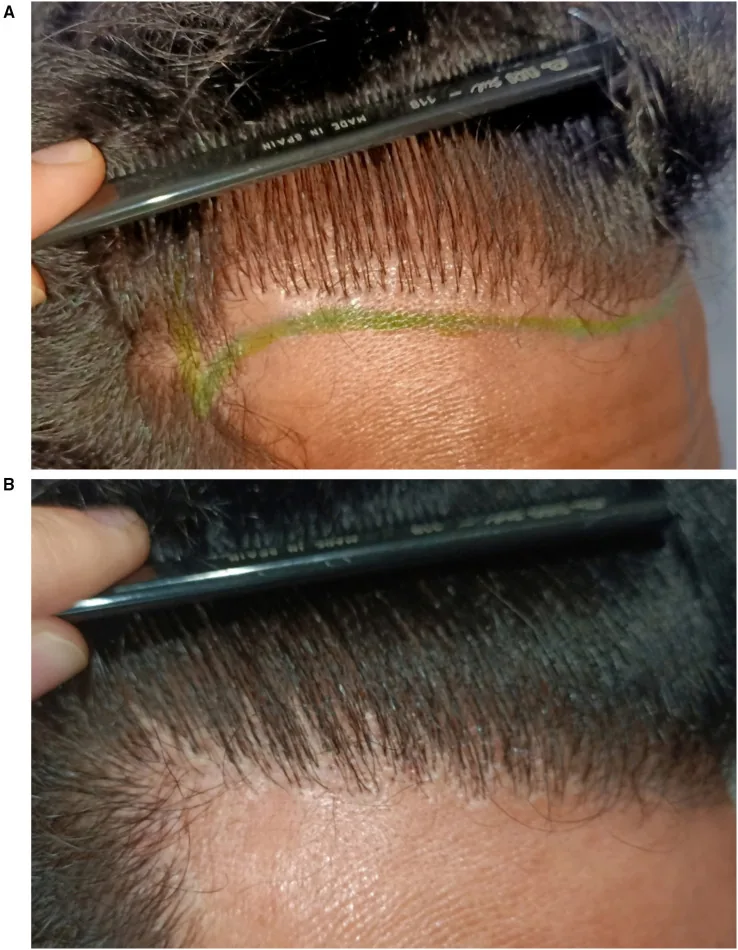
The hairline in particular is an artistic, medical decision: its angle, density and irregularity are what make a result look natural or obviously done. That is why "who places the front row?" is a better question than "which hotel?".
Once you are home, these are the signs that need a doctor rather than a WhatsApp message to the clinic:
flowchart TD
  A[Back home after a transplant] --> B{Spreading redness, pus or fever?}
  B -->|Yes| C[Urgent medical review - possible infection]
  B -->|No| D{Dark patches or thick crusts in the grafted area?}
  D -->|Yes| E[Prompt review - possible poor blood supply]
  D -->|No| F[Shedding of transplanted hairs in early weeks is expected]
What about cost and patient stories?
Prices move quickly and vary widely between clinics as of 2026, so I won't quote figures that will be wrong within months. What does not change is how to read them: compare what the price includes — who operates, the graft count and its rationale, and follow-up after you return — before comparing the number itself. It is the same logic I set out for the cost of rhinoplasty.
Read online "my hair transplant in Turkey" stories with care. Many are filmed in the first few months, before the result can be judged, and almost none show the donor area — which is where the long-term cost of a poorly planned procedure shows up. For a broader view of how surgical and non-surgical aesthetic options compare, see cosmetic procedures, surgical and non-surgical.
Frequently asked questions
How do I know a hair transplant clinic in Turkey is trustworthy?
Ask one question before anything else: who will make the incisions and extract the grafts with their own hands? The International Society of Hair Restoration Surgery warns about clinics that advertise a doctor's name while unlicensed technicians perform the surgery. Ask for the surgeon's name and licence, their exact role on the day, and whether everyone involved carries malpractice insurance.
Is a hair transplant suitable for women?
Only sometimes. Most female hair loss is diffuse thinning across the crown that can involve the donor area too, so there may be no stable follicles to move. Many cases in women are driven by low iron, thyroid disease or post-partum shedding, which are treated without surgery. Diagnosis always comes before any decision about transplantation.
Why is a hair transplant cheaper in Turkey?
Part of the gap reflects lower operating costs and the sheer size of the market. Part may reflect technicians rather than doctors doing the surgery in some clinics. Price alone cannot tell you which you are looking at, so compare it against who operates and what follow-up is included, not against other numbers.
When will I see the result of a hair transplant?
Transplanted hairs usually shed in the first weeks and then regrow gradually. Judging the result takes many months, and clinics themselves describe a year or more for the final outcome. Do not judge it early, and be wary of any promise of a fixed date.
When to see a clinician
Before booking any trip, your hair loss deserves a dermatology assessment to establish its cause. Sudden shedding or hair coming out in clumps, round bald patches, an itchy, red or scaly scalp, or shedding after childbirth, illness or a strict diet all need a diagnosis, not surgery. And if you come home from a transplant and notice spreading redness, pus, fever or dark patches in the grafted area, see a doctor straight away rather than waiting for a remote follow-up appointment.
Related articles
- Causes of a dry scalp — and when it isn't dryness
- Why skin and hair dry out together
- Cosmetic procedures: surgical and non-surgical
- What rhinoplasty really costs
- Facial cosmetic procedures
Further reading
- Hair transplantation in Turkey: a 2026 guide for international patients — Quotenmeter
- Best Hair Transplant in Turkey: Your Ultimate Medical Guide — Doctronic
- Best hair transplant clinics in Turkey — The Berliner
- Buyer beware: medical tourism for hair transplants can have costly consequences — ISHRS
Medical disclaimer: This article is for health education only and is not a substitute for professional medical advice. If you have a skin condition that concerns you, please consult a dermatologist.