
There's no evidence that coconut oil lightens skin or fades pigmentation. It's a good moisturiser that makes dry skin softer and shinier, so skin can look fresher, but it doesn't affect the pigment that determines your colour. And the popular mixtures that combine it with lemon can cause dark patches rather than lighten them.
The Arabic pages that rank for this search list many benefits of coconut oil and suggest mixing it with lemon, turmeric or baking soda for lightening, without citing any study on lightening itself. This article explains what the oil actually does, and what it doesn't, from published research.
What does coconut oil do for skin?
Coconut oil is rich in saturated fatty acids, mainly lauric acid. A 2017 review summarises the effects of plant oils on the skin:
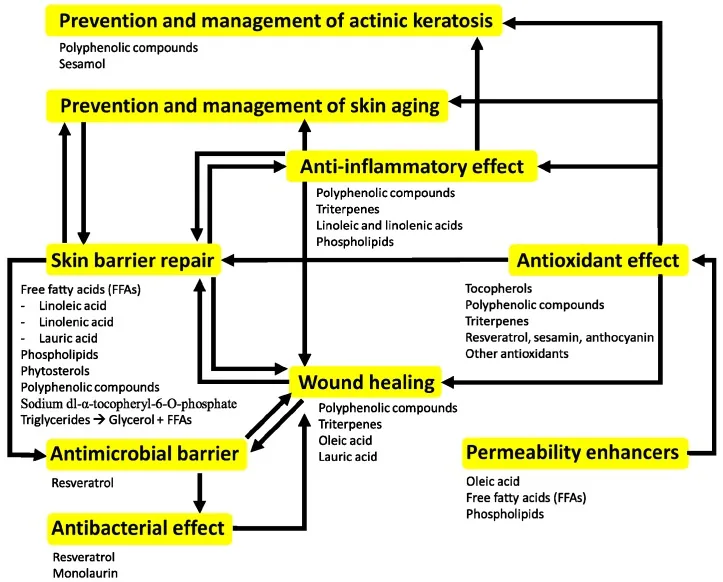
The review cites small trials finding that coconut oil moisturises dry skin, and laboratory work suggesting antibacterial activity. Notice that lightening isn't among the effects it lists: moisturising and lightening are different things.
Where coconut oil genuinely helps
According to the same review, coconut oil was found to be as effective and safe as mineral oil when used as a moisturiser for dry skin, and it helped children with eczema in a small trial. That makes it a reasonable, inexpensive option for moisturising the body and dry areas such as elbows and heels. But that benefit doesn't make it right for everything: oily or acne-prone skin may not tolerate it on the face, and some people are sensitive to it. If you have eczema, use it after talking to your doctor, not as a substitute for your treatment.
Coconut oil is sometimes promoted as a natural sunscreen. Its protection is very weak and doesn't compare with a real sunscreen, and relying on it increases tanning and dark spots, which is the opposite of the lightening goal.
Why oil doesn't lighten skin
Skin colour comes from melanin, a pigment made by specialised cells at the base of the epidermis and passed to the surrounding cells. A 2022 review illustrates the process:

Tested lightening ingredients work on this process: they slow pigment production or reduce its transfer. Oil mostly stays on the skin's surface, moisturising it and reflecting light, which is why skin can look brighter for a few hours without its colour changing.
| Claim about coconut oil | The reality | A better option |
|---|---|---|
| Lightens skin | No evidence | Sunscreen and a tested pigment ingredient |
| Removes dark spots | No evidence | Azelaic acid, niacinamide or vitamin C |
| Moisturises dry skin | True | Suits the body and dry skin |
| Protects from the sun | Very weak protection | Broad-spectrum sunscreen |
| Suits all skin types | Can worsen spots on oily skin | A light, non-comedogenic moisturiser |
Harmful mixtures: lemon and baking soda
The best-known lightening recipe mixes coconut oil with lemon juice. But lemon and other citrus contain substances that react with sunlight, causing burn-like inflammation followed by dark patches. A 2024 review explains the stages of this reaction:
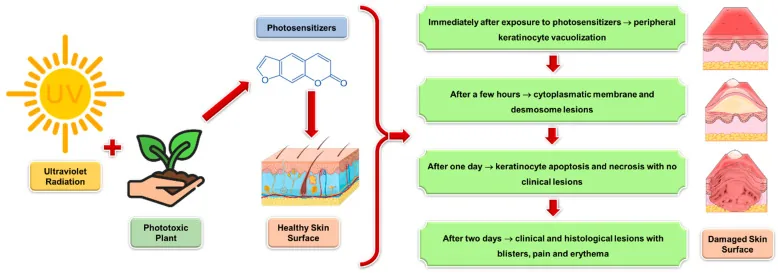
The oil doesn't protect against this reaction, and may keep the lemon in contact with the skin for longer. Baking soda is alkaline, irritates the skin and weakens its barrier, and turmeric can leave a yellow stain and cause allergy. On brown skin, any inflammation can leave a dark mark that lasts for months, so a harsh lightening recipe can create the very problem it promised to fix.
Another common suggestion is to leave coconut oil on overnight under a thick layer, or to warm it and massage it in for long periods. Heavy occlusion on facial skin that's prone to blocked pores can lead to small bumps and spots, and vigorous daily massage adds friction that some skin reacts to. If you enjoy using the oil, keep the layer thin, use it where your skin is dry, and judge it by how your skin feels and behaves over a few weeks rather than by any change in colour.
flowchart TD
  A[Considering coconut oil for lightening] --> B{Is your goal fading spots or pigmentation?}
  B -->|Yes| C[Sunscreen and a tested pigment ingredient]
  B -->|No, moisturising| D{Is your skin oily or spot-prone?}
  D -->|Yes| E[A light moisturiser instead of oil]
  D -->|No| F[The oil suits dry skin and the body]
How to use coconut oil safely
Use it as a moisturiser for the body or dry areas such as elbows and heels, on damp skin after a shower. If your facial skin is dry, try it on a small area for several days first, and stop if new spots appear. Choose a pure, fragrance-free oil and store it away from heat. If you use pigment products, apply them first to clean skin, then the oil on top only on dry areas if you need it, so it doesn't get in their way. Don't mix it with lemon, baking soda or coarse scrubs.
If your goal is fading spots or pigmentation, the tested ingredients are covered in natural ways to brighten your face, and treating pigmentation in the fastest way to remove facial pigmentation.
Understanding what you want to change
It helps to separate your natural skin tone from the changes on top of it. Your underlying colour is inherited and healthy, and no safe product changes it. What can improve is pigmentation that has been added: a suntan, dark marks after spots or inflammation, melasma on the cheeks and forehead, and sun spots with age. Each responds to a different approach, and sun protection underpins all of them. If you're not sure what kind of pigmentation you have, that's the most useful question to take to a dermatologist, because the answer decides which products are worth your money. Coconut oil can still have a place in your routine as a body moisturiser, just not as a lightening treatment.
mindmap
  root((Coconut oil and skin))
    Helps
      Moisturising dry skin
      Body and elbows
    Doesn't help
      Lightening
      Removing spots
    Be careful
      Mixing with lemon
      Oily skin
Frequently asked questions
Does coconut oil lighten the skin?
There's no evidence that coconut oil lightens skin or fades pigmentation. It's a good moisturiser that makes dry skin softer and shinier, so skin can look fresher, but it doesn't affect pigment production.
Does coconut oil with lemon lighten the face?
This mixture isn't recommended. Lemon contains substances that react with sunlight to cause inflammation and dark patches that can last for months, and the oil doesn't prevent that. The result is often the opposite of what you want.
Does coconut oil cause spots?
It can make spots worse in oily or acne-prone skin because it's a heavy oil. On dry skin or on the body, many people tolerate it well.
What's a better option for fading dark spots?
Daily sunscreen first, then a product containing a tested pigment ingredient such as azelaic acid, niacinamide or vitamin C. If the spots are melasma or don't improve, a dermatologist can assess them.
When to see a clinician
See a dermatologist if a recipe causes burning, blisters or dark patches, if a new spot appears that changes in size, colour or border, if widespread darkening appears suddenly without an obvious cause, or if pigmentation keeps returning despite sun protection.
Related articles
- Natural ways to brighten your face
- The fastest way to remove facial pigmentation
- Best oils for wrinkles
- Natural face masks
Further reading
- Anti-Inflammatory and Skin Barrier Repair Effects of Topical Application of Some Plant Oils — International Journal of Molecular Sciences
- New Insights Concerning Phytophotodermatitis Induced by Phototoxic Plants — Life
- Melasma: diagnosis and treatment — American Academy of Dermatology
Medical disclaimer: This article is for health education only and is not a substitute for professional medical advice. If you have a skin condition that concerns you, please consult a dermatologist.