

Nothing natural changes your underlying skin colour, but some naturally derived ingredients, such as arbutin, licorice extract, azelaic acid and vitamin C, may ease pigmentation and dark spots with regular use. Popular home remedies such as lemon, baking soda and toothpaste irritate the skin and can deepen pigmentation rather than lighten it. Daily sunscreen remains the most important step.
The Arabic pages that rank for this search list dozens of home recipes, from lemon and turmeric to starch and yoghurt, and promise quick results, without separating lightening skin colour from treating pigmentation, or what has evidence from what does harm. This article explains the difference, from published research.
How skin colour is made
Skin colour comes from melanin, a pigment made by specialised cells at the base of the epidermis and then passed to the surrounding cells. A 2022 review illustrates the process:
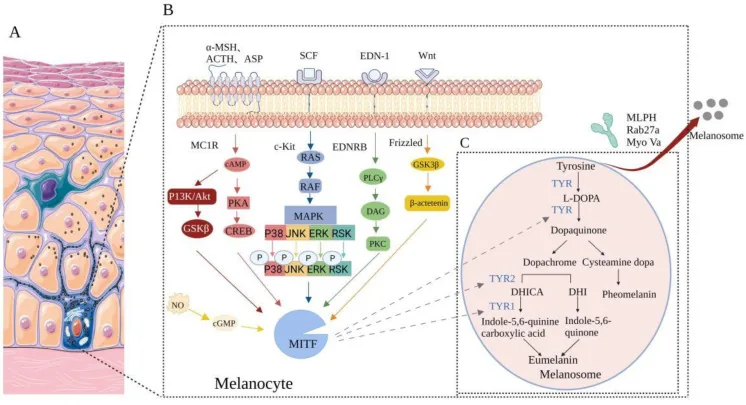
Sun is one of the strongest triggers of melanin production, which is why no brightening ingredient works without sun protection. Useful ingredients act at different points in this process: some slow pigment production, some reduce its transfer, and some speed up renewal of the surface layer. That's also why pigmentation takes time to fade: existing pigment leaves gradually as the skin naturally renews itself.
Lightening your colour, or treating pigmentation?
It helps to be clear about what you actually want. Your underlying skin colour is inherited and healthy, and no safe ingredient changes it. What can improve is what's added to it: a suntan that fades gradually with protection, dark marks after spots or inflammation, melasma that usually appears on the cheeks and forehead, and sun spots with age. Each type has its own approach, and the same ingredient may help one and not another. So knowing your type of pigmentation matters more than choosing a recipe. The causes of facial spots are covered in causes of brown spots on the face.
Naturally derived ingredients with evidence
The same review groups ingredients from natural sources by the pathway of pigment formation they act on:
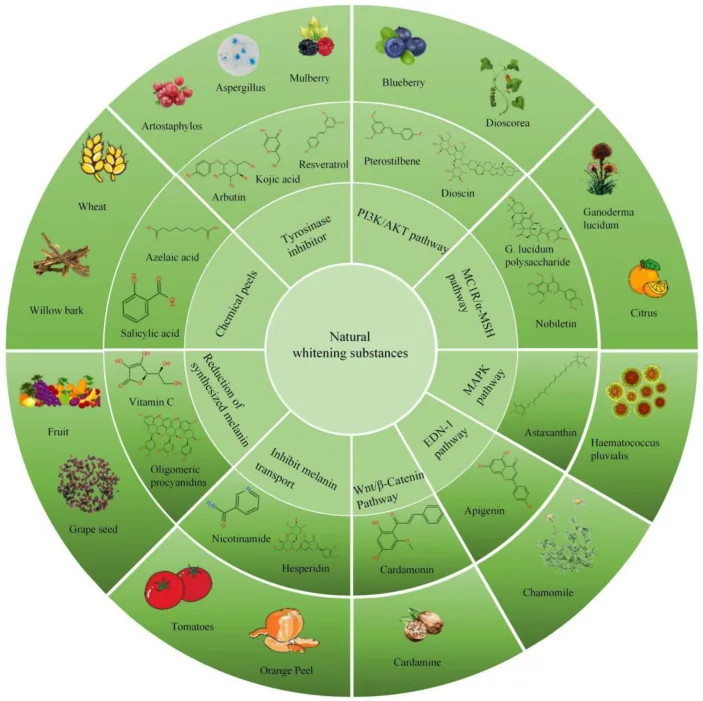
Important: these are extracted, purified ingredients in tested products, not the fruit or plant itself. Putting wheat on your face doesn't deliver azelaic acid, and orange juice doesn't deliver stable vitamin C that reaches the skin.
| Ingredient | Natural source | Strength of evidence for pigmentation | Notes |
|---|---|---|---|
| Azelaic acid | Grains | Good | Used for melasma and post-acne marks; some strengths are prescription-only |
| Vitamin C | Fruit | Moderate | Oxidises easily; useful in the morning before sunscreen |
| Niacinamide | Vitamin B3 | Moderate | Gentle and tolerated by most skin types |
| Arbutin | Bearberry plant | Moderate | Acts on the enzyme that makes pigment |
| Licorice extract | Licorice root | Limited | Gentle and soothing |
| Kojic acid | Fungi | Moderate | Can cause allergy in some people |
Home remedies that cause harm
Lemon and other citrus contain substances that react with sunlight, causing a burn-like inflammation followed by dark patches that can last for months. A 2024 review explains the stages of this reaction:
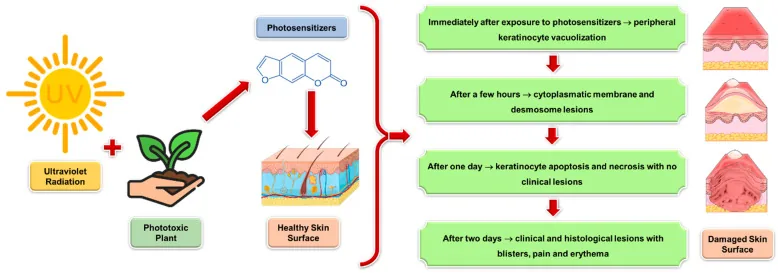
Baking soda and toothpaste are alkaline; they irritate the skin and weaken its barrier. Coarse scrubs such as sugar, salt and coffee cause micro-scratches and inflammation, and inflammation itself leaves dark marks on brown skin. Turmeric can leave a yellow stain and cause allergy. Honey, yoghurt and aloe vera are generally harmless, but the evidence that they lighten skin is weak. Coconut oil, another favourite, is covered in coconut oil for skin lightening. Rice water, potato juice and milk masks fall into the same category: unlikely to hurt most skin, but there's no good evidence they change pigmentation, so they're best seen as pleasant extras rather than treatment. And be wary of lightening creams of unknown origin, some of which contain harmful substances, as covered in Pakistani whitening creams.
flowchart TD
  A[You want to brighten your face] --> B{Specific spots or patches?}
  B -->|Yes| C[Sunscreen and a tested ingredient such as azelaic acid or vitamin C]
  B -->|No| D{An overall darker tone than usual?}
  D -->|Yes| E[Often a suntan: protection is enough over time]
  C --> F{No improvement after regular use?}
  F -->|Yes| G[Dermatologist to identify the pigmentation type]
A simple routine for an even tone
In the morning: a gentle cleanser, a vitamin C serum if you'd like one, then moisturiser and a broad-spectrum sunscreen, reapplied during long periods outdoors. In the evening: cleanser, then a product with a pigment-targeting ingredient such as azelaic acid or niacinamide, then moisturiser. Introduce one new ingredient at a time and patch-test it on a small area first. Remove sources of inflammation such as rubbing and harsh scrubs. Treating pigmentation in more depth is covered in the fastest way to remove facial pigmentation.
If you're pregnant or breastfeeding, ask your doctor before using any pigmentation product, because some ingredients aren't used during this time. Remember too that melasma often worsens with pregnancy, the contraceptive pill and heat, so it needs a long-term plan rather than a quick recipe.
Sunscreen deserves its own note, because it's where most routines fall short. Apply enough to cover the whole face evenly, including the hairline, ears and neck, and reapply after a few hours outdoors or after sweating. For melasma and dark marks on brown skin, a tinted sunscreen containing iron oxides can help, because visible light as well as ultraviolet light can deepen this type of pigmentation. A wide-brimmed hat adds protection that no cream can match on a long day outside.
Patch testing and realistic expectations
Even gentle, naturally derived ingredients can irritate. Before using a new product on your whole face, apply a little behind your ear or along your jaw for several days and watch for redness, itching or burning. Irritation matters more than it seems on brown skin, because the inflammation it causes can itself leave dark marks, undoing the progress you're working towards. Expect gradual change: pigmentation fades as the skin renews itself, and lasting results depend on keeping up sun protection after the marks have faded.
mindmap
  root((Natural face brightening))
    Has evidence
      Azelaic acid
      Vitamin C
      Arbutin
      Niacinamide
    Harmful
      Lemon
      Baking soda
      Coarse scrubs
    Essential
      Sunscreen
Frequently asked questions
What's the best natural thing to lighten the face?
No natural ingredient changes your underlying skin colour. But some naturally derived ingredients, such as arbutin, licorice extract, azelaic acid and vitamin C, may ease pigmentation and dark spots with regular use in properly formulated products, alongside daily sunscreen.
Does lemon lighten the face?
It isn't recommended. Lemon juice is acidic and irritates the skin, and it contains substances that react with sunlight to cause burns and dark patches that can last for months, which is the opposite of what you want.
Do turmeric or honey lighten the skin?
Honey is a gentle moisturiser, but there's no good evidence that it lightens skin. Turmeric can leave a yellow stain and cause allergy in some people, and research on it for pigmentation is limited.
When will I see results from natural lightening ingredients?
Pigmentation improves slowly with any ingredient, needs regular use and sun protection, and can return if you stop protecting your skin. If you see no improvement after long, regular use, see a dermatologist to identify the type of pigmentation.
When to see a clinician
See a dermatologist if a new spot appears that changes in size, colour or border, if widespread darkening appears suddenly without an obvious cause, if a remedy causes burning, blisters or dark patches, or if your pigmentation is melasma that keeps coming back.
Related articles
- The fastest way to remove facial pigmentation
- Natural face masks
- How to get rid of a suntan
- Pakistani whitening creams
Further reading
- Advances in Biomedical Functions of Natural Whitening Substances in the Treatment of Skin Pigmentation Diseases — Pharmaceutics
- New Insights Concerning Phytophotodermatitis Induced by Phototoxic Plants — Life
- Melasma: diagnosis and treatment — American Academy of Dermatology
Medical disclaimer: This article is for health education only and is not a substitute for professional medical advice. If you have a skin condition that concerns you, please consult a dermatologist.