Natural face masks can soothe the skin for a while: clay absorbs oil on oily skin, finely ground oatmeal calms dry and sensitive skin, and honey is a gentle humectant. But on their own they don't treat acne, pigmentation or wrinkles, and some popular ingredients such as lemon, cinnamon and baking soda irritate the skin and can leave it darker. "Natural" doesn't mean safe, either: some products sold as natural have been found to contain banned substances.
The Arabic pages that rank for this search offer dozens of recipes with lemon, turmeric, cucumber and cinnamon, promising whitening and tightening, without mentioning what could do harm. This article separates what has some basis from what's a promise without evidence.
What can a mask actually do?
A mask sits on the skin for a few minutes and is then rinsed off, so its effect is superficial and temporary. It can absorb oil from the surface, add temporary moisture, or ease a feeling of tightness. It doesn't reach deep into the follicle to treat spots, down to the pigment layer to fade patches, or into the dermis to build collagen and tighten the skin. Realistic expectations protect you from disappointment and from overdoing it, which is how most mask-related irritation happens.
That doesn't make masks pointless. A pleasant, gentle ritual that leaves the skin feeling comfortable has value, as long as it's not standing in for treatment of an actual skin condition and isn't damaging the barrier along the way.
Clay: for oily skin
Clays such as bentonite and kaolin absorb oil from the surface of the skin, so shine is reduced for a few hours. In a 2025 randomised trial of sixty patients with moderate acne, a bentonite mask with a plant extract was added to an oral medicine, and spots and severity fell more than in the comparison group:
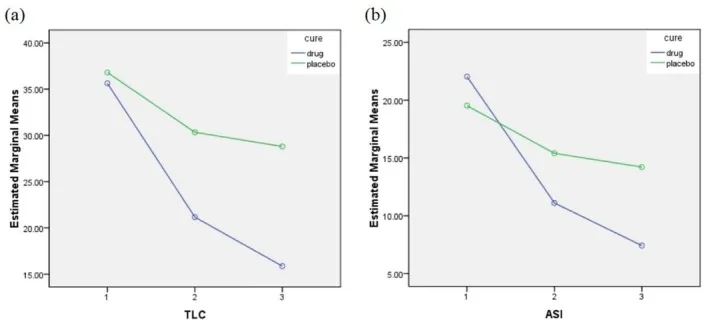
But the mask was an add-on to an oral antibiotic and wasn't tested on its own, and the trial was small. So a clay mask may be a gentle extra for oily skin, not a replacement for acne treatment. Don't leave it on until it cracks, because that over-dries the skin, and dry, irritated skin often responds by looking shinier, not less.
Oatmeal and honey: for dry and sensitive skin
Very finely ground oatmeal, known as colloidal oatmeal in skincare products, is soothing and moisturising, and it's widely used in products for sensitive skin and eczema. Honey on its own is a humectant that draws water into the skin, but it doesn't treat spots, as explained in honey for acne. A simple mask of finely ground oats with a little water or plain yoghurt may comfort dry skin, provided you're not allergic to any of the ingredients.
For people with oat or gluten sensitivities, or a known allergy to dairy or bee products, these "gentle" options are not gentle at all. Patch testing first is the simplest protection.
What to avoid in homemade masks
| Ingredient | The problem |
|---|---|
| Lemon and vinegar | Acidic and irritating; lemon plus sun can cause burns and darkening |
| Cinnamon and clove | Irritation and contact allergy |
| Baking soda and toothpaste | Alkaline; damages the skin barrier |
| Concentrated essential oils | Allergy and irritation |
| Large amounts of turmeric | Can stain yellow and irritate some skin |
| Charcoal and glue peel-off masks | Strip the surface layer and irritate pores |
If redness, stinging or itching follows a mask, read facial skin inflammation. If your goal is a brighter, more even tone, which naturally derived ingredients have evidence is covered in natural ways to brighten your face.
"Natural" doesn't mean safe
Many people choose "natural" products to avoid chemicals. But a 2026 study reviewed European safety alerts about cosmetics marketed as natural and found that most of the problems were unauthorised substances, including a potent steroid, hydroquinone and an allergy-causing hair dye ingredient:
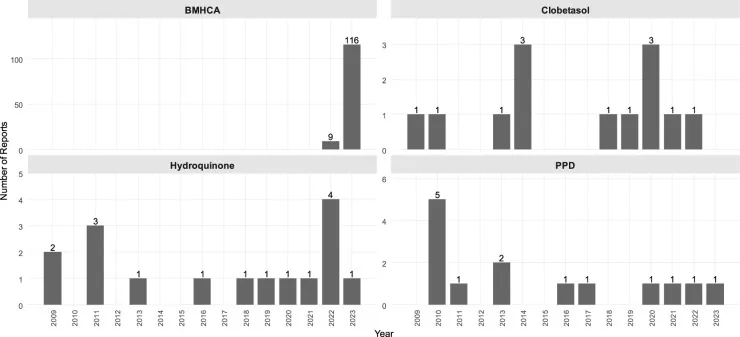
A ready-made mask labelled "natural" that promises rapid lightening deserves caution, especially if its ingredient list isn't clear. The authors conclude that the word "natural" on a cosmetic can be misleading.
How do you know a mask caused an allergy?
Allergy shows as itching, redness and sometimes swelling where the mask was applied, and it can be delayed by a day or two. A review of cosmetic allergy suggests an organised approach: review what you used, then repeatedly test the suspected product on a small area, then patch test with a dermatologist:
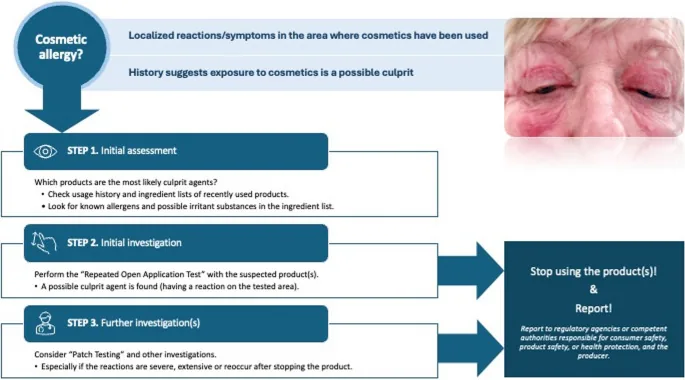
The same review notes that fragrances and some "natural" ingredients such as propolis are among the more frequent cosmetic allergens, which is a useful reminder that plant-derived doesn't mean allergy-free.
How to apply a mask safely
Patch test a new ingredient first on a small area near your ear for a full day. Then apply a thin layer to a clean face, avoiding the eyes and lips, leave it on for only a few minutes, rinse with lukewarm water without scrubbing, and follow with your usual moisturiser. Use clean ingredients prepared fresh, and don't keep a mixture for days. Fresh food ingredients such as yoghurt, fruit and egg spoil quickly at room temperature, and a contaminated mixture on the face is the last thing irritated skin needs. Don't apply any mask to cracked or inflamed skin, after a peel, or while using a retinoid, without asking your dermatologist, because the skin is more reactive then.
flowchart TD
  A[You want a natural mask] --> B{Oily, shiny skin?}
  B -->|Yes| C[Clay for a few minutes once or twice a week]
  B -->|No| D{Dry or sensitive?}
  D -->|Yes| E[Ground oatmeal or plain honey]
  D -->|No| F[A simple mask or none]
  C --> G{Redness or stinging?}
  E --> G
  G -->|Yes| H[Rinse off and stop]
mindmap
  root((Natural face masks))
    May help
      Clay for oil
      Oatmeal to soothe
      Honey to hydrate
    Avoid
      Lemon and vinegar
      Cinnamon
      Baking soda
    Remember
      Temporary effect
      Patch test first
      Natural isn't always safe
Frequently asked questions
What is the best natural face mask?
It depends on your skin type. Clay suits oily skin because it absorbs oil, finely ground oatmeal suits dry and sensitive skin because it's soothing, and plain honey is a gentle humectant. But their effect is temporary and they don't treat skin conditions.
Are natural face masks always safe?
No. Lemon, cinnamon, vinegar, baking soda and essential oils irritate the skin and can cause allergy or darkening. Products sold as natural have also been found to contain banned substances such as steroids and hydroquinone.
How often should I use a natural face mask?
Once or twice a week is enough for most people, for a short time before rinsing. Overusing clay masks dries the skin, and repeating any mask on irritated skin makes it worse.
Does a clay mask treat acne?
It may reduce shine on oily skin temporarily. In a small randomised trial, acne improved more when a bentonite mask was added to medication, but it wasn't tested on its own, so it isn't a substitute for acne treatment.
When to see a clinician
Rinse the mask off straight away and seek medical help if your face, eyelids or lips swell, if redness and itching are severe, or if blisters appear. See a dermatologist too if darkening follows a mask containing lemon, or if you have spots or pigmentation that haven't improved with home care, as these need evidence-based treatment.
Related articles
Further reading
- Potential side effects of toxic and restricted substances found in cosmetics declared to be of natural origin — Frontiers in Public Health
- What is New in Contact Allergy To Cosmetics for Physicians, Cosmetologists, and Cosmetic Users? — Current Allergy and Asthma Reports
- 10 skin care secrets for healthier-looking skin — American Academy of Dermatology
Medical disclaimer: This article is for health education only and is not a substitute for professional medical advice. If you have a skin condition that concerns you, please consult a dermatologist.