Chin wrinkles are mostly not lines at all but a "dimpled chin": an orange-peel surface that appears when the chin muscle contracts under the skin, sometimes with a horizontal crease below the lower lip. Because the main cause is an overactive muscle, the most direct treatment relaxes it in clinic, while daily skincare improves the skin on top without changing how it moves.
The Arabic pages that rank for this search mention the "strawberry chin" and suggest chin exercises and yoga. But they don't explain that the dimpling comes from a muscle doing too much, so exercising it doesn't help. This article explains the anatomy of the chin, how to tell the types apart, and what softens each one.
The chin muscle: where the dimpling comes from
The mentalis is a small muscle that runs from the bone below the front teeth directly into the skin of the chin. When it contracts, it lifts and pushes the lower lip and pulls on the skin it is attached to, which is what produces the dimpling. The muscle varies in shape from person to person: in an anatomical study of forty-four half-faces, it was dome-shaped in most cases and flat and thin in a few:
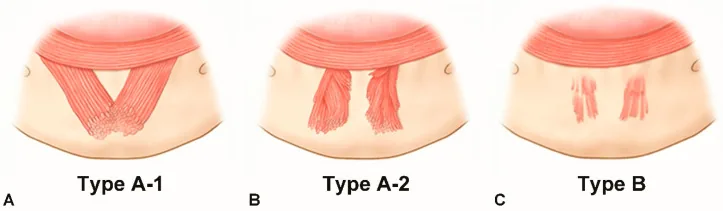
This variation explains why one woman's chin dimples strongly and another's barely at all, and why injecting this muscle needs a precise knowledge of its anatomy.
You can see the muscle at work yourself. Look in a mirror and press your lips together firmly, as if concentrating: if the chin puckers into small pits and bumps, that is the mentalis. Relax your lips and let your mouth fall slightly open, and the surface usually smooths out again. That simple test tells you the dimpling is dynamic, which matters for choosing treatment.
What makes chin wrinkles worse?
- Repeated movement: pursing the lips, concentrating, and some speech habits all engage the chin muscle.
- Chin shape: when the chin is short or set back, the muscle may work harder to support the lower lip and close the mouth.
- Age: the skin thins and the collagen and fat beneath it decline, so dimpling shows with even a light contraction.
- Sun and smoking: both speed collagen breakdown across the whole face, the chin included.
The three types: how to tell them apart
| Type | Look | When it shows | Best tool |
|---|---|---|---|
| Dimpled chin | Orange-peel surface | When the muscle contracts | The toxin |
| Horizontal crease below the lip | A line separating lip from chin | Deepens with age, visible at rest | Filler, sometimes with toxin |
| Lines running down from the mouth corners | Two lines towards the chin | With volume loss and sagging | Assessing volume and support |
flowchart TD
  A[Wrinkles on the chin] --> B{Does the surface dimple when you press your lips together?}
  B -->|Yes| C[Overactive chin muscle - the toxin]
  B -->|No| D{A fixed horizontal crease below the lip?}
  D -->|Yes| E[Filler, or combined with the toxin]
  D -->|No| F[Lines from the mouth corners - assess volume]
The toxin: relaxing the muscle
The toxin relaxes the chin muscle so it pulls less on the skin, and dimpling with movement decreases. A technique published in 2026 describes injecting this muscle from inside the mouth for greater precision, and it was applied in three cases while preserving lower lip movement:
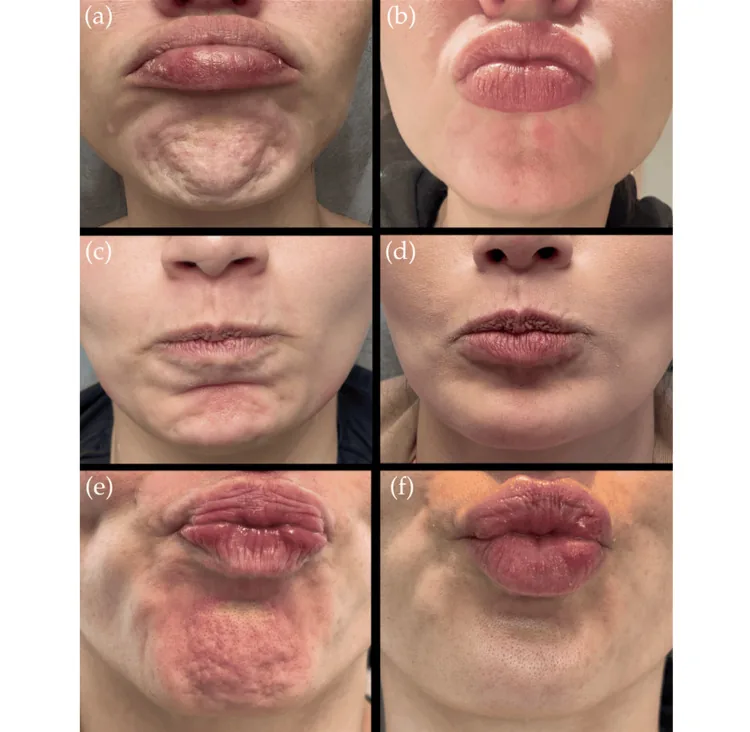
These are just three cases in a technical report, not a comparative trial. What they show is the principle: when the muscle relaxes, the dimpling softens. The main risk is weakness of the lower lip if the toxin spreads to neighbouring muscles, which is why this injection needs a clinician who knows the anatomy of the area well. For what the toxin and its alternatives offer, read Botox alternatives for wrinkles.
The horizontal crease below the lower lip behaves differently. Early on it deepens mainly when the muscle contracts, but with age it can stay visible at rest as the skin and soft tissue thin. A crease like that is often a candidate for a small amount of filler placed by an experienced injector, sometimes alongside the toxin, rather than toxin alone.
Supporting the chin: when shape is part of the problem
If the chin is short or set back, supporting it may be part of the answer. In a randomised trial in adults of Chinese origin, hyaluronic acid filler improved chin retrusion at six months more than in an untreated group:
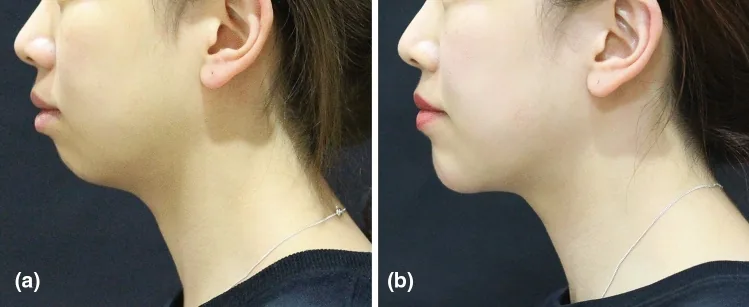
This study measured chin shape, not the dimpling itself, but it shows that filler changes how the chin is supported. When filler suits and when other options do is explained in non-surgical chin augmentation.
What helps at home, and what doesn't
A retinoid at night and sunscreen in the morning improve the quality of the skin over the muscle and slow collagen loss, but they don't relax the muscle, so don't expect them to hide the dimpling when it moves; see best serum for wrinkles. As for chin exercises, there's no good evidence that they soften wrinkles, and the dimpling comes from a muscle that is already working too hard.
It can also help to notice when you are tensing your chin. Many people press their lips together while reading, working at a screen or concentrating, and simply becoming aware of the habit can reduce how often the muscle is engaged. That won't erase established lines, but it costs nothing.
mindmap
  root((Chin wrinkles))
    Cause
      Chin muscle contraction
      Short chin
      Thinning skin
    Clinic
      The toxin
      Filler
    Home
      Retinoid
      Sunscreen
Frequently asked questions
What causes chin wrinkles?
Most come from the chin muscle, which contracts when you purse your lips, speak or try to close your mouth, pulling on the skin above it so it looks dimpled like orange peel. Thinning skin and declining collagen and fat make it worse with age, and a short chin that makes the muscle work harder may add to it.
How do I get rid of chin wrinkles?
Dimpling caused by the muscle contracting is softened by injecting the toxin into the chin muscle, and when a crease is visible at rest, hyaluronic acid filler may be added. At home, retinoids and sunscreen improve skin quality, but they don't relax the muscle.
Do chin exercises get rid of wrinkles?
There's no good evidence that they do. Chin dimpling comes from the chin muscle contracting in the first place, so exercising that muscle doesn't relax it. Exercises may help neck posture and the feeling of firmness, but they aren't a treatment for wrinkles.
What is a cobblestone chin?
It is the common name for chin dimpling, when the surface of the chin looks like orange peel or a strawberry as its muscle contracts. It is usually dynamic at first and softens when the muscle relaxes.
When to see a clinician
See a dermatologist if chin dimpling or the crease below your lip bothers you and you want to know whether the toxin, filler or a combination suits it. See one promptly if, after any injection in the area, you notice weakness of the lower lip, difficulty speaking or drinking, or a clearly uneven smile. If sudden weakness appears on one side of your face without any injection, seek urgent care straight away.
Related articles
- Non-surgical chin augmentation
- Botox alternatives for wrinkles
- Smile lines
- Facial lines
- How to reduce wrinkles
Further reading
- Chin Botox: A Fix for Pebble Chin — Aglow Dermatology
- Effective Locations for Injecting Botulinum Toxin into the Mentalis Muscle — Toxins
- A Novel Intraoral Technique for Botulinum Toxin Type A Application in the Mentalis Muscle — Cureus
Medical disclaimer: This article is for health education only and is not a substitute for professional medical advice. If you have a skin condition that concerns you, please consult a dermatologist.