The right Botox alternative for wrinkles depends on the type of line: only the toxin itself genuinely relaxes the expression lines your face makes when it moves, but for fine lines and sun-related wrinkles the best-studied alternative is a topical retinoid with daily sunscreen. Deep, fixed lines respond to fillers or in-clinic procedures, not creams. "Botox-like" creams, wrinkle patches and facial exercises have weak or no evidence behind them.
The Arabic pages that rank for this search list scattered alternatives, from other injections to vitamins and patches, without saying which are studied and which are marketing, and without separating one type of wrinkle from another. This article ranks the alternatives by evidence.
First: are your lines dynamic or static?
Before looking for an alternative, it helps to know what Botox actually does. It relaxes the muscle contracting under the skin, so the lines that form with movement soften: forehead lines, the two vertical lines between the brows, and the crow's feet that appear when you smile. These are called dynamic wrinkles. They appear when the facial muscles move and fade, or soften, when the face is at rest.
Over the years, some of them become static lines that show even when your face is still, because collagen in the dermis has declined and the skin no longer springs back flat. The fine, criss-cross lines on the cheeks, meanwhile, are mostly from sun and dryness rather than movement.
This distinction decides the alternative. A cream can't relax a muscle, and Botox can't rebuild collagen or replace volume. For a map of every line on the face and its cause, read facial lines.
flowchart TD
  A[Wrinkles you want to soften] --> B{Appear with expression and soften at rest?}
  B -->|Yes| C[Dynamic - the toxin is the direct tool]
  B -->|No| D{Fine criss-cross lines from sun?}
  D -->|Yes| E[Retinoid and sunscreen]
  D -->|No| F[Deep fixed lines - filler or in-clinic procedures]
Other toxin brands aren't an "alternative"
Some articles list Dysport or newer products as Botox alternatives. But these are all injections of the same class of toxin under different brand names. They work by the same mechanism and differ in details such as how units are counted and how long the effect lasts. If you're looking for an alternative because you're wary of injections or of the toxin itself, these aren't one. If the reason is price or availability, choosing between them is a conversation with your clinician.
It's also worth being clear about what people usually mean when they search for an alternative. For some, it's a fear of needles; for others, worry about a "frozen" look, cost, or a preference for something they can do at home. Each of those points to a different answer, and naming your reason makes the choice much easier.
Retinoids: the best-studied alternative for fine lines
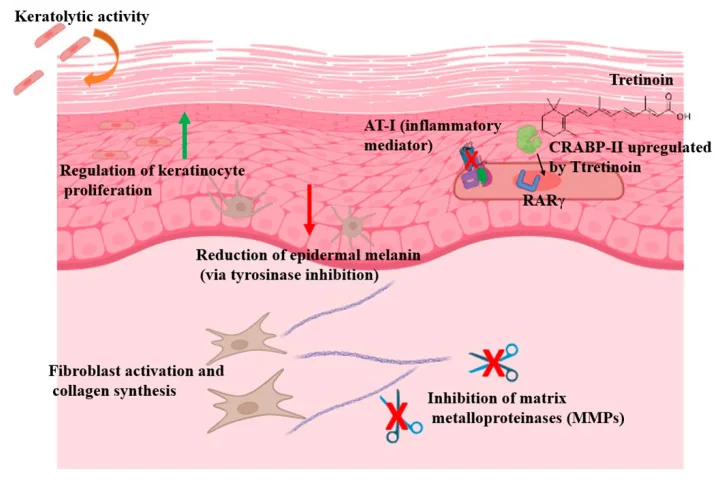
Tretinoin, a prescription retinoid, is the benchmark topical treatment for improving fine facial lines. The diagram from a recent review shows how it works in the skin, from normalising cell turnover to activating the cells that make collagen and slowing the enzymes that break it down:
Tretinoin works slowly and irritates the skin at first, so your clinician introduces it cautiously and watches how your skin tolerates it, and it isn't used in pregnancy. The retinol in pharmacy products is weaker but easier to tolerate; the difference is explained in how retinol works.
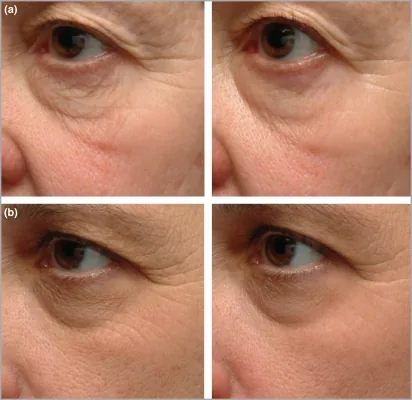
In a randomised trial of 196 women, a cosmetic regimen of niacinamide, peptides and a retinol derivative was compared with tretinoin. The cosmetic regimen improved the appearance of wrinkles around the eyes to a comparable degree over twenty-four weeks, with less irritation. The study was funded by the maker of the cosmetic regimen, and both groups also used sunscreen:
The practical message is that a well-designed, well-tolerated routine used consistently can matter more than the strongest product used for a fortnight and then abandoned because it stung.
"Botox-like" peptides: more promise than proof
Acetyl hexapeptide-8, sold under the trade name Argireline, is marketed as "Botox in a jar" because it was designed to mimic part of the protein the toxin targets. The problem is that the molecule is large and water-loving, so it struggles to cross the skin's oily outer layer. A 2025 review concludes that its ability to reach the neuromuscular junction is uncertain, and that how it might affect muscle contraction when applied to the skin is still not understood.
In a double-blind study of nineteen women, each participant applied a serum with Argireline to one side of her face and the same serum without it to the other for four weeks, and her lines were measured with a skin-imaging system:
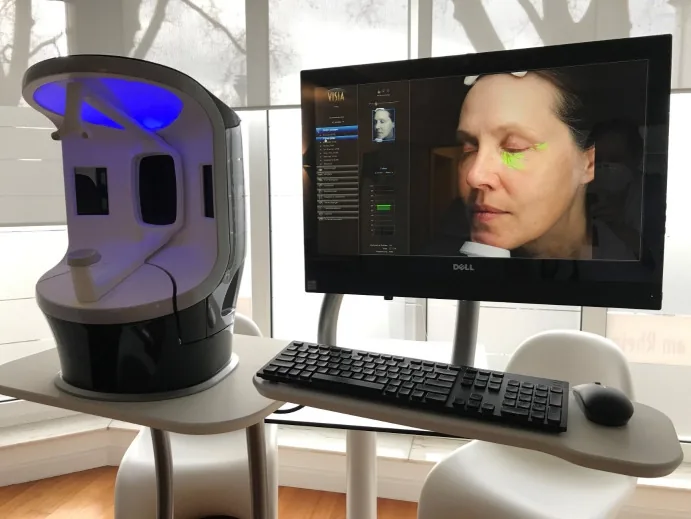
Wrinkle scores fell slightly on both sides, but the change wasn't statistically significant. A peptide may improve the skin's feel and hydration, but it doesn't relax the muscle the way Botox does. Peptides are reasonable as part of a moisturiser; they are not a reason to pay a premium for a "Botox cream".
Filler and in-clinic procedures for fixed lines
Filler, most commonly hyaluronic acid, doesn't relax a muscle; it fills. It lifts a deep, fixed line or replaces volume the face has lost, which makes it a complement to Botox more than an alternative. Chemical peels, microneedling and lasers work on the skin's surface and dermis, improving fine lines and texture; your dermatologist chooses between them based on the depth of the lines and your skin tone. These options are covered in how to reduce wrinkles.
Patches, exercises and acupuncture
- Wrinkle patches: hold the skin flat and stop it creasing while they're on, so a line looks softer in the morning and then returns. The effect is temporary.
- Facial exercises: there is no good evidence that they soften expression lines; details in eye wrinkle exercises.
- Acupuncture: studies are small and not enough to judge.
- Oils and home mixes: moisturise but don't relax a muscle; see best oils for wrinkles.
The alternatives compared
| Alternative | What it does | Strength of evidence | For which lines |
|---|---|---|---|
| Prescription tretinoin | Renews skin, stimulates collagen | Strong | Fine lines, sun wrinkles |
| Retinol and pharmacy products | Milder effect, less irritation | Moderate | Fine lines |
| Daily sunscreen | Slows collagen breakdown | Strong for prevention | All types |
| "Botox-like" peptides | Hydration, better texture | Weak | Fine lines |
| Filler | Fills a line or lost volume | Strong for its use | Deep, fixed lines |
| Patches and exercises | Temporary smoothing or nothing | Weak or absent | — |
Sunscreen: the alternative nobody mentions
Ultraviolet light is the strongest external factor breaking down collagen, and daily sunscreen slows that damage. The good retinoid studies were all run alongside sunscreen, and no topical alternative delivers its result without it. For the other preventive steps, read how to prevent facial wrinkles.
flowchart TD
  A[I don't want Botox] --> B{Is the reason fear of injections?}
  B -->|Yes| C[Retinoid and sunscreen - patience over months]
  B -->|No| D{Are the lines deep and fixed?}
  D -->|Yes| E[Consultation about filler or procedures]
  D -->|No| F[Retinoid, then reassess]
Setting realistic expectations
Topical alternatives and injections work on different timescales. A toxin relaxes a muscle within days and wears off over months; a retinoid changes the skin gradually and keeps working only while you keep using it. That means the honest comparison isn't "which one is stronger" but "which one fits the line and the commitment you're willing to make". A retinoid routine asks for months of consistent use and daily sunscreen. A clinic treatment asks for repeat visits. Neither stops ageing; both can soften what you see.
Frequently asked questions
What is the best alternative to Botox?
It depends on the type of wrinkle. Only the toxin itself genuinely relaxes the expression lines that appear when you move your face. For fine lines and sun-related wrinkles, the best-studied alternative is a topical retinoid with daily sunscreen, and deep, fixed lines are treated with fillers or in-clinic procedures.
Is there a cream that works like Botox?
No cream relaxes the muscle the way Botox does. Peptides marketed as "Botox-like", such as acetyl hexapeptide-8, are large molecules that struggle to cross the skin to reach the muscle, and their results in studies are modest and inconsistent.
Is filler an alternative to Botox?
No, they work in two different ways. Botox relaxes the muscle and softens the lines that movement creates; filler replaces lost volume or fills a fixed line. That is why each is used for a different kind of line, and the two are often combined in the same face.
Can facial exercises replace Botox?
There is no good evidence that facial exercises soften expression lines, and the lines around the eyes and on the forehead form in the first place from repeated muscle contraction. Exercises may feel relaxing, but they are not a substitute for treatment.
When to see a clinician
See a dermatologist if you want to start tretinoin or any prescription retinoid, especially if you're planning a pregnancy or breastfeeding, or if a new product has caused severe irritation, redness and peeling that won't settle. See one too if your lines are deep and fixed and you want to know which procedure suits them: an assessment establishes whether a line is dynamic or static before any treatment is chosen.
Related articles
Further reading
- Botox Alternatives: 7 Wrinkle Treatments That Work — Healthline
- Acetyl Hexapeptide-8 in Cosmeceuticals: A Review of Skin Permeability and Efficacy — IJMS
- An Updated Review of Topical Tretinoin in Dermatology — Journal of Clinical Medicine
Medical disclaimer: This article is for health education only and is not a substitute for professional medical advice. If you have a skin condition that concerns you, please consult a dermatologist.