Eye wrinkle exercises are all over the internet, but there is no good evidence that they erase the lines around the eyes. Crow's feet are made by the ring-shaped muscle around the eye contracting when you smile and squint, and exercises built on tightening that muscle don't address the cause and may deepen the lines. What does have evidence: sun protection, retinoids for fine lines, and, in clinic, injections that relax the muscle.
The Arabic pages that rank for this search suggest widening the eyes, raising the eyebrows and cucumber slices, without explaining where these lines come from in the first place. This article starts there.
Where do eye wrinkles come from?
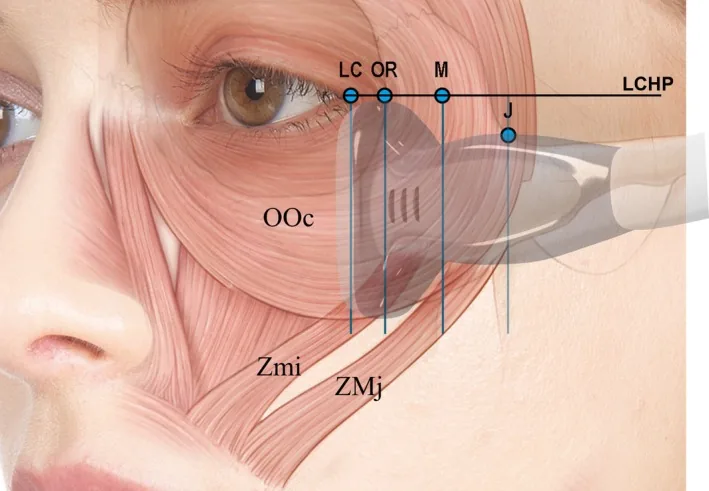
Around the eye is a ring of muscle called the orbicularis oculi, which contracts when you smile, laugh and squint into light. The skin over it is the thinnest on the face, so it folds with every contraction. The illustration below shows where the muscle sits:
At first, the lines appear only when you smile and vanish afterwards. Over the years, as collagen declines and sun damage accumulates, the lines start to stay even when the face is relaxed. So there are two kinds: dynamic lines that appear with expression, and static lines that remain at rest.
Do eye exercises remove wrinkles?
Most of the suggested exercises ask you to widen your eyes forcefully, raise your eyebrows, or squeeze your eyes shut. The problem is that these are contractions of the same facial muscles that create forehead lines and crow's feet. There are no good trials showing that eye exercises remove crow's feet, and the logic runs the other way: contracting a muscle more doesn't relax it.
"Face yoga" in general has been studied in small trials looking at cheek fullness, not eye wrinkles specifically, and those results aren't enough to treat it as a remedy for fine lines. Facial exercises are generally safe, and you can enjoy them, but don't expect them to erase wrinkles.
Gentle massage with a moisturiser does no harm and may temporarily improve how the skin looks through hydration and circulation, but firm rubbing and pulling on thin skin can damage it.
It is also worth being clear about what exercise can't change. Static lines at rest come from collagen loss and accumulated sun damage in the skin itself; no amount of muscle training rebuilds collagen. That is a skin problem, and it is answered with sun protection and skin treatments.
What has been shown to help?
| Approach | Which lines it works on | Evidence |
|---|---|---|
| Sunscreen and sunglasses | Slows new lines forming | Reduces sun damage and squinting |
| Topical retinoids | Fine static lines | Good evidence for improving skin |
| Botulinum toxin injections | Dynamic lines when smiling | Randomised trials against placebo |
| Home light-therapy masks | Mild lines | One sham-controlled trial, company-funded |
| Eye exercises | Unclear | No good evidence |
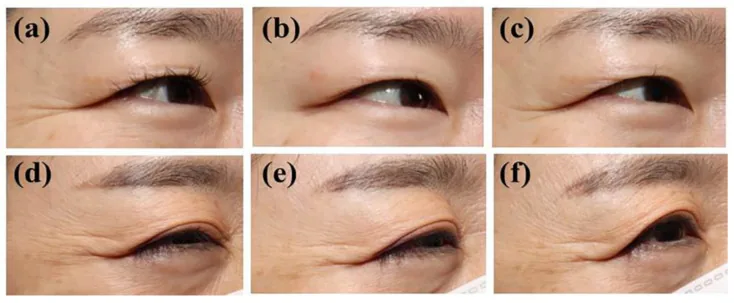
Botulinum toxin injections temporarily relax the muscle responsible. In a 2023 randomised trial of ninety participants with moderate to severe crow's feet, the lines when smiling improved clearly after injection compared with placebo, and the effect faded gradually by week twelve:
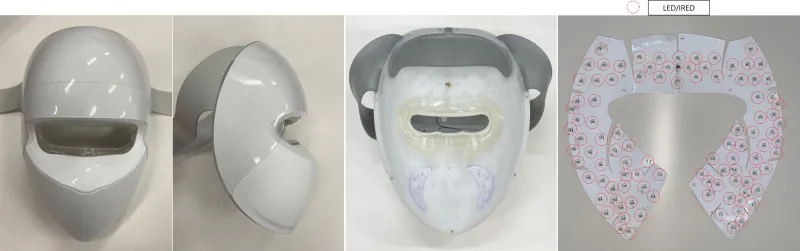
Home light-therapy masks are a newer option. In a 2025 randomised trial against a sham device, crow's feet improved more with a red and infrared light mask after twelve weeks of home use; the study was funded by the manufacturer. This is the mask that was used:
The flowchart below sets out the decision:
flowchart TD
  A[Lines around the eyes] --> B{Only visible when smiling?}
  B -->|Yes| C[Dynamic lines - sunscreen, and injections if they bother you]
  B -->|No: present at rest| D{Fine lines and thin skin?}
  D -->|Yes| E[A retinoid under supervision, with moisturiser and protection]
  D -->|No: deep folds| F[In-clinic assessment for stronger procedures]
Daily care for the eye area
- Sunscreen taken right up to the eye area without getting into the eye, and sunglasses to stop you squinting.
- A gentle, fragrance-free moisturiser; the skin here is thinner and more sensitive.
- An eye-area retinoid introduced gradually, as in how retinol works.
- No rubbing or pulling when removing make-up.
- Cold cucumber eases puffiness for a while, not wrinkles; for puffiness, see under-eye puffiness treatment.
Sleep position plays a smaller part too. Pressing the same side of your face into the pillow every night creases the skin around the eye in the same place for hours, and some people notice deeper lines on the side they sleep on. A silk pillowcase or sleeping on your back won't reverse lines, but it removes one repeated fold.
Sunglasses deserve more credit than they get. Squinting into bright light contracts the very muscle that folds the skin into crow's feet, many times a day, for years. A good pair of sunglasses reduces both the squinting and the ultraviolet reaching the thin skin around your eyes, which makes it one of the few interventions that works on both causes at once.
Frequently asked questions
Do facial exercises get rid of eye wrinkles?
There is no good evidence that eye exercises remove the wrinkles around the eyes. Crow's feet form from repeated contraction of the muscle around the eye when you smile and squint, and exercises built on tightening that same muscle don't address the cause and may increase the contraction.
What actually reduces eye wrinkles?
Sunscreen and sunglasses to reduce squinting, topical retinoids for fine lines under supervision, and in clinic, botulinum toxin injections that relax the muscle responsible — a randomised trial showed clear improvement compared with placebo — along with other devices and procedures.
Do cucumber or honey remove eye wrinkles?
Cold cucumber may briefly reduce puffiness and feels hydrating, and honey is a humectant, but neither removes wrinkles. Don't put home mixes on the rim of the eye, where the skin is thin and the eye is sensitive.
At what age do eye wrinkles appear?
The skin around the eye is thinner than the rest of the face, so wrinkles often show there first. Laughter lines can appear with smiling from your twenties, then start to stay even when the face is relaxed over time, and sun exposure and smoking speed this up.
When to see a clinician
See a dermatologist if lines around your eyes bother you and you want to know which options suit their type; if redness, itching or flaking appeared around the eye after a cream or home mix; or if your upper eyelid has drooped enough to block your vision, which needs a different assessment, as in eyelid surgery. For facial wrinkle options more broadly, read how to reduce wrinkles.
Related articles
- How to reduce wrinkles
- How retinol works
- Under-eye puffiness treatment
- Causes of a sagging face
- Eyelid surgery
Further reading
- What Is Face Yoga, and Does It Work? — Livestrong
- The 3 Most Effective Face Yoga Exercises To Get Rid Of Wrinkles — Eat This Not That
- 5 Facial Exercises That Can Help Lift Your Face Naturally — Doctor Binder
Medical disclaimer: This article is for health education only and is not a substitute for professional medical advice. If you have a skin condition that concerns you, please consult a dermatologist.