
Upper eyelid surgery removes excess skin, and very little else. If your heavy lids are caused by accumulated skin, the operation treats that directly. But if the cause is a descending brow, a weak muscle that lifts the lid, or swelling with a medical cause, you can come out of surgery looking just as tired as you went in.
One thing to be clear about first: InJasmine is a dermatology clinic that consults and refers; we do not perform eyelid surgery. My role is the diagnosis before the decision — is what you are seeing really excess skin, or something else that needs a different specialist?
What is upper eyelid surgery?
Blepharoplasty is surgery that removes excess skin, and sometimes some fat or a strip of the circular orbicularis muscle, from the upper or lower eyelid. The NHS describes it as done under local or general anaesthetic, with most people going home the same day.
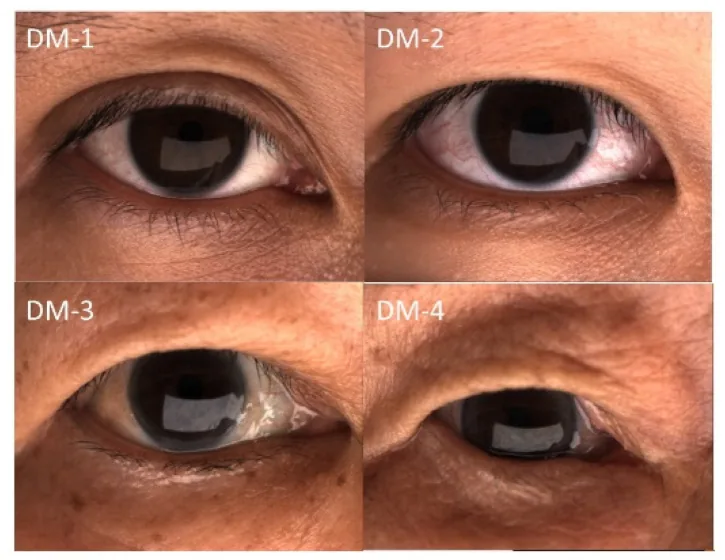
The condition it targets is dermatochalasis: eyelid skin that loses elasticity with age and folds down over the crease, sometimes touching the lashes or making it an effort to look upwards. The progression from mild to severe is shown in this published image.
Surgeons distinguish functional indications — skin encroaching on the field of vision — from cosmetic ones, such as a heavy, hooded look. The same operation can serve both, but the distinction matters for expectations: removing skin that blocks vision is a clear, measurable goal, whereas "looking less tired" depends on everything else around the eye.
Three causes that look the same
Most guides to this procedure jump straight to technique and price. They skip the question that decides whether surgery will work: a "heavy eyelid" is a description, not a diagnosis. In clinic I separate three causes, each with its own specialist and route:
| Cause | What is happening | The telltale sign | Route |
|---|---|---|---|
| Dermatochalasis | Excess skin over the crease | The lid margin is in place; skin hangs over it | Upper eyelid surgery |
| Ptosis | Weak or detached lifting muscle | The lid margin itself sits low over the pupil | Muscle surgery, decided by an oculoplastic surgeon |
| Brow descent | A lower brow pushes skin downwards | The look improves when you lift your brow with a finger | A brow procedure, not an eyelid one |
The commonest mistake is removing eyelid skin when the problem is the brow. Skin the lid actually needs is taken away, the brow stays low, and the eye can look narrower rather than more open. The three mechanisms, with a simple test you can do at home, are explained in swelling above the eye.
This is the sequence I follow:
flowchart TD
  A[Heavy upper eyelid] --> B{Does it change through the day?}
  B -->|Yes| C[Fluid or allergy - not surgical]
  B -->|No| D{Lid margin sitting low over the pupil?}
  D -->|Yes| E[Ptosis - oculoplastic eye specialist]
  D -->|No| F{Better when you lift the brow with a finger?}
  F -->|Yes| G[Brow descent - assess for brow lift]
  F -->|No| H[Dermatochalasis - eyelid surgery is an option]
What around the eyelid is not surgical
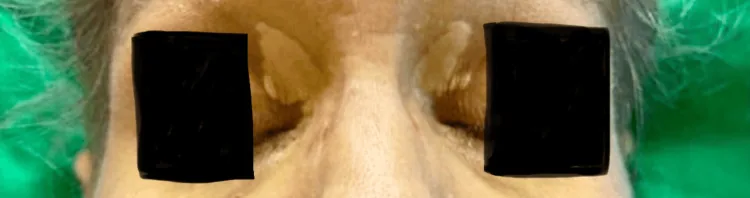
Some things on the upper lid are skin conditions that do not call for blepharoplasty at all, or need assessing first. The clearest example is soft yellow plaques on the inner corners of the lids, called xanthelasma, which can be linked to raised blood lipids and deserve a check before any cosmetic decision.
Eyelid eczema and allergy to eye cosmetics are similar traps: redness, itch and scaling make the skin look crepey and heavy, and settle when the cause is treated rather than cut away. If your concern is the lower lid, bags and puffiness there are a different subject, covered in treating under-eye puffiness.
Dry eye: a question to ask before surgery
The same study that graded dermatochalasis found it associated with worse dry eye from dysfunction of the oil glands along the lid margin. Surgery can, in turn, temporarily change how completely the eye closes.
If you have burning, a gritty feeling or intermittent watering, mention it before the operation, not after. It does not necessarily rule surgery out, but it changes the plan and how much skin is removed, and it deserves an eye examination.
Recovery after upper eyelid surgery
The NHS gives a realistic picture: head propped up on pillows and cold packs in the first days, fine stitches usually removed within a week, around two weeks off work for most people, and bruising and redness that can take several weeks to fade.
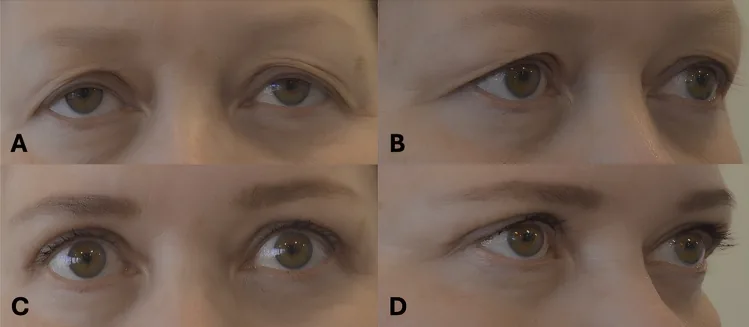
The scar sits in the eyelid crease and can look visible and feel tight for a few months before fading. The NHS advises avoiding contact lenses, eye-rubbing and smoking during recovery, and is clear that results cannot be guaranteed. You also cannot drive for several days, so plan for someone to take you home and help for the first evening.
The risks of eyelid surgery
An honest view of risk is part of the decision. This flowchart shows what needs your surgeon straight away:
flowchart TD
  A[After eyelid surgery] --> B{Severe pain behind the eye, rapidly increasing swelling or reduced vision?}
  B -->|Yes| C[Emergency care now - possible bleeding behind the eye]
  B -->|No| D{Spreading redness, discharge or fever?}
  D -->|Yes| E[Call your surgeon urgently]
  D -->|No| F[Swelling, bruising, irritation - routine follow-up]
The NHS groups risks as common and temporary (puffy, numb lids that are hard to close, irritation, bruising), occasional (blurred or double vision, uneven-looking eyes, a noticeable scar, changed eyelid sensation), and rare but serious (injury to the eye muscles, the lower lid turning outwards, bleeding into the eye socket). It also notes that some people want a second operation because the result was not what they hoped for. A systematic review and meta-analysis of upper blepharoplasty techniques compares the main surgical approaches for those who want to read further into the evidence.
My advice: ask the surgeon how much skin they plan to remove and why, and whether they have assessed your brows, your lid muscle and your tear film. A surgeon who is conservative about skin removal is safer than one who promises a "fully open" eye.
Frequently asked questions
What is the difference between excess eyelid skin and a drooping eyelid?
Excess eyelid skin (dermatochalasis) hangs over the crease while the lid margin itself stays where it should. A drooping eyelid (ptosis) is weakness or detachment of the lifting muscle, so the lid margin itself sits low over the eye. The first is treated by removing skin; the second needs surgery on the muscle, decided by an oculoplastic eye specialist.
How long is recovery after upper eyelid surgery?
According to the NHS, the fine stitches are usually removed within a week, most people take around two weeks off work, bruising and redness can take several weeks to fade, and the scar can look visible and feel tight for a few months before it fades.
Can hooded eyelids be lifted without surgery?
Non-surgical options can improve skin texture or lift the brow slightly, but they do not remove a meaningful amount of excess skin. Once skin rests on the lashes or makes the lid feel heavy, surgery is what addresses the cause, and an assessment tells you whether you have reached that point.
What are the risks of eyelid surgery?
Common and temporary: swelling, bruising, irritation and difficulty closing the eye at first. Less common: asymmetry, blurred vision and a noticeable scar. Rare but serious: bleeding behind the eye and the lower lid turning outwards. Pre-existing dry eye needs assessing beforehand because it can worsen afterwards.
When to see a clinician
See a doctor without delay if one eyelid droops suddenly, especially with double vision, headache or pupils of different sizes — these are neurological warning signs, not cosmetic ones. The same applies to a painful, red, swollen area around the eye, or swollen lids with a bulging eye. A heavy lid that has developed slowly over years, yellow plaques, or itchy, flaky eyelid skin all deserve a dermatology assessment to establish the cause before any surgical decision. If dark circles are part of the tired look, start with what causes dark circles.
Related articles
- Swelling above the eye: causes and when to see a doctor
- Treating under-eye puffiness
- Under-eye puffiness explained
- What causes dark circles
- Cosmetic procedures: surgical and non-surgical
Further reading
- Upper Eyelid Blepharoplasty: Surgical Techniques and Results — Systematic Review and Meta-analysis
- Upper Eyelid Blepharoplasty — UNC Academic Aesthetics
- Upper Eyelid Blepharoplasty: Evaluation, Treatment, and Complication Minimization — Seminars in Plastic Surgery
- Eyelid surgery — NHS
Medical disclaimer: This article is for health education only and is not a substitute for professional medical advice. If you have a skin condition that concerns you, please consult a dermatologist.