Antibiotic ointment treats a limited, superficial bacterial skin infection, such as impetigo in a small area, when a doctor has diagnosed it. But simple clean wounds rarely need it, it isn't a treatment for acne or eczema, unnecessary or prolonged use increases bacterial resistance, and some types are among the commonest causes of contact allergy. An infection that is spreading or comes with a fever needs different treatment.
The Arabic pages that rank for this search list brand names and pharmacy ointments, without explaining when you don't need an ointment at all, or how to tell that redness is an allergy to the ointment rather than infection. This article sets out how to decide.
What types of antibiotic ointment are there?
| Ingredient | Usually used for | Note |
|---|---|---|
| Mupirocin | Impetigo and superficial staph infections | Often prescription only; short courses |
| Fusidic acid | Superficial skin infections | Resistance rises with overuse |
| Ozenoxacin | Impetigo | Newer; studied in trials |
| Neomycin and bacitracin | Combination wound ointments | Among the commonest causes of allergy |
| Topical tetracycline | Superficial infections | Used less often now |
Fusidic acid is covered in detail in Fusiderm green ointment.
When an ointment is appropriate: impetigo
Impetigo is a common superficial bacterial infection, especially in children, that shows as honey-coloured crusts or soft blisters that burst and leave shallow sores. Limited cases are often treated with an antibiotic ointment alone; widespread or extensive blistering cases need oral treatment or more. In a 2025 case report, a two-year-old girl with bullous impetigo on the leg improved within days with combined systemic and topical treatment:
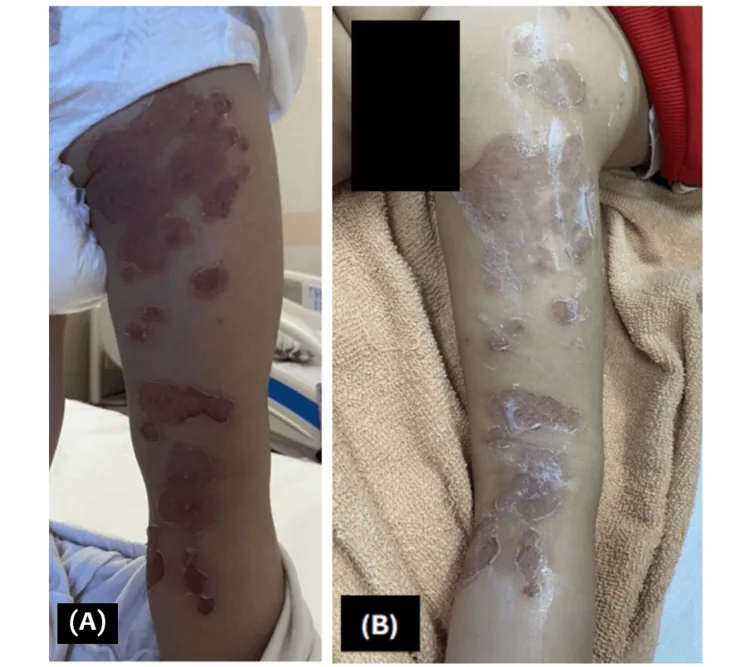
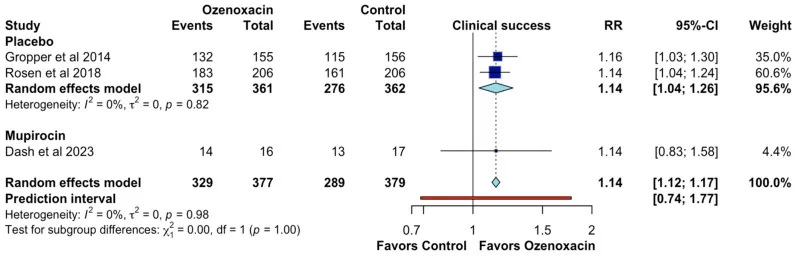
This was an extensive case that needed hospital treatment, and it shows that ointment alone isn't always enough. In a 2025 meta-analysis of four randomised trials, ozenoxacin ointment outperformed placebo for impetigo, with results similar to mupirocin:
The American Academy of Dermatology's guide to impetigo treatment also stresses keeping the area clean and covered, and not sharing towels, because impetigo spreads easily within households.
When you don't need an ointment
Simple, clean cuts and scrapes usually don't need an antibiotic. Gently washing with soap and water, then applying a thin layer of petroleum jelly and a dressing, is enough: petroleum jelly keeps the wound moist and helps it heal without the risk of allergy or resistance. Antibiotic ointment isn't a treatment for acne, which has dedicated treatments, as covered in bacterial spots; nor for eczema, minor burns, or fungal infections that can look similar.
Caring for a minor wound without an antibiotic
Wash your hands first, then rinse the wound under running water and wash around its edges with mild soap, removing any visible dirt. Pat it dry, apply a thin layer of petroleum jelly, and cover it with a clean dressing changed daily or whenever it gets dirty or wet. Keeping a wound moist and covered helps it heal with less scarring than letting it dry out and scab. Don't put toothpaste, coffee grounds or powders on a wound: they contaminate it and slow healing.
How to tell a wound is becoming infected
Most minor wounds are slightly red, tender and a little swollen for the first day or two; that's normal healing, not infection. Signs that infection may be developing are redness that spreads outwards rather than shrinking, warmth, increasing pain after the first couple of days, thick yellow or green discharge, a bad smell, or honey-coloured crusts. Red streaks running from the wound, a fever or feeling unwell suggest the infection is spreading beyond the skin's surface, and that needs a doctor promptly, because an ointment won't reach it. If you're unsure, draw around the edge of the redness with a pen: if it moves outward over the next day, get the wound checked.
Combination creams with steroids
Some ointments combine an antibiotic with a steroid, and they're sometimes sold without a prescription. They can help in specific situations a doctor decides on, but using them on the face or for long periods thins the skin and can mask and worsen a fungal infection, so don't use them for spots or a rash whose cause you don't know.
When the ointment is the problem: contact allergy
Some topical antibiotics, particularly neomycin and bacitracin, are well-known causes of contact allergy. It shows as redness, itching and swelling with clear edges where the ointment and dressing were applied, and is often mistaken for the infection getting worse, so more ointment is applied. In a 2025 case report, a man who used an ointment containing bacitracin and another antibiotic on a leg wound developed redness confined to the ointment area, then a widespread rash on his body:
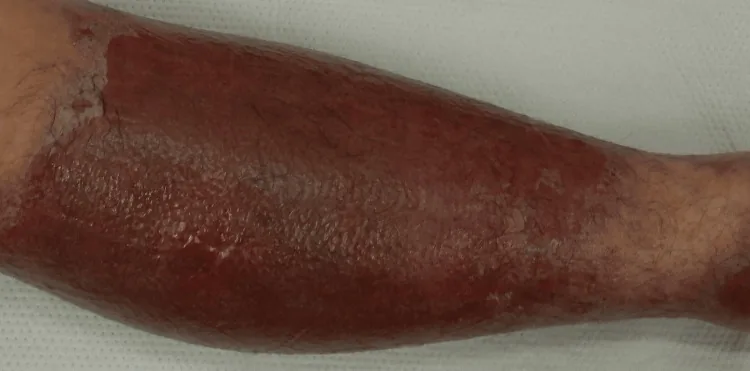
Intense itching and straight edges matching the shape of the dressing are two signs that distinguish allergy from infection. The answer is to stop the ointment and see a doctor, not to try a different one.
flowchart TD
  A[A wound or spots on the skin] --> B{Simple clean wound?}
  B -->|Yes| C[Gentle washing, petroleum jelly and a dressing]
  B -->|No| D{Honey-coloured crusts or pus in a small area?}
  D -->|Yes| E[See a doctor - may prescribe a short course]
  D -->|No| F{Spreading redness, fever or worsening pain?}
  F -->|Yes| G[Urgent review - oral antibiotics may be needed]
  F -->|No| H[Assess the cause]
  E --> I{Itching and redness matching the dressing?}
  I -->|Yes| J[Allergy to the ointment - stop it]
Bacterial resistance: why not use it just in case?
Every unnecessary use gives bacteria a chance to develop resistance, and ointments such as fusidic acid and mupirocin have lost some effectiveness in some places because of overuse. That's why they're kept for genuine infections, for a short course set by a doctor or the leaflet. Using an antibiotic ointment "just in case" on every scratch is the kind of habit that erodes these medicines for everyone.
mindmap
  root((Antibiotic ointment))
    Needed
      Limited impetigo
      Diagnosed surface infection
    Not needed
      Clean wounds
      Acne
      Eczema
    Risks
      Allergy
      Resistance
    Alternative
      Petroleum jelly and a dressing
Frequently asked questions
When do I need an antibiotic ointment for my skin?
For a limited, superficial bacterial infection diagnosed by a doctor, such as impetigo in a small area or a contaminated wound beginning to show mild signs of infection. Simple clean wounds usually don't need it; cleaning, petroleum jelly and a dressing are enough.
Should I put antibiotic ointment on spots?
It isn't recommended without a doctor. Acne isn't an infection in the usual sense, and using an antibiotic ointment alone for long periods increases bacterial resistance. Acne has dedicated treatments such as benzoyl peroxide and retinoids.
Can antibiotic ointment cause an allergy?
Yes. Some topical antibiotics, particularly neomycin and bacitracin, are common causes of contact allergy. It shows as redness, itching and swelling where the ointment was applied, and can be mistaken for the infection getting worse.
How many days should I use antibiotic ointment?
The duration is set by your doctor or the leaflet and is usually short. Long use without review increases the risk of resistance and allergy. If the infection hasn't improved within a few days, see a doctor rather than carrying on.
When to see a clinician
See a doctor straight away if redness spreads around a wound or red streaks appear, if pain and swelling increase, if you develop a fever, or if the person affected is a baby, has diabetes or has a weakened immune system. See one too if honey-coloured crusts or blisters spread, if an infection hasn't improved within a few days of treatment, or if itching and redness develop where the ointment was applied.
Related articles
Further reading
- Impetigo: Diagnosis and treatment — American Academy of Dermatology
- Ozenoxacin 1% in Pediatric and Adult Patients with Impetigo: A Meta-Analysis of Randomized Trials — Journal of Clinical Medicine
- Autoeczematization: A Rare Complication of Contact Dermatitis Triggered by Topical Antibiotic Ointment — Cureus
Medical disclaimer: This article is for health education only and is not a substitute for professional medical advice. If you have a skin condition that concerns you, please consult a dermatologist.