
Fusiderm green ointment is a topical antibiotic whose active ingredient is fusidic acid, used as a short course for superficial bacterial skin infections such as impetigo. It isn't an acne treatment, and it isn't something to put on every cut or spot. The longer and more often it is used, the more bacteria become resistant to it — which is exactly what recent European data show.
The Arabic pharmacy pages that top the search for this product list its uses, including "mild acne", and mention resistance in a single line. This article puts resistance and the difference from Fusiderm B first, because those two things decide whether the ointment helps you or harms you.
What is Fusiderm ointment and how does it work?
Fusidic acid is an antibiotic that acts mainly on Staphylococcus aureus, the commonest cause of superficial skin infection. It stops bacteria making the proteins they need, so they can't multiply. Fusiderm comes in several forms: a greasy green ointment, a cream, and Fusiderm B, which adds a corticosteroid.
The greasy ointment suits dry, scaly or crusted skin; the cream is lighter on hairy or moist areas. But the difference that matters most isn't ointment versus cream; it is whether there is a steroid in it or not. The UK product information for Fucidin, an ointment with the same active ingredient, lists lanolin (wool fat) in its base, so check your tube's label if you are allergic to wool fat.
Fusiderm as an antibiotic: for which infection exactly?
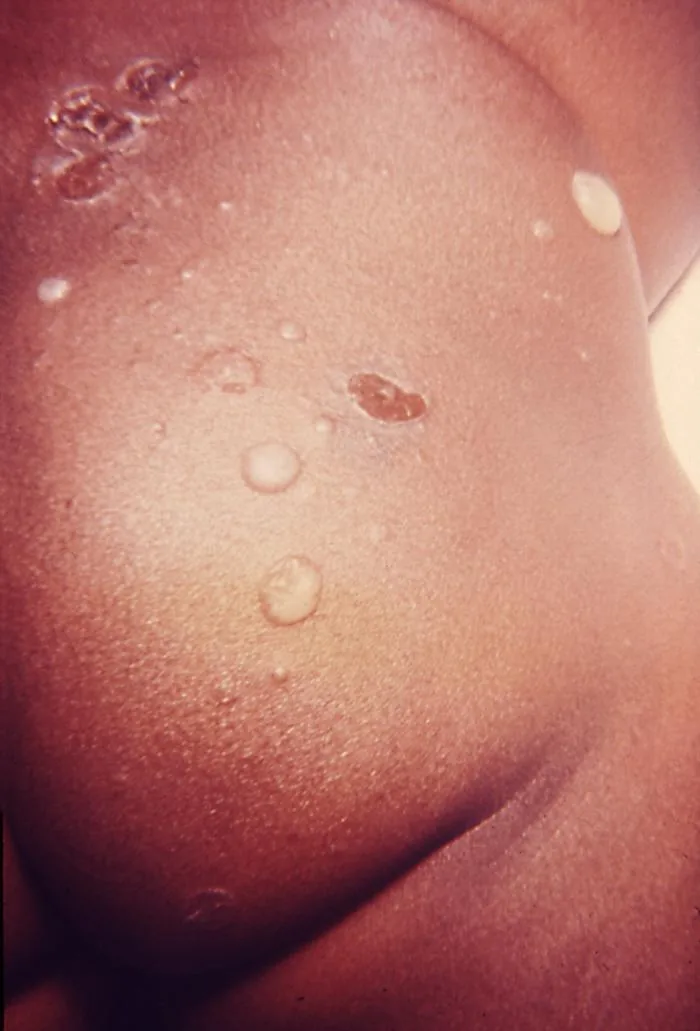
Its clearest use is impetigo, a superficial skin infection that is common in children. It starts as sores or blisters that burst and leave honey-coloured crusts, and can also form larger blisters, as in the photo:
Even so, a topical antibiotic is no longer always the first choice. The NICE impetigo guideline recommends considering an antiseptic cream rather than an antibiotic first for localised impetigo in someone who isn't systemically unwell, then a short course of a topical antibiotic if that isn't suitable, and warns that extended or recurrent use of topical fusidic acid may increase the risk of resistance.
Other recognised uses include infected eczema, infected cuts and grazes, folliculitis and infection around the nail fold — always as a short course, and always after someone has decided the problem really is bacterial.
Why does resistance matter?
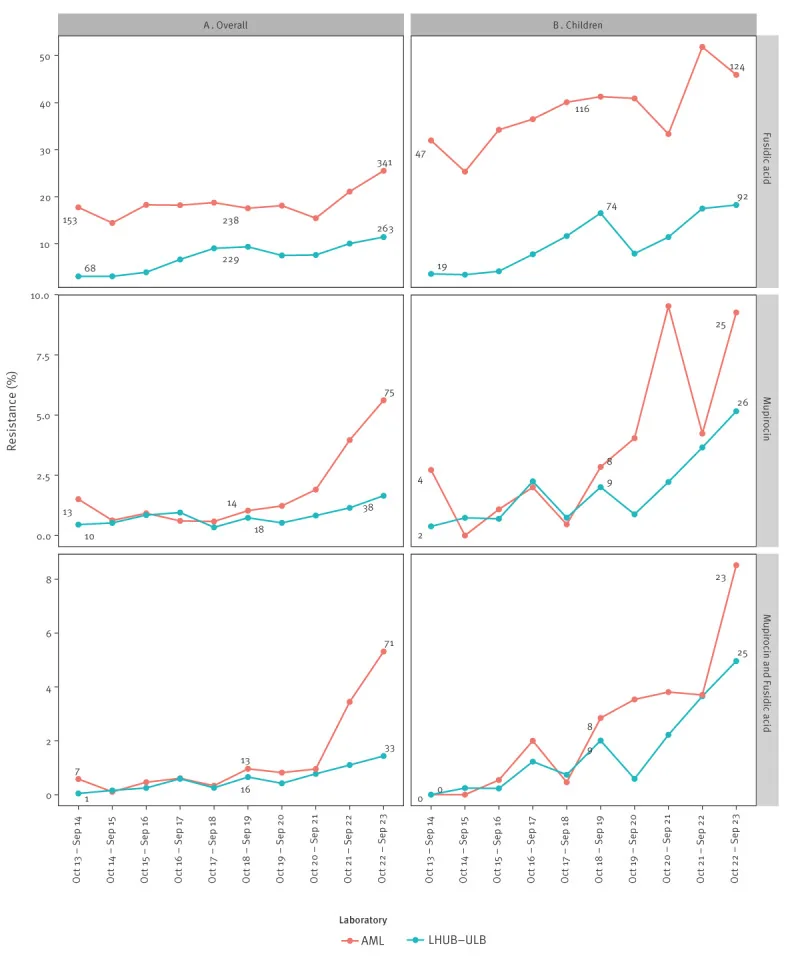
In Belgium, a 2024 study followed ten years of skin-infection samples and found fusidic acid resistance was higher in children, with combined resistance to fusidic acid and mupirocin climbing in recent years. The chart shows this in two laboratories:
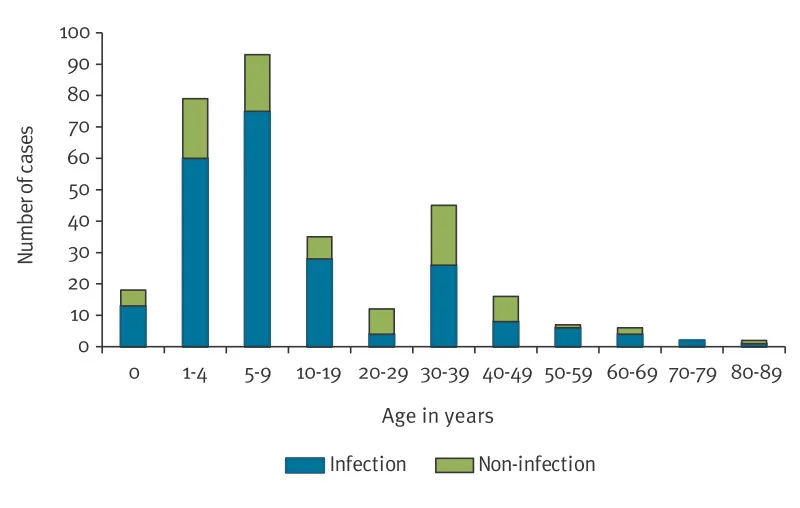
A 2025 European report described a strain resistant to both fusidic acid and meticillin spreading across Europe and causing impetigo and other skin infections, mostly in young children:
Every tube used on a spot or a scratch that didn't need it contributes to this. And when your child genuinely needs the ointment, it may not work. A 2025 review of resistance mechanisms notes that worldwide fusidic acid resistance is still relatively low, so the antibiotic remains useful — which is the reason to protect it, not to spend it.
Fusiderm cream for acne: why it isn't a good choice
Acne is blocked pores plus inflammation; bacteria are part of the story, not all of it. Fusidic acid does nothing for blockage, the NICE acne guideline doesn't include it among its options, and that guideline advises against using any topical antibiotic on its own for acne. Using fusidic acid on spots for months combines both drawbacks: it doesn't treat the cause, and it breeds resistance. The evidence-based alternatives are covered in Derma-T solution and benzoyl peroxide.
| Fusiderm (green ointment or cream) | Fusiderm B | |
|---|---|---|
| Ingredient | Fusidic acid | Fusidic acid plus betamethasone |
| Used for | Superficial bacterial infection | Infection with inflammation, or inflamed eczema |
| On the face | Short course on advice | Prescription and short course only |
| Risk of long use | Bacterial resistance | Resistance plus steroid thinning and redness |
| For acne | Not suitable | Not suitable, and can worsen it |
Fusiderm B on the face: the hidden steroid
In a Saudi study of "topical steroid damaged face", a cream combining fusidic acid and betamethasone was among the most used on the face, and peeling and redness were the side effects users reported most. A steroid improves spots and redness for a few days, then things come back worse, sometimes ending in perioral dermatitis or persistent redness that is hard to stop.
The flowchart below lays out the decision:
flowchart TD
  A[Considering Fusiderm] --> B{Honey crusts, spreading sores or an infected wound?}
  B -->|Yes| C[Assessment and a short course on medical advice]
  B -->|No| D{Acne spots?}
  D -->|Yes| E[Not the right treatment - an acne plan instead]
  D -->|No| F{Itchy ring-shaped scaling or eczema?}
  F -->|Yes| G[Probably not bacterial - diagnosis before any ointment]
  F -->|No| H[No antibiotic needed]
Common mistakes with Fusiderm
- Putting it on every scratch and spot "just in case"; a clean wound needs washing and covering.
- Using it for weeks because the spots are "a bit better".
- Swapping to Fusiderm B because it is "stronger"; the extra strength is a steroid.
- Applying it to an itchy, ring-shaped rash; that is usually fungal, not bacterial.
- Reusing an old tube for a new infection without an examination.
- Sharing it within the family when one child has impetigo; each person needs assessing, and towels and flannels shouldn't be shared either.
The flowchart below summarises what needs a review during use:
flowchart TD
  A[While using Fusiderm] --> B{Fever, or spreading redness, swelling and pain?}
  B -->|Yes| C[Prompt medical review]
  B -->|No| D{No improvement a few days into the course?}
  D -->|Yes| E[Review - possible resistance or another diagnosis]
  D -->|No| F[Finish the short course, then stop]
Frequently asked questions
Does Fusiderm green ointment treat acne?
It isn't an established acne treatment. Fusidic acid is an antibiotic for superficial bacterial skin infections, and the UK acne guideline doesn't list it among its options. Acne isn't an infection that a short course cures; using an antibiotic on it for months increases bacterial resistance without treating blocked pores.
What is the difference between Fusiderm and Fusiderm B?
Fusiderm contains fusidic acid alone, while Fusiderm B adds betamethasone, a potent corticosteroid. The steroid calms inflammation quickly, but on the face and over time it thins the skin and can cause persistent redness and spots. Fusiderm B shouldn't be used on the face except on prescription and for a period your doctor sets.
Does Fusiderm need a prescription?
It is prescription-only in many countries, though some pharmacies sell it without one. The more important question is the diagnosis: the ointment helps a superficial bacterial infection, and does nothing for fungal infections, eczema or acne, and can delay their proper treatment.
Can I put Fusiderm on cuts?
A clean cut usually doesn't need an antibiotic; washing and covering it is enough. The ointment is used when signs of a superficial infection appear, on medical advice. A deep wound, or one with increasing redness, swelling and pain or a fever, needs a medical review, not just an ointment.
When to see a clinician
See a doctor if crusts or sores spread quickly, if there is a fever or you feel unwell, if the infection hasn't improved a few days into the course, or if it keeps recurring in your child or other family members. Seek urgent help if your lips, mouth or throat swell after applying any cream. See a dermatologist if you have been using Fusiderm or Fusiderm B on your face for weeks for acne or redness; that needs a different plan. For the antibiotic options in acne, read the strongest antibiotic for acne.
Related articles
- Derma-T solution
- The strongest antibiotic for acne
- Benzoyl peroxide for acne
- The benefits and harms of popping pimples
- Types of acne
Further reading
- Fusidic acid: antibiotic to treat bacterial skin and eye infections — NHS
- Fucidin Ointment: Summary of Product Characteristics — emc
- Impetigo: antimicrobial prescribing — NICE
Medical disclaimer: This article is for health education only and is not a substitute for professional medical advice. If you have a skin condition that concerns you, please consult a dermatologist.