
Derma-T solution is a topical antibiotic whose active ingredient is clindamycin; it reduces bacteria and inflammation in red acne spots. But it isn't an acne treatment on its own: it does nothing for blocked pores, and with long solo use the bacteria adapt and resist it. That is why current guidelines say plainly that a topical antibiotic should not be used as monotherapy.
Most Arabic pages ranking for this product are pharmacy listings and user experiences that explain how to apply it and skip the question that matters most: what happens when it's used alone for months? This article answers that.
What is Derma-T solution and how does it work?
Clindamycin belongs to the lincosamide group of antibiotics. It stops bacteria making the proteins they need, so they can't multiply. In acne, the target is Cutibacterium acnes, a bacterium that lives in oily pores and feeds inflammation once a pore is blocked and sebum builds up inside it.
That defines what the solution can and can't do. It calms red spots and pustules, where inflammation is doing most of the damage, but it doesn't clear blackheads and whiteheads, because those are blockages, not infections. Nor does it reach the deep, painful cystic spots that need a different assessment.
In most countries it is a prescription medicine, and your doctor decides how and for how long you use it, based on the type and severity of your spots. To understand the difference between inflammatory and non-inflammatory spots, see types of acne.
Clindamycin is also used by mouth and by injection for serious infections elsewhere in the body, which is part of why prescribers take resistance seriously: a bacterium that learns to survive it on the face is not a purely cosmetic problem. The solution form exists to put the antibiotic where the spots are while keeping the amount that reaches the rest of the body low — low, but not zero, as the safety section below explains.
Why shouldn't Derma-T solution be used alone?
The UK's NICE acne guideline is explicit: do not use monotherapy with a topical antibiotic to treat acne. The reason is resistance. When bacteria meet one antibiotic over a long period, the strains that can tolerate it survive and multiply, and the drug gradually loses its effect.
A 2025 systematic review and meta-analysis pooled twenty-three studies on resistance in acne bacteria and found that resistance to clindamycin and the macrolide group was far higher than resistance to the tetracyclines, and that it has been rising over time. The plot below summarises the pooled figures for each antibiotic:
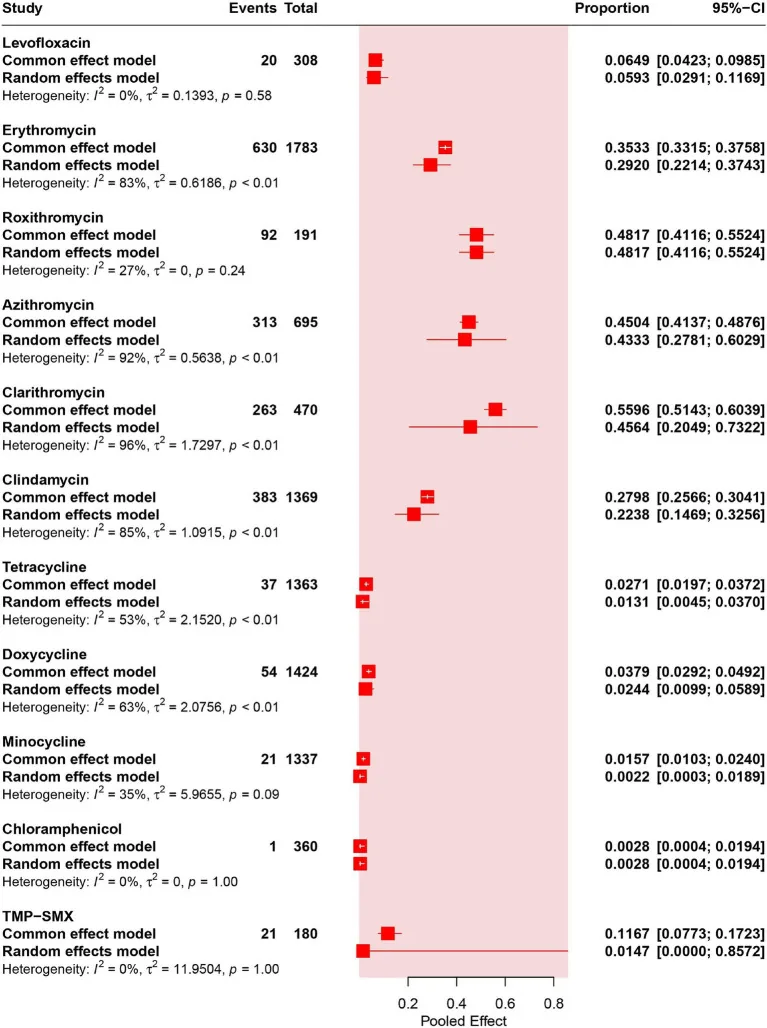
Resistance doesn't stay on your face. It spreads between bacteria and narrows treatment options later. That is exactly why the solution shouldn't simply be renewed month after month without a review.
Derma-T with benzoyl peroxide: why the combination is preferred
Benzoyl peroxide kills bacteria by oxidation, and bacteria don't develop resistance to it. Used together with clindamycin, it kills bacteria that might resist the antibiotic, protecting its effect. That is why fixed combinations of the two exist in a single tube, and guidelines list them among the first-line options.
In a 2019 randomised trial comparing a clindamycin lotion alone with a lotion combining it with benzoyl peroxide, inflammatory spots fell in both groups over twelve weeks; the reduction was numerically larger with the combination, though the difference wasn't statistically significant:
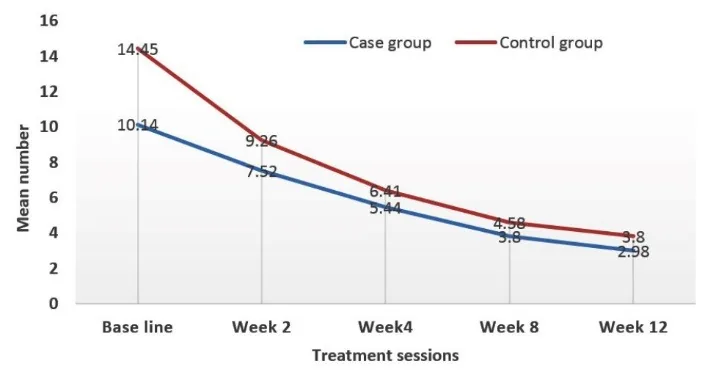
The main benefit of combining isn't faster results; it is protecting the antibiotic from resistance. How to tolerate benzoyl peroxide is covered in benzoyl peroxide for acne, and a retinoid-plus-benzoyl-peroxide alternative in Epiduo gel.
Is clindamycin still effective?
That depends on the bacteria where you live and on your own history of antibiotic use. In a 2023 randomised study of patients in India, topical minocycline gel outperformed clindamycin gel in reducing both inflammatory and non-inflammatory spots over twelve weeks. The study didn't test resistance, but the rising clindamycin resistance shown above is a reasonable explanation:
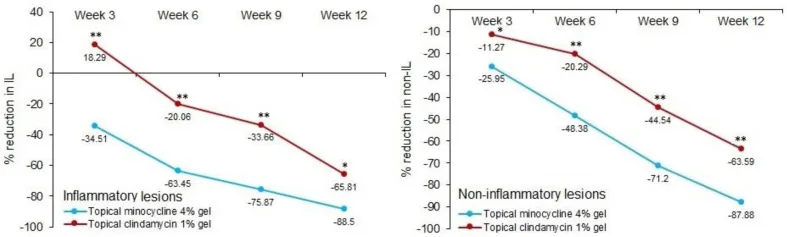
This is one open-label study in one country, so it doesn't mean Derma-T won't work for you. But it does help explain why some women find the solution "stopped working" after helping at first.
Who is it for, and who isn't it for?
| Situation | Is Derma-T suitable? | Note |
|---|---|---|
| Mild to moderate red spots and pustules | Yes, with another treatment | Paired with benzoyl peroxide or a retinoid |
| Blackheads and whiteheads only | No | The problem is blockage, not bacteria |
| Deep cystic spots or scarring | Not enough | Needs assessment and stronger treatment |
| History of bowel inflammation or antibiotic-associated colitis | Contraindicated | Per the product information |
| Pregnancy or breastfeeding | Your doctor's decision | Don't start without advice |
This flowchart lays out the decision:
flowchart TD
  A[Considering Derma-T solution] --> B{Red, inflamed spots?}
  B -->|No: blackheads and whiteheads| C[A treatment for blockage, not an antibiotic]
  B -->|Yes| D{History of bowel inflammation or colitis?}
  D -->|Yes| E[Not for you - ask about an alternative]
  D -->|No| F{Paired with another treatment such as benzoyl peroxide?}
  F -->|Yes| G[Evidence-supported use for a set period]
  F -->|No| H[Review the plan - an antibiotic alone breeds resistance]
Side effects, and when to stop
The common effects are mild dryness, irritation and stinging, especially when combined with other drying treatments. What deserves attention is flagged in the UK product information: topical clindamycin is partly absorbed through the skin, diarrhoea and colitis have been reported infrequently with it, and it is contraindicated if you have a history of inflammatory bowel disease or antibiotic-associated colitis. Any severe or persistent diarrhoea during or after use means stopping the solution and seeing a doctor promptly.
The flowchart below summarises when to stop:
flowchart TD
  A[While using Derma-T] --> B{Severe, persistent or bloody diarrhoea?}
  B -->|Yes| C[Stop and see a doctor promptly]
  B -->|No| D{Redness, itch and swelling after applying?}
  D -->|Yes| E[Possible allergy - stop and see your dermatologist]
  D -->|No| F{No improvement after several weeks?}
  F -->|Yes| G[Review the plan, don't just renew the prescription]
  F -->|No| H[Continue the plan as set]
What a sensible plan looks like
A plan that uses Derma-T well usually has three features. It pairs the antibiotic with something that works on blockage — benzoyl peroxide, a retinoid, or both — so that new spots are prevented rather than just calmed. It has an end point: the antibiotic is used for a defined stretch and then stepped down, while the non-antibiotic treatment carries on as maintenance. And it has a review date, so that if the spots aren't settling the plan changes instead of the prescription simply being repeated. If your current routine has none of those features, that is worth raising at your next appointment.
Common mistakes with Derma-T solution
- Using it alone for months because it "worked at first"; that is how resistance is built.
- Applying it to blackheads and waiting for them to clear.
- Sharing it or reusing an old prescription without a review.
- Layering it with scrubs and acids on the same night, so irritation stacks up.
- Treating it as a cure for brown marks; those need a different plan.
- Swapping to another antibiotic ointment, as often happens with Fusiderm ointment; it is the same problem, an antibiotic with nothing for blockage.
To compare topical and oral antibiotics, read the strongest antibiotic for acne.
Frequently asked questions
Does Derma-T solution cure acne for good?
No. Derma-T is a topical antibiotic that reduces bacteria and inflammation in red spots, but it doesn't treat blocked pores or stop new spots forming. That is why medical guidelines advise against using a topical antibiotic on its own, and recommend pairing it with a treatment that works on blockage, for a limited period set by your doctor.
Does Derma-T remove acne marks?
It doesn't remove the brown or red marks left after spots, or scars. What it does is calm active inflamed spots, and reducing inflammation may lower the chance of new marks, but existing marks need a different treatment.
Can I use Derma-T with benzoyl peroxide?
Yes, and that is the use guidelines prefer. Benzoyl peroxide kills bacteria without resistance developing to it, so it protects the antibiotic from losing its effect. There are also products combining both in a single tube; your dermatologist can choose what suits your skin.
What are the side effects of Derma-T solution?
The most common are dry skin and mild irritation. The rare but important one is that the product information warns diarrhoea and colitis have been reported infrequently with topical clindamycin, and it must not be used if you have a history of inflammatory bowel disease or antibiotic-associated colitis. Any severe or persistent diarrhoea means stopping it and seeing a doctor.
When to see a clinician
See a dermatologist if your spots haven't improved after several weeks on the agreed plan, if they are deep and painful or leaving scars, if they come straight back when you stop, or if you've been using the solution on its own for a long time. See a doctor promptly for severe, persistent or bloody diarrhoea, or for redness, swelling and itching after applying it. For a complete treatment plan, read acne medicines.
Related articles
Further reading
- Clindamycin for Acne: Efficacy, Safety & More — Healthline
- Clindamycin (topical route) — Mayo Clinic
- Dalacin T Topical Lotion: Summary of Product Characteristics — emc
Medical disclaimer: This article is for health education only and is not a substitute for professional medical advice. If you have a skin condition that concerns you, please consult a dermatologist.