
Epiduo combines two medicines in one tube: adapalene, a retinoid that unblocks pores and stops them clogging, and benzoyl peroxide, which kills acne bacteria without resistance developing. Treating acne from two directions at once is what makes it effective in moderate acne. But it irritates at first, it is contraindicated in pregnancy, and it needs medical guidance rather than solo experimentation.
Most of what ranks for this search is online-pharmacy pages. What they rarely explain is why these two ingredients in particular, and who the combination doesn't suit.
Two ingredients in one tube: why?
Acne begins with blocked pores, then bacteria multiply in the blockage and inflammation starts. The diagram below shows the early stages: a normal pore, a whitehead and a blackhead.
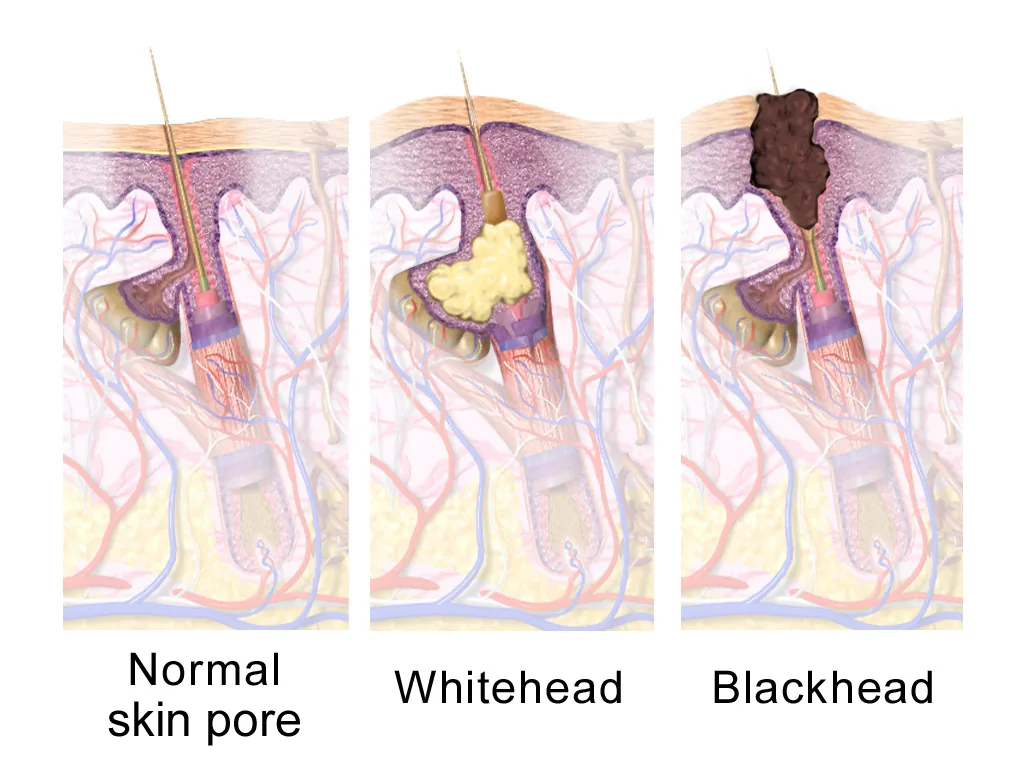
Adapalene addresses the first stage: it normalises cell turnover in the follicle wall so blockages form less, and it calms inflammation. Benzoyl peroxide addresses the second: it kills bacteria by oxidation, and bacteria don't become resistant to it. That ingredient on its own is covered in benzoyl peroxide for acne.
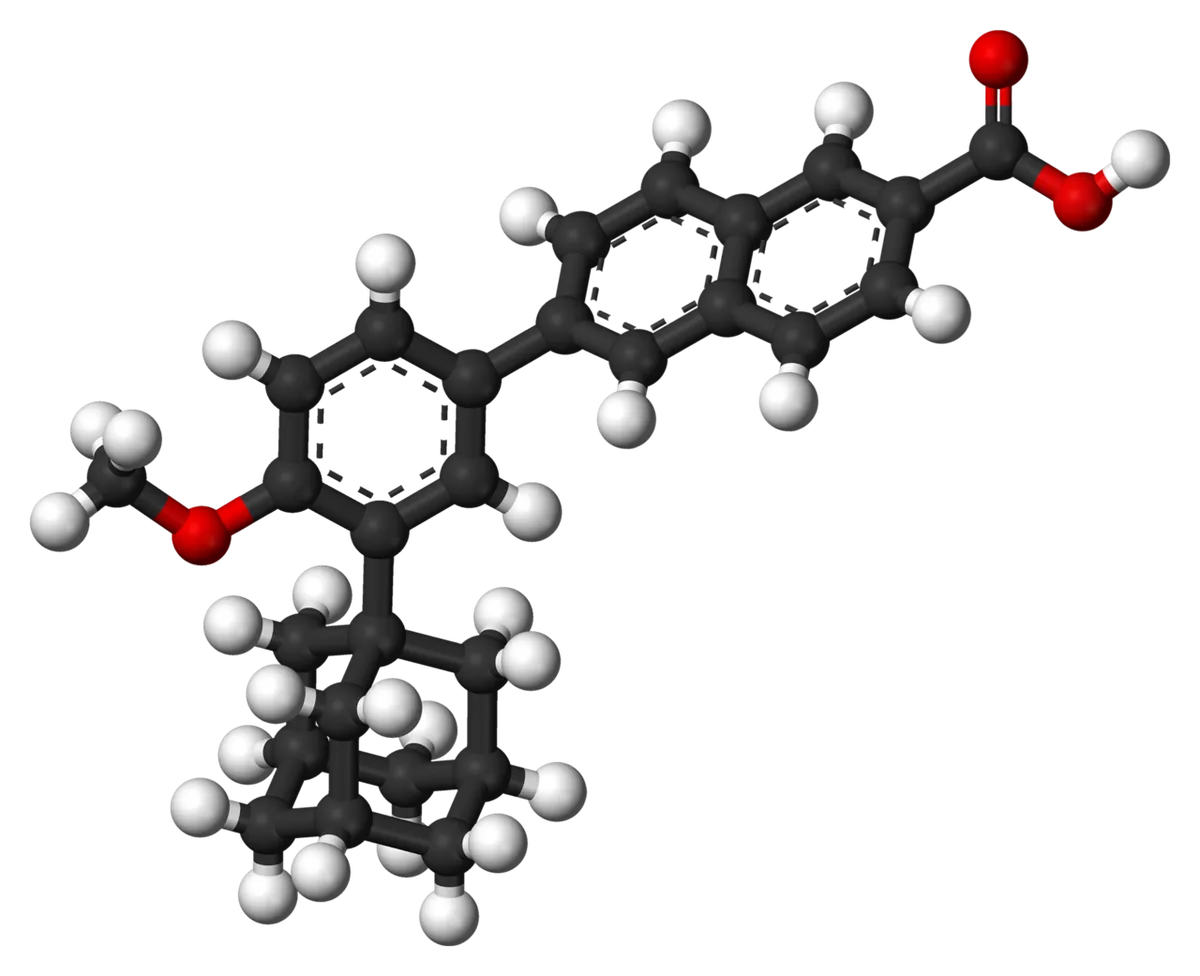
A 2024 systematic review of clinical trials found the fixed combination of adapalene and benzoyl peroxide effective in acne, with side effects that were mostly local and mild to moderate — dryness, redness and scaling.
Who is Epiduo for, and who isn't it for?
| Situation | Suitable? | Note |
|---|---|---|
| Moderate acne with spots and comedones | Usually yes | Treats blockage and bacteria together |
| Only blackheads and whiteheads | Sometimes | Something gentler may be enough |
| Very sensitive skin or eczema | With great care | Irritation is higher |
| Deep cystic or scarring acne | Not enough alone | Needs stronger, supervised treatment |
| Pregnancy or planning one | No | Contraindicated per the product information |
In clinic, most people I see who have given up on Epiduo weren't failed by the medicine. They started by spreading it thickly over the whole face from day one, their skin burned, and they stopped before it could work.
Epiduo or each ingredient separately?
A question I hear a lot: why not buy adapalene and benzoyl peroxide separately? The practical answer is that one product is easier to stick with — one step instead of two — and that alone makes a difference in a treatment that takes months. But separating them gives flexibility: you can start with one ingredient, or use benzoyl peroxide as a rinse-off wash on the back while adapalene goes on the face, which suits some sensitive skins better.
There is also a stronger version of the combination with more adapalene, studied in a 2024 trial in moderate-to-severe acne. Stronger isn't better for everyone; it is more irritating, and choosing it is a medical decision based on how severe your acne is and how well your skin tolerates treatment.
Epiduo in pregnancy: the red line
The UK product information for Epiduo lists pregnancy and planning a pregnancy as contraindications, because adapalene is a retinoid, and says treatment should stop if pregnancy occurs during use. This isn't a matter for personal experience stories; if you are pregnant or planning to be, ask your doctor for an alternative.
This flowchart shows what comes before starting:
flowchart TD
  A[Considering Epiduo gel] --> B{Pregnant or planning pregnancy?}
  B -->|Yes| C[Don't use it - safe alternative from your doctor]
  B -->|No| D{Deep cystic or scarring acne?}
  D -->|Yes| E[Medical assessment - may need stronger treatment]
  D -->|No| F{Very sensitive skin or eczema?}
  F -->|Yes| G[Only with supervision - or a gentler option]
  F -->|No| H[A suitable option with medical guidance]
The first weeks: expected irritation and when it goes too far
Many people notice dryness, redness and stinging in the first weeks, and sometimes spots surfacing that were already forming under the skin, because adapalene speeds up cell turnover. That is an expected part of starting a retinoid and usually doesn't mean failure.
But there is a limit. This flowchart shows when to see your doctor:
flowchart TD
  A[After starting Epiduo gel] --> B{Mild dryness and redness?}
  B -->|Yes| C[Expected - oil-free moisturiser and sun protection]
  B -->|No| D[Continue as planned]
  C --> E{Severe burning, swelling, painful peeling or cracking?}
  E -->|Yes| F[Stop and see your doctor]
  E -->|No| G[Review after several weeks of regular use]
Three things reduce irritation: a light, non-comedogenic moisturiser; daily sunscreen, because retinoids make skin more sun-sensitive; and not combining it with exfoliants or other active products unless advised. Which form of Bepanthen for acne suits that role, and when it backfires, is explained there.
Because benzoyl peroxide is one of its ingredients, everything that applies to it applies here too: it bleaches pillowcases, towels and hair on contact, and should be stored somewhere cool, away from heat. Use a white pillowcase, and let the gel dry completely before bed.
What to tell your prescriber before you start
A few details change how Epiduo should be used, or whether it should be used at all, and they are easy to forget in a short appointment:
- Every other product on your face, including toners, acids, scrubs and "brightening" serums. Most irritation I see comes from stacking actives, not from Epiduo alone.
- Eczema, rosacea or very reactive skin, now or in the past. These raise the risk of irritation considerably.
- Pregnancy plans, not just pregnancy. The contraindication covers planning a pregnancy too.
- Recent or current oral treatment, such as isotretinoin or antibiotics, so the plan fits around it.
- Waxing or threading on the face. Retinoids make skin more fragile, and hair removal on treated skin can tear or burn it.
Telling your prescriber all of this up front is what turns a tube that "didn't work" into a treatment you can actually stay on long enough to see results.
What do the pictures show?
The image below, from a published study, shows patients before and after treatment with adapalene gel in two different formulations. They are not pictures of Epiduo itself, but they show what its retinoid component does to inflamed spots and comedones.
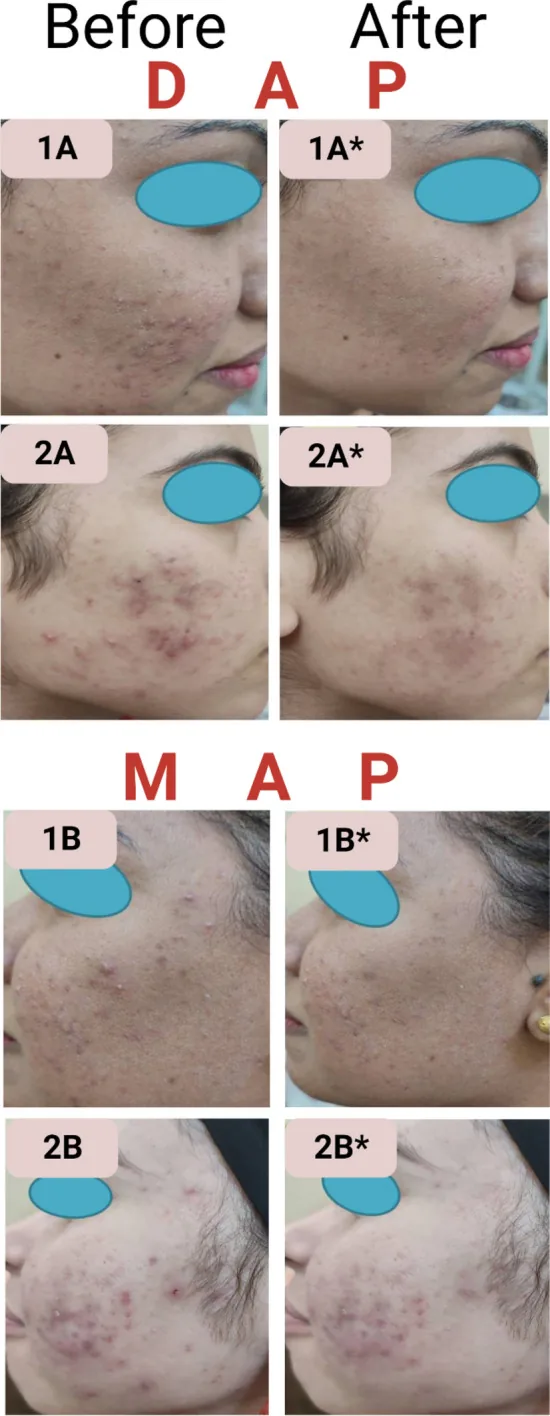
Notice that dark marks don't fade as quickly as red spots settle; how to manage them is covered in Skinoren (azelaic acid).
Frequently asked questions
Is Epiduo safe in pregnancy?
No. The UK product information lists pregnancy and planning a pregnancy as contraindications, because adapalene belongs to the retinoid family, and says treatment should stop if pregnancy occurs. If you are pregnant or planning to be, ask your doctor for a safe alternative.
Why do I get more spots after starting Epiduo?
In the first weeks adapalene speeds up cell turnover inside the pores, so spots that were already forming under the skin may surface, along with dryness and redness. That usually doesn't mean the treatment is failing. Severe burning, swelling or painful peeling, however, needs a review with your doctor.
How long does Epiduo take to work?
Topical acne treatments are judged over weeks, not days. Studies of the adapalene–benzoyl peroxide combination have usually assessed results at around twelve weeks. Don't judge it in the first month, and don't stop it without advice.
Does Epiduo lighten the skin or remove acne marks?
It doesn't lighten skin. Dark acne marks may fade gradually because fewer new spots form and adapalene speeds cell turnover, but it won't fill pitted scars. Its benzoyl peroxide component also bleaches fabric and hair.
When to see a clinician
See a dermatologist before starting if you are pregnant, planning a pregnancy or breastfeeding, or if your skin is very sensitive. See them during treatment if you develop severe burning, swelling or painful peeling, if your acne hasn't improved after months of regular use, or if your spots are deep, painful and scarring. For broader treatment options see acne treatment, and for hormone-linked spots, hormonal acne.
Related articles
- Benzoyl peroxide for acne
- Skinoren (azelaic acid)
- Acne treatment
- Pimple patches and creams
- Hormonal acne
Further reading
- Epiduo Gel Acne Treatment — Pharmacy2U
- Epiduo 0.1%/2.5% gel — Apollo Pharmacy
- Epiduo Gel — Asda Online Doctor
- Epiduo 0.1%/2.5% Gel: Summary of Product Characteristics — emc
Medical disclaimer: This article is for health education only and is not a substitute for professional medical advice. If you have a skin condition that concerns you, please consult a dermatologist.