Bepanthen for acne isn't an acne treatment; its active ingredient, dexpanthenol, moisturises and helps skin recover, but it doesn't unblock pores or kill bacteria. Its real value in acne is secondary but important: easing the dryness and irritation that strong acne treatments cause. A heavy ointment on an oily face, on the other hand, can add spots for some women.
The Arabic pages that rank for this search are shop listings and general moisturising pages, and they don't answer the question being asked: does it help spots or harm them? This article puts the answer where it belongs.
What is Bepanthen and how does it work?
Dexpanthenol is a form of vitamin B5 that the skin converts into pantothenic acid. It works as a humectant, drawing water into the outer layer, and helps skin cells renew after irritation or superficial wounds. Bepanthen comes in several forms: the original greasy ointment, a cream, and a lighter lotion for face and body.
The difference between these forms matters in acne. The ointment is a heavy base that locks in moisture very well, which is excellent for cracked lips and very dry skin, but it is heavier than an oily, acne-prone face needs.
Does Bepanthen treat spots?
Acne comes from four factors: excess sebum, blocked pores, bacterial growth and inflammation. Dexpanthenol does nothing for the first three. It may soothe surface inflammation a little, but it won't stop the next spot. So anyone putting Bepanthen on spots and waiting for them to disappear will be waiting a long time, and may add to the blockage if she is using the heavy ointment.
That is also the honest reading of the mixed reports you'll find online. Some people say it helped redness after spots, which fits what a barrier cream does; others say it made them break out, which fits what a heavy ointment can do on oily skin. Both can be true, depending on the skin and the form used.
Where Bepanthen genuinely helps alongside acne treatment
Effective acne treatments often dry the skin: retinoids, benzoyl peroxide and acids, and above all oral isotretinoin, which dries the lips almost constantly. This is where barrier repair products earn their place. The evidence for dexpanthenol on its own is limited, but products containing panthenol with other soothing ingredients have been studied in settings where the barrier is damaged.
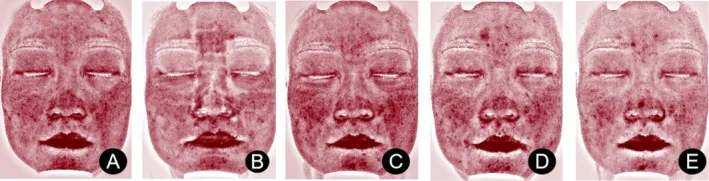
In a 2025 double-blind randomised trial, a mask containing panthenol with centella extract and bisabolol reduced redness after laser treatment compared with a saline dressing, and improved skin hydration. The images below show the change in the red area in the mask group:
And in a 2024 study of sensitive facial skin, water loss through the skin fell steadily over four weeks of a cream containing panthenol with other ingredients — a marker of a recovering barrier:
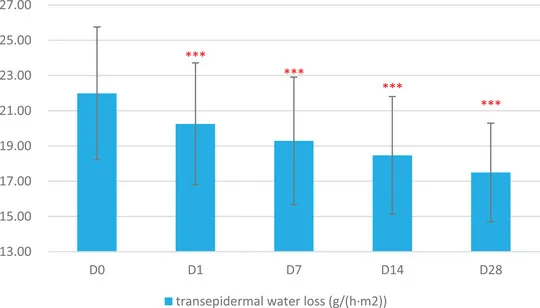
Both studies used multi-ingredient products, so their results can't be credited to Bepanthen itself. But they support its logical role: a repair product alongside treatment, not instead of it.
In practice, that role looks like this. A woman starts a retinoid, and after a week her cheeks feel tight and flake around the nose. Rather than stopping the retinoid, she adds a light panthenol cream in the morning and a thin layer over the dry patches at night, and the treatment becomes tolerable enough to continue. That is the job — keeping an effective treatment going — and it is a genuinely useful one.
Bepanthen for the lips and the corners of the mouth
The clearest use for the original ointment is the lips. Oral acne treatments, isotretinoin in particular, dry the lips and crack the corners of the mouth. In a 2026 randomised trial of children before tonsil surgery, cracking at the corners of the mouth on the next day was clearly less common in those who had dexpanthenol applied:
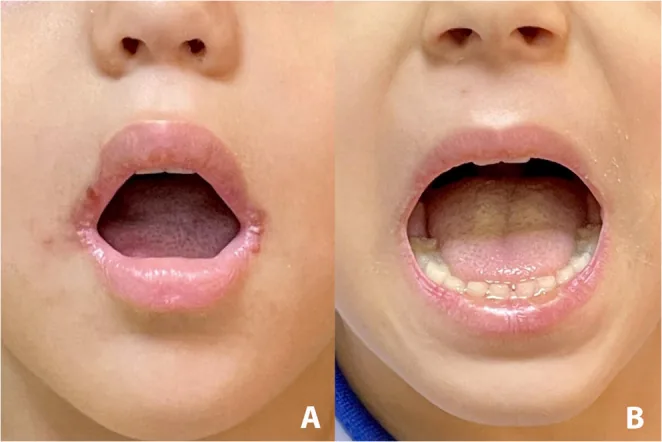
The setting is different from acne, but it shows what the ointment does well: protecting thin skin from drying and cracking.
Which form suits you?
| Form | Suits | Avoid it when |
|---|---|---|
| Original ointment | Lips, mouth corners, cracked skin | Oily, acne-prone facial skin |
| Cream | Facial skin dried or irritated by treatment | Very oily skin |
| Light lotion | Face and body alongside a drying treatment | Not enough for cracked lips |
The flowchart below lays out the decision:
flowchart TD
  A[Considering Bepanthen] --> B{Want to treat the spots themselves?}
  B -->|Yes| C[Not the right product - an acne plan instead]
  B -->|No| D{Dryness and peeling from acne treatment?}
  D -->|Yes| E{Oily skin?}
  E -->|Yes| F[Lotion or a light cream, not the ointment]
  E -->|No| G[The cream usually suits]
  D -->|No| H{Cracked lips?}
  H -->|Yes| I[Ointment on lips and mouth corners]
  H -->|No| J[Not needed]
Common mistakes with Bepanthen
- Putting the heavy ointment on spots overnight in the hope of drying them out.
- Stopping acne treatment and relying on a moisturiser once the skin gets dry; it is better to adjust how you use the treatment with your dermatologist.
- Thick layers around the mouth and nose; heavy ointments are among the triggers of perioral dermatitis.
- Treating it as a cure for brown marks; those need a different plan, as in acne scar treatments.
To choose a treatment for the spots themselves, read benzoyl peroxide for acne and Epiduo gel.
Frequently asked questions
Does Bepanthen cream treat acne?
No. Its active ingredient, dexpanthenol, moisturises and helps irritated skin recover, but it doesn't unblock pores, kill bacteria or reduce oil. Its value in acne is easing the dryness and irritation that acne treatments cause.
Does Bepanthen clog pores?
The original ointment is a heavy, greasy base, and on oily, acne-prone skin it can add to blockage or trigger small bumps around the mouth in some women. Lighter forms such as the cream or lotion suit the face better, and the ointment is best kept to small areas such as the lips and the corners of the mouth.
Does Bepanthen remove acne marks?
It doesn't remove brown or red marks, or scars. It may help skin recover after a spot has opened or after peeling, and reducing irritation may lower the chance of a new mark, but existing marks need a different treatment.
Can I use Bepanthen with retinoids?
Usually yes, and this is one of its best uses: moisturising the skin and lips during treatments that dry the skin out. It goes on at a different time from the treatment or over it, as your dermatologist advises, and it isn't a substitute for the treatment itself.
When to see a clinician
See a dermatologist if your acne treatment causes redness, peeling and burning that moisturising doesn't settle; if small bumps appear around your mouth and nose after using ointments; or if your spots are deep, recurring or leaving scars. See a doctor if a rash, itching and swelling appear after any cream, or if your lips crack and bleed despite moisturising during an oral treatment.
Related articles
- Benzoyl peroxide for acne
- Epiduo gel
- Flaky, dry skin on the face
- Acne scar treatments
- Antiseptic for acne
Further reading
- Bepanthen Ointment reviews — Acne.org
- Bepanthen Cream questions and answers — ProductReview.com.au
- Bepanthen — HealthTap
Medical disclaimer: This article is for health education only and is not a substitute for professional medical advice. If you have a skin condition that concerns you, please consult a dermatologist.