
Skinoren is a brand of azelaic acid cream, and one of the gentlest and most versatile topical acne treatments available: it reduces bacteria, inflammation and pore blockage, and at the same time fades the pigmentation acne leaves behind. But it is slow, and it works as part of a plan rather than a solution for every case.
Most of the pages that rank for this search are pharmacy listings with a price and usage instructions. What they leave out is the more important question: who is azelaic acid actually right for, and when is it not enough?
What is azelaic acid and how does it work?
Azelaic acid is a naturally occurring acid found in grains such as wheat and barley, made synthetically for medical use.
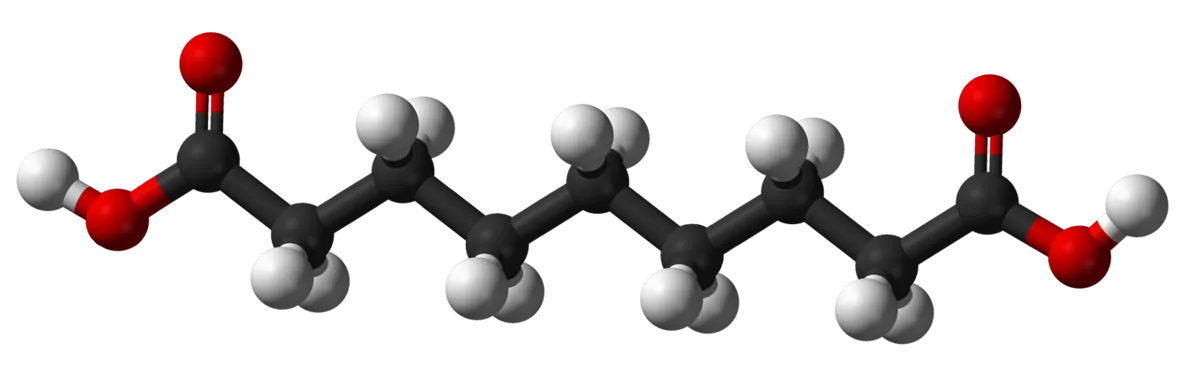
DermNet describes three actions in acne: it reduces bacterial growth inside the follicle, slows the abnormal cell growth that blocks pores, and calms inflammation. A 2025 review adds a fourth: it inhibits melanin production in overactive pigment cells.
This diagram from the same review summarises those mechanisms:
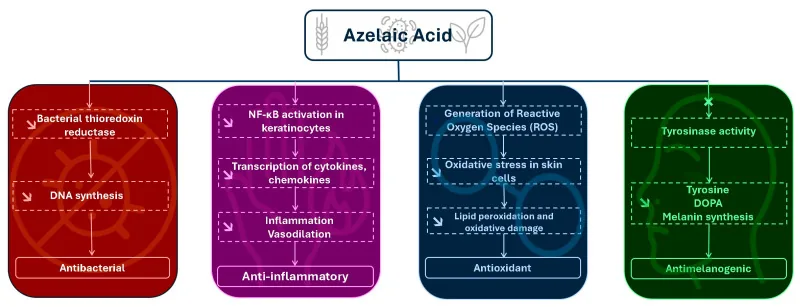
The practical point: azelaic acid doesn't hit just one cause of acne; it acts on several, each with moderate strength. That's why it suits mild to moderate acne, and why it shouldn't be expected to do what an oral treatment does for deep cystic acne.
Who is Skinoren right for?
| Condition | Azelaic acid's role | The limit |
|---|---|---|
| Mild to moderate acne | Reduces inflamed spots and comedones | Slow; takes weeks |
| Dark acne marks | Fades pigmentation gradually | Doesn't fill pitted scars |
| Melasma | An option to discuss, especially if alternatives irritate | Melasma returns without sun protection |
| Rosacea (bumps and redness) | Reduces inflammatory bumps | Doesn't remove visible vessels |
| Deep cystic or scarring acne | Not enough on its own | Needs assessment and stronger treatment |
The 2025 review found that therapeutic-strength azelaic acid improved acne to a degree comparable with topical retinoids in some studies, sometimes with better tolerability, and that irritation was usually mild and transient. That is what makes it a good choice for sensitive skin that can't tolerate stronger products.
In clinic, the people I most often reach for it with are those who have tried retinoids and found them too harsh, those whose acne leaves dark marks that outlast the spots, and those with acne and melasma at the same time — where one product can work on both.
Skinoren for acne marks and melasma: the "lightening" that's misunderstood
Many people search for "Skinoren for lightening". More precisely, it doesn't lighten your natural skin tone; it targets overactive pigment cells more than normal ones, so it fades excess pigmentation — dark acne marks and melasma.
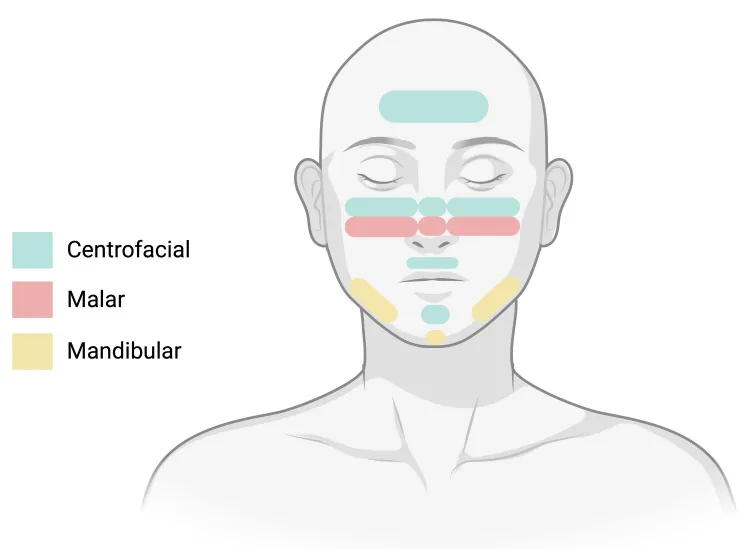
Melasma usually appears in a symmetrical pattern on the face, as in this diagram:
There is an important safety point for darker skin here. Long, unsupervised use of stronger lightening creams such as hydroquinone can cause a condition called exogenous ochronosis, which looks like melasma but is much harder to treat, as described in a 2026 case report in skin of colour. A systematic review and meta-analysis comparing azelaic acid with hydroquinone for melasma found azelaic acid an effective alternative. Even so, any melasma treatment fails without strict sun protection; more on that in what causes dark spots on the face.
When will you see results, and what are the side effects?
According to DermNet, some improvement in acne should be seen after about a month, with maximum benefit after several months of consistent use; rosacea may take up to twelve weeks.
This flowchart shows how to judge your progress:
flowchart TD
  A[Starting azelaic acid under medical guidance] --> B{Mild stinging or redness at first?}
  B -->|Yes| C[Usually expected - settles with continued use]
  B -->|No| D[Continue as planned]
  C --> E{Severe redness, itching or heavy peeling?}
  E -->|Yes| F[Stop and see your doctor]
  E -->|No| D
  D --> G{Improvement after several weeks of regular use?}
  G -->|Yes| H[Continue - benefit builds over months]
  G -->|No| I[Review the plan - you may need stronger treatment]
Common side effects are mild stinging or burning, redness and peeling, which usually settle. DermNet notes that some lightening of treated skin may be more noticeable in darker skin types, and that worsening of asthma has been reported in some patients.
How it fits with other treatments
Azelaic acid is rarely the only thing in a good acne plan. It is often combined with a gentle cleanser, a non-comedogenic moisturiser and daily sunscreen, and sometimes with benzoyl peroxide or a retinoid when acne is more active. Which combination makes sense, and in what order the products go on, depends on how sensitive your skin is and what else you are using; that is worth settling with your clinician rather than by trial and error. If irritation builds up, the usual fix is to simplify the routine rather than to add another soothing product on top.
Skinoren in pregnancy and breastfeeding
The UK product information for Skinoren states that there are no adequate, well-controlled studies in pregnant women and asks for caution when it is prescribed in pregnancy or breastfeeding, including making sure a baby doesn't come into contact with treated skin. This is your doctor's decision, not one for forum experiences.
Common mistakes with Skinoren
- Stopping in week two because nothing has happened yet; the effect is cumulative.
- Layering it randomly with strong exfoliants, doubling irritation without adding benefit.
- Relying on it alone for deep cystic acne or acne that scars; that needs an assessment, and stronger options are covered in acne treatment.
- Using it for melasma without sunscreen; the sun undoes what it builds.
- Buying it as a "whitening cream"; it is a treatment for specific conditions. How it compares with other spot products is in pimple patches and creams.
Frequently asked questions
Does Skinoren lighten the skin?
It doesn't lighten your natural skin tone, but it fades excess pigmentation such as dark acne marks and melasma, because azelaic acid inhibits an enzyme that overactive pigment cells need to make melanin. The effect is gradual, takes weeks, and doesn't replace sun protection.
How long does Skinoren take to work?
According to DermNet, some improvement in acne should be seen after about a month, with maximum benefit after several months of regular use; rosacea may take up to twelve weeks. Don't judge it in the first week.
Is Skinoren safe in pregnancy?
The UK product information states that there are no adequate, well-controlled studies in pregnant women and asks for caution when it is prescribed in pregnancy or breastfeeding. So in pregnancy it should only be used after talking to your doctor, who weighs the benefit against alternatives.
What are the side effects of Skinoren?
The commonest are mild stinging or burning, redness and peeling in the first weeks, which usually settle as you continue. Stop and see your doctor if redness, itching or peeling becomes severe. Some lightening of the treated skin can occur and may be more noticeable in darker skin.
When to see a clinician
See a dermatologist if your acne is deep and painful or leaving scars, if it hasn't improved after months of consistent topical treatment, or if dark patches are spreading despite sun protection — some things that look like melasma aren't. The same applies if you are pregnant or breastfeeding before starting any acne or pigmentation treatment, or if severe redness and itching follow use. For hormonal acne, which usually needs more than a cream, see hormonal acne.
Related articles
- Acne treatment
- Pimple patches and creams
- Creams for facial spots
- Hormonal acne
- What causes dark spots on the face
Further reading
- Skinoren 20% cream — Asda Online Doctor
- Skinoren 20% Cream: Summary of Product Characteristics — emc
- Skinoren Cream 20% — Singapore National Drug Formulary
- Azelaic acid — DermNet
Medical disclaimer: This article is for health education only and is not a substitute for professional medical advice. If you have a skin condition that concerns you, please consult a dermatologist.