Acretin cream's active ingredient is tretinoin, a prescription retinoid used for acne and for improving fine wrinkles, pigmentation and roughness caused by sun. It works by speeding cell turnover, preventing clogged pores and stimulating collagen, but it irritates the skin at first, increases sun sensitivity, and isn't used in pregnancy or when planning one. It comes in two strengths, and the higher one isn't best for everyone.
The Arabic pages that rank for this search are pharmacy pages and blogs that call it a "peeling cream" and give specific usage instructions without a prescription. This article explains what it actually does and its cautions, and leaves dosing and how to use it to your dermatologist.
How does tretinoin work?
Tretinoin is the oldest and best-studied topical retinoid. A 2025 review sums up its effects in the skin: it regulates cell turnover in the epidermis, reduces pigment, stimulates the cells that produce collagen, and inhibits the enzymes that break collagen down:
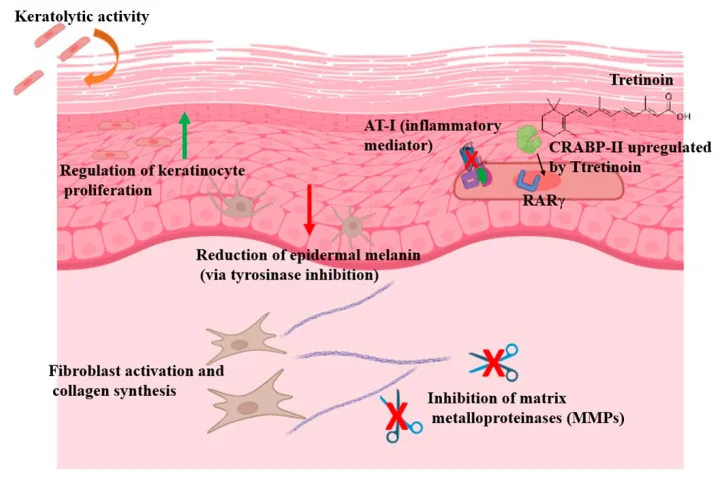
The strongest evidence is for acne and sun-related skin ageing, according to the same review, while evidence for other uses such as melasma and pigmentation comes from smaller studies. Its role in pigmentation is covered in tretinoin for pigmentation.
Acretin for acne
Tretinoin prevents the follicle opening from clogging, so fewer blackheads and whiteheads form, and then fewer inflamed spots. Like the adapalene in Sure Cure gel, it's a topical retinoid, but it's older, more irritating for many people, and less stable in light. Spots can increase in the first weeks because faster skin turnover brings hidden blockages to the surface; they settle as you continue.
Acretin for fine wrinkles
Tretinoin is the benchmark against which wrinkle treatments for sun damage are compared. In a 2010 randomised trial in women with wrinkles around the eyes, a cosmetic regimen was compared with tretinoin, and the appearance of wrinkles improved in both groups:
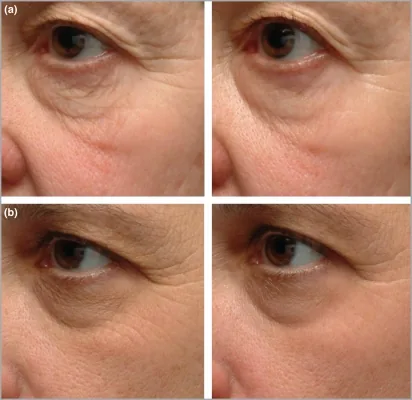
The trial was funded by a cosmetics company, and its aim was to show its product came close to tretinoin, but it also illustrates that tretinoin improves fine wrinkles gradually. Deep wrinkles aren't removed by any cream; alternatives are compared in Botox alternatives for wrinkles.
Not a "peeling cream"
Some pages call it a peeling cream because the skin flakes in the first weeks. But peeling is a side effect, not the goal; the benefit comes from regulating cell turnover and stimulating collagen over months. Using more of it in search of stronger peeling increases irritation without speeding results, and can leave dark patches in olive and brown skin.
Acretin for pigmentation and darker skin
Tretinoin can help fade brown marks and superficial pigmentation, because it speeds skin renewal and reduces pigment. But in darker skin, the irritation it causes can itself trigger new darkening, so a dermatologist starts cautiously, stresses daily sunscreen, and may combine it with other lightening ingredients in a melasma plan.
Tretinoin or retinol?
Retinol converts gradually in the skin into retinoic acid, so it's weaker, less irritating and sold without a prescription, whereas tretinoin is the directly active form. That's why retinol suits beginners and sensitive skin, and tretinoin suits situations that need a stronger effect under medical supervision. This is explained in how retinol works.
Acretin or Sure Cure?
Both are topical retinoids used for acne, so people often ask which is better. Adapalene, the ingredient in Sure Cure, was designed to be more stable and more selective, and many people find it gentler to start with, which is why it's often a first choice for acne alone. Tretinoin has the longer track record and the stronger evidence for sun-related ageing, so it may be preferred when fine lines and uneven tone matter as much as spots. Neither should be used alongside the other, and switching between them without advice mainly adds irritation. Your dermatologist will choose based on your skin type, sensitivity, the kind of acne you have, and what else you're treating.
Practical points
Keep the tube closed and away from heat and light, because tretinoin breaks down in light. Apply it to clean, completely dry skin, as damp skin absorbs more and can sting. Don't apply extra to "catch up" if you miss a day, and don't spot-treat individual spots with thick layers, because that mainly causes local irritation. Above all, be patient: judging it after a week or two, when irritation is at its peak and results haven't started, is the commonest reason people give up on a treatment that would have worked.
Side effects and how to ease them
The commonest side effects are redness, dryness, peeling and stinging, most noticeable in the first weeks. In a 2026 Indian study of patients whose skin was irritated by retinoids, itching, burning, stinging and tightness eased within weeks of using a moisturiser with sunscreen:
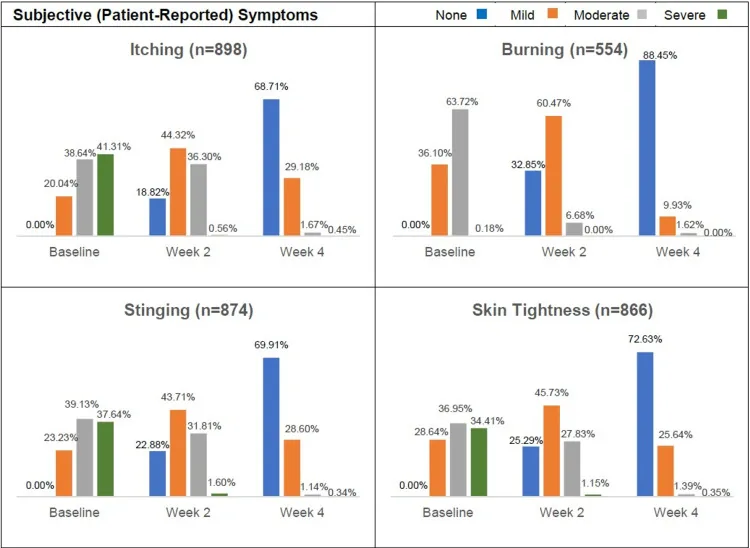
The study was retrospective with no comparison group, and the product belongs to a pharmaceutical company, but the principle is general: moisturiser and sunscreen make it possible to keep going. Avoid exfoliants, acids and scrubbing alongside it, and keep it away from the skin right next to the eyes and the corners of the nose and mouth.
| Strength | Usually suits | Note |
|---|---|---|
| Lower | Starting out, sensitive skin | Less irritation |
| Higher | After the skin has adjusted, on medical advice | Stronger and more irritating |
flowchart TD
  A[Considering Acretin cream] --> B{Pregnant, planning pregnancy or breastfeeding?}
  B -->|Yes| C[Don't use it - talk to your doctor]
  B -->|No| D{Acne, fine wrinkles or pigmentation?}
  D -->|Yes| E[On prescription - usually starting with the lower strength]
  D -->|No| F[You may not need it]
  E --> G{Severe irritation?}
  G -->|Yes| H[Tell your dermatologist to adjust use]
Who should avoid it?
It isn't used in pregnancy, when planning a pregnancy, or while breastfeeding without advice, nor on cuts, sunburn or active eczema, nor with another retinoid or strong exfoliants without asking your dermatologist. Avoid waxing and peels on treated areas, because the skin is thinner and more reactive. If you're using other acne medicines, on the skin or by mouth, tell your dermatologist before starting, because some combinations increase irritation or shouldn't be used together.
mindmap
  root((Acretin cream))
    Ingredient
      Tretinoin
      Prescription
    Helps
      Acne
      Fine wrinkles
      Pigmentation
    Side effects
      Redness and peeling
      Sun sensitivity
    Avoid
      Pregnancy
      Broken skin
Frequently asked questions
What is Acretin cream?
Acretin is a topical cream whose active ingredient is tretinoin, a retinoid derived from vitamin A. It comes in two strengths, is usually dispensed on prescription, and is used for acne and for signs of sun-related skin ageing.
What's the difference between Acretin's two strengths?
The higher strength is more potent and more irritating. A dermatologist usually starts with the lower one, then decides whether to move up depending on how your skin responds and tolerates it. The higher strength isn't better for everyone.
What are the side effects of Acretin cream?
The commonest are redness, dryness, peeling and stinging in the first weeks, increased sensitivity to the sun, and sometimes a temporary increase in spots at the start. It isn't used in pregnancy or when planning one.
Does Acretin remove wrinkles?
Tretinoin is one of the best-studied topical ingredients for improving fine wrinkles caused by sun, but improvement is gradual over months and it doesn't remove deep wrinkles. Daily sunscreen is an essential part of the result.
When to see a clinician
See a dermatologist before starting, to decide the strength and how to use it, and before any use if you're pregnant, breastfeeding or planning a pregnancy. See one if swelling, blistering or severe burning develops that doesn't settle, or if your spots haven't improved after months of regular use.
Related articles
Further reading
- An Updated Review of Topical Tretinoin in Dermatology — Journal of Clinical Medicine
- Acne: Diagnosis and treatment — American Academy of Dermatology
- A randomized, controlled comparative study of the wrinkle reduction benefits of a cosmetic regimen vs. a prescription tretinoin regimen — British Journal of Dermatology
Medical disclaimer: This article is for health education only and is not a substitute for professional medical advice. If you have a skin condition that concerns you, please consult a dermatologist.