Sure Cure gel's active ingredient is adapalene, a topical retinoid that prevents pores from clogging, so it reduces blackheads and whiteheads and eases mild to moderate acne. It works slowly and needs several weeks of regular use, and its most common side effects are dryness, redness and peeling at the start. It shouldn't be used in pregnancy or when planning one.
The Arabic pages that rank for this search are pharmacy listings and short drug leaflets that say it "removes spots, marks and pigmentation", and some claim it doesn't work without an antibiotic. This article explains what adapalene actually does, how to manage its side effects, and when it needs another treatment alongside it.
What is adapalene?
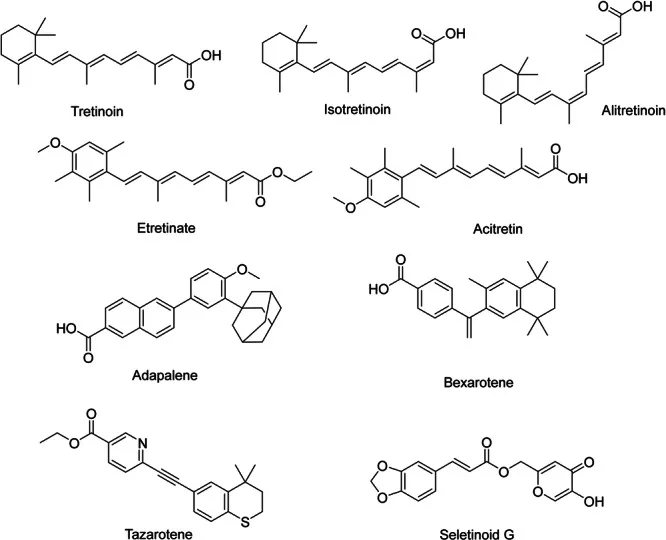
Adapalene is a retinoid, one of a group of substances derived from or similar to vitamin A. Retinoids differ in their chemical structure, and adapalene is known for being more stable and, for many people, less irritating than tretinoin, as a 2026 review summarises:
How does it work? It normalises how cells renew inside the follicle opening so they don't stick together and block it, which prevents blackheads and whiteheads, the starting point from which acne develops. It also has an anti-inflammatory effect. But it doesn't kill bacteria, which is why a dermatologist sometimes adds benzoyl peroxide, as in Epiduo gel, which combines the two.
Because it acts on blockages before they become visible spots, adapalene is as much a preventive treatment as a corrective one. That's why it's usually continued after the skin clears, to stop the cycle starting again.
Adapalene compared with other retinoids
Tretinoin, the oldest topical retinoid, is very effective for acne and sun damage but tends to irritate more, and it breaks down in light, so it's traditionally applied in the evening. Adapalene was designed to be more stable and to act more selectively on the receptors involved in acne, which is why many people find it gentler to start with. Trifarotene is a newer retinoid studied on both the face and the trunk. None of these is "the best" for everyone: the right one depends on your skin's sensitivity, the type of acne, cost and availability, and whether you're also treating marks or sun damage. Switching between them without advice, or using two at once, mainly adds irritation.
What are the benefits of Sure Cure for the face?
| Condition | Does it help? | Note |
|---|---|---|
| Blackheads and whiteheads | Yes, its main strength | Prevents blockage |
| Mild to moderate inflamed acne | Yes | Benzoyl peroxide may be added |
| Severe or cystic acne | Not enough alone | Needs medical treatment |
| Brown marks after spots | May help gradually | With sunscreen |
| Pitted scars | No | Other treatments |
| Melasma | Not its main treatment | A melasma plan |
Is it enough on its own? For mild acne dominated by blackheads and whiteheads it may be; more inflamed acne often needs another ingredient alongside it, chosen by a dermatologist. The claim that it never works without an antibiotic isn't accurate, but it's also true that combining treatments that act on different drivers of acne usually works better than any single one.
What does a response to a topical retinoid look like?
Improvement is gradual, and spots can increase in the first few weeks before they improve. In a Malaysian study published in 2026 of another topical retinoid, trifarotene, spots and brown marks improved gradually over twelve weeks:
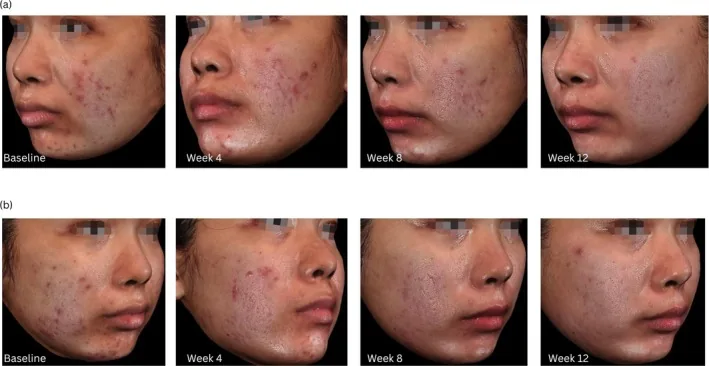
These photos show a different retinoid from adapalene, in a small study with no comparison group, but they illustrate the shape and pace of response with this class of treatment.
Why spots can increase at first
Some people who start adapalene or another retinoid notice more spots in the first few weeks. Speeding up skin renewal brings blockages that were already forming under the skin to the surface sooner. This flare is usually in the places where you normally get spots, and settles as you continue. Spots in new places, or severe redness and burning, may be irritation or allergy rather than a passing phase, and need a dermatologist's advice rather than waiting it out.
Side effects and how to ease them
The most common side effects are dryness, redness, peeling and stinging, most noticeable in the first weeks and usually easing as the skin adjusts. In a 2026 Indian study of patients whose skin was irritated by retinoids, itching, burning, stinging and tightness eased within weeks of using a moisturiser with sunscreen:
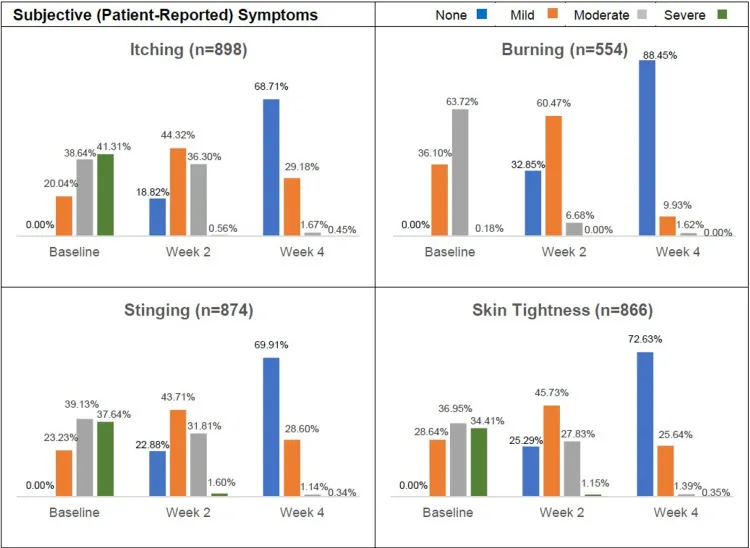
The study was retrospective with no comparison group, and the product belongs to a pharmaceutical company, but the principle is general: moisturiser and sunscreen make it possible to keep using a retinoid. That's covered in the benefits of moisturising. Avoid strong exfoliants, acids and scrubbing alongside it, and follow your dermatologist's instructions or the leaflet on how and how often to use it.
flowchart TD
  A[Considering Sure Cure] --> B{Pregnant or planning pregnancy?}
  B -->|Yes| C[Don't use it - talk to your doctor]
  B -->|No| D{Blackheads or mild to moderate spots?}
  D -->|Yes| E[May suit - with moisturiser and sunscreen]
  D -->|No| F{Deep painful spots or pitted scars?}
  F -->|Yes| G[See a dermatologist - other treatment]
  E --> H{Severe irritation or no improvement after months?}
  H -->|Yes| G
Who should avoid it?
It shouldn't be used in pregnancy or when planning one, on cuts, sunburn or skin affected by eczema, or if you're allergic to adapalene or any of the gel's ingredients. Avoid combining it with another retinoid or strong exfoliants without advice. The American Academy of Dermatology's guide to acne diagnosis and treatment describes retinoids as a cornerstone of acne treatment, but also stresses that the right combination depends on the type and severity of acne.
mindmap
  root((Sure Cure gel))
    Active ingredient
      Adapalene
      Topical retinoid
    Helps
      Blackheads
      Mild to moderate acne
      Brown marks gradually
    Side effects
      Dryness and redness
      Sun sensitivity
    Avoid
      Pregnancy
      Cuts and eczema
Frequently asked questions
What is Sure Cure gel and what is its active ingredient?
Sure Cure is a topical gel whose active ingredient is adapalene, a retinoid related to vitamin A. According to pharmacy listings, it's used to treat acne on the face, chest and back.
Adapalene compared with other retinoids
Tretinoin, the oldest topical retinoid, is very effective for acne and sun damage but tends to irritate more, and it breaks down in light, so it's traditionally applied in the evening. Adapalene was designed to be more stable and to act more selectively on the receptors involved in acne, which is why many people find it gentler to start with. Trifarotene is a newer retinoid studied on both the face and the trunk. None of these is "the best" for everyone: the right one depends on your skin's sensitivity, the type of acne, cost and availability, and whether you're also treating marks or sun damage. Switching between them without advice, or using two at once, mainly adds irritation.
What are the benefits of Sure Cure for the face?
It prevents pores from clogging and reduces blackheads and whiteheads, eases mild to moderate inflamed acne, and with continued use may help brown marks left by spots fade. But it works slowly and needs several weeks of regular use.
What are the side effects of Sure Cure?
The most common are dryness, redness, peeling and stinging, especially in the first few weeks, and spots may briefly increase at first. It makes the skin more sensitive to the sun, so sunscreen is essential. It shouldn't be used in pregnancy or when planning one.
Does Sure Cure remove acne marks?
It may help brown marks fade gradually, because it speeds skin renewal and prevents new spots that would leave new marks, but it doesn't fill pitted scars. Pitted scars need other treatments decided by a dermatologist.
When to see a clinician
See a dermatologist before starting if your spots are deep and painful or leave pits, or if you're pregnant, breastfeeding or planning a pregnancy. See one too if severe irritation with swelling or blistering develops, if your spots haven't improved after months of regular use, or if you need to combine it with another treatment.
Related articles
Further reading
- Acne: Diagnosis and treatment — American Academy of Dermatology
- A Comprehensive Review of Acne Treatments: Unpacking the Chemical Structures and Effective Bioactive Compounds — Health Science Reports
- Efficacy and Tolerability of Topical Trifarotene in Managing Acne Vulgaris Among Malaysians — Journal of Cosmetic Dermatology
Medical disclaimer: This article is for health education only and is not a substitute for professional medical advice. If you have a skin condition that concerns you, please consult a dermatologist.