
An exfoliator for acne helps when it is a gentle chemical one, such as salicylic or glycolic acid, because it loosens the dead cells that block pores without rubbing. A gritty scrub does the opposite on inflamed spots: it increases redness and can leave dark marks. Either way, an exfoliant is a supporting step in mild acne, not a treatment for moderate or deep acne.
The Arabic pages that rank for this search are short medical Q&As and shop pages for gritty scrubs. This article separates two kinds of exfoliation that behave in opposite ways with spots.
Why might exfoliating help acne?
A spot starts as a tiny closed head, when dead cells pile up with sebum inside the pore opening and plug it. If that opening stayed clear, there would be fewer whiteheads and blackheads, which come before inflamed spots. That is the logic of exfoliating: helping dead cells separate before they build up.
But the place exfoliation needs to reach is inside the pore, not just the surface. And this is where the two kinds of exfoliation differ fundamentally.
It is also worth knowing that the strongest "exfoliant" for the inside of the pore isn't a product sold under that name at all: it is a topical retinoid such as adapalene or tretinoin, which normalises how cells renew within the pore opening itself. So if you already use a retinoid, you usually don't need an extra exfoliant, and adding one doubles the irritation before it doubles the benefit.
Exfoliator for acne: chemical or gritty?
| Chemical exfoliant | Gritty scrub or brush | |
|---|---|---|
| How it works | Acids loosen the bonds between cells | Friction removes surface cells |
| Reaches inside the pore? | Salicylic yes, because it dissolves in sebum | No |
| With inflamed spots | Gentle if well chosen | Rubs them and adds inflammation |
| Risk of dark marks | Low unless overused | Higher in olive and brown skin |
| Examples | Salicylic, glycolic, lactic | Sugar, crushed shells, brushes |
Salicylic acid dissolves in sebum and so gets into pores; it suits oily skin and blackheads best, as covered in Stridex pads. Glycolic acid dissolves in water and works more on the surface and texture, and in the laboratory it also has an antibacterial effect that depends on how acidic the product is, as a 2020 study showed:
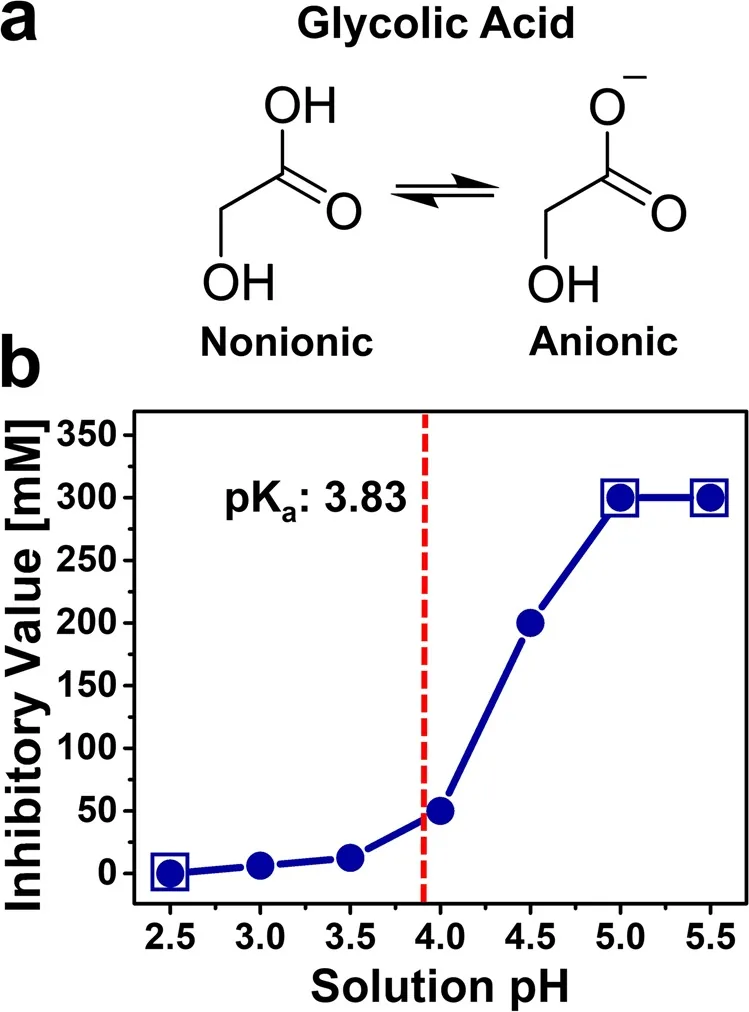
That explains why products carrying the same acid aren't equal: acidity and formulation change the effect — and the more acidic, the more irritating too.
What do studies show about acid exfoliants?
In a 2026 study of eighty-seven adults with mild to moderate acne who used a serum combining salicylic, glycolic and a third acid with niacinamide for about six months, spot counts fell steadily:
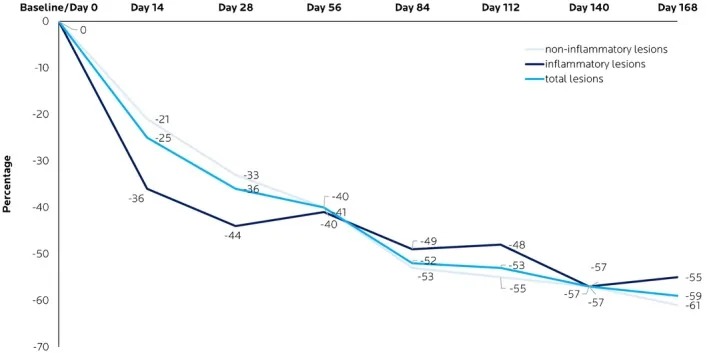
But note the limits of that study: there was no comparison group, it was funded by the manufacturer, and acne partly improves with time on its own. The result is encouraging, not conclusive.
In-clinic peels are stronger. In an exploratory 2026 study of sixteen adults, spot counts fell after twelve weeks of chemical peel sessions using a blend of acids:
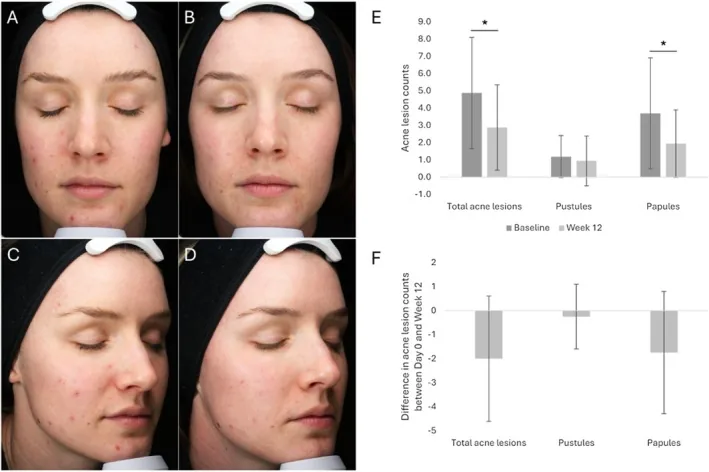
That too was a small study without a comparison group and with company funding. And in-clinic peels need an assessment of skin type, because darker skin is more prone to dark marks afterwards, as covered in skin darkening after a chemical peel.
How to choose a suitable exfoliant
The flowchart below lays out the decision:
flowchart TD
  A[Looking for an exfoliator for acne] --> B{Many red, inflamed spots?}
  B -->|Yes| C[No scrubs - acne treatment first]
  B -->|No| D{Blackheads, whiteheads and oily skin?}
  D -->|Yes| E[A salicylic acid exfoliant]
  D -->|No| F{Dull texture and superficial brown marks?}
  F -->|Yes| G[Glycolic or lactic acid, with sunscreen]
  F -->|No| H[No exfoliant needed]
  E --> I{Using a retinoid or benzoyl peroxide?}
  G --> I
  I -->|Yes| J[Ask your dermatologist before adding it]
Format matters as much as the acid. A wash-off cleanser containing salicylic acid is the gentlest way in, because contact time is short. A leave-on toner or serum works harder and irritates more. A weekly mask sits in between. If your skin is sensitive, start with the wash-off format and only move to a leave-on product if you tolerate it well.
Exfoliating in olive and brown skin
Darker skin tones need a little more caution, not because exfoliants don't work, but because the price of irritation is higher. Every episode of inflammation, whether from a spot or from a product that stung, can leave a brown mark that lasts for months. That makes gentle, steady exfoliation the better bet than strong, occasional sessions, and it makes daily sunscreen non-negotiable, since sun exposure darkens fresh marks. If a product leaves your skin red or stinging the next morning, it is too strong for you at that frequency, whatever the label suggests.
Signs of over-exfoliating
- Stinging or burning from products that never used to bother you.
- A tight, plastic-like shine, with dryness and flaking.
- Persistent redness and small new bumps.
- Dark marks around spots getting darker rather than fading.
If you notice these, stop exfoliating and other actives, and go back to a gentle cleanser, moisturiser and sunscreen until the skin settles, as described in flaky, dry skin on the face.
Frequently asked questions
Is exfoliating good for acne?
A gentle chemical exfoliant can help, because acids such as salicylic and glycolic loosen the dead cells that block pores. A gritty scrub rubs inflamed spots, increases redness and can spread inflammation. And an exfoliant alone doesn't treat moderate or deep acne.
What is the difference between chemical and physical exfoliation?
Physical exfoliation uses grains or a brush to remove dead cells by friction; chemical exfoliation uses acids to loosen the bonds between cells without rubbing. In acne, chemical is the better fit because it reaches inside the pore and doesn't injure spots, whereas rubbing irritates inflamed skin.
How often should I exfoliate with acne?
It depends on the product's strength, your skin's tolerance and what else you use. Start with less than the product suggests and build up gradually, and stop if you get lasting stinging, redness or peeling. If you use a retinoid or benzoyl peroxide, ask your dermatologist before adding any exfoliant.
Does exfoliating remove acne marks?
Regular chemical exfoliation may gradually fade superficial brown marks, and in-clinic peels are stronger. But over-exfoliating irritates the skin and can deepen dark marks, especially in olive and brown skin, and it doesn't remove depressed scars.
When to see a clinician
See a dermatologist if your spots are inflamed and numerous, deep or scarring; if blackheads and texture haven't improved after several weeks of a suitable exfoliant; if redness, burning and peeling don't settle after exfoliating; or if you are considering an in-clinic chemical peel and your skin is olive or brown. For a complete treatment plan, read acne medicines.
Related articles
- Stridex pads
- La Roche-Posay Effaclar Duo
- Flaky, dry skin on the face
- Skin darkening after a chemical peel
- Acne medicines
Further reading
- The 5 Best Exfoliators For Acne — Bustle
- Physical Exfoliation vs. Chemical Exfoliation: How to Choose — Dermstore
- Chemical Exfoliant vs. Physical Scrub: Why Dermatologists Don't Recommend Scrubs for Your Face — Dr. Su
Medical disclaimer: This article is for health education only and is not a substitute for professional medical advice. If you have a skin condition that concerns you, please consult a dermatologist.