

Tetralysal is an oral antibiotic whose active ingredient, lymecycline, belongs to the tetracycline family; it's prescribed for moderate to severe inflammatory acne. Its commonest side effects are stomach upset, headache and increased sensitivity to the sun, and it can cause oral or vaginal thrush. Rarely, serious reactions occur that mean stopping and seeking medical advice straight away. It isn't used in pregnancy or breastfeeding.
Few Arabic pages rank for this search, and most of the available information comes from English patient leaflets. This article sets out the side effects clearly, explains why shorter courses are now preferred, and tells you when to stop.
What is Tetralysal and how does it work?
Lymecycline is a tetracycline, like doxycycline and minocycline. It reduces acne bacteria and dampens inflammation, which is why it's used for red, inflamed spots rather than for blackheads alone. A 2026 review summarises the structures of this family and how they work:
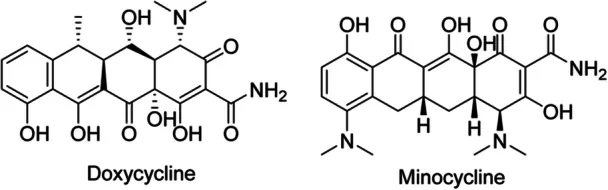
Lymecycline isn't shown in the figure, but it belongs to the same family and shares many of its effects and cautions. Tetracyclines work against acne in two ways: they reduce the numbers of Cutibacterium acnes, the bacterium that lives in oily follicles, and they have an anti-inflammatory action of their own. That's why they help red, tender spots and pustules but do little for closed comedones on their own.
Common side effects
According to the UK product information, the commonest effects are nausea, abdominal pain, diarrhoea and headache. Taking the capsule with a full glass of water and not lying down straight afterwards reduces irritation of the oesophagus. It can also cause thrush in the mouth or vagina, because the antibiotic disturbs the normal balance of microbes.
| Effect | How common | What to do |
|---|---|---|
| Nausea, abdominal pain, diarrhoea | Common | Often settles; tell your doctor if it persists |
| Mild headache | Common | Keep an eye on it |
| Sun sensitivity | Possible | Sunscreen and covering up |
| Oral or vaginal thrush | Possible | Simple treatment from your doctor |
| Severe headache with visual disturbance | Rare | Stop and see a doctor urgently |
| Severe rash or facial swelling | Rare | Emergency care |
Most people who take lymecycline have no side effects or only mild ones. Stomach symptoms are the commonest reason people stop early, and they often ease after the first days. Diarrhoea that is severe, bloody, or continues after the course has finished needs medical review, because antibiotics occasionally trigger a more serious bowel infection.
Sun sensitivity
Tetracyclines can make the skin burn faster in the sun. In a 2026 case report of a patient taking doxycycline, blisters appeared on the backs of the hands in sun-exposed skin, especially in areas of vitiligo that lack protective pigment:
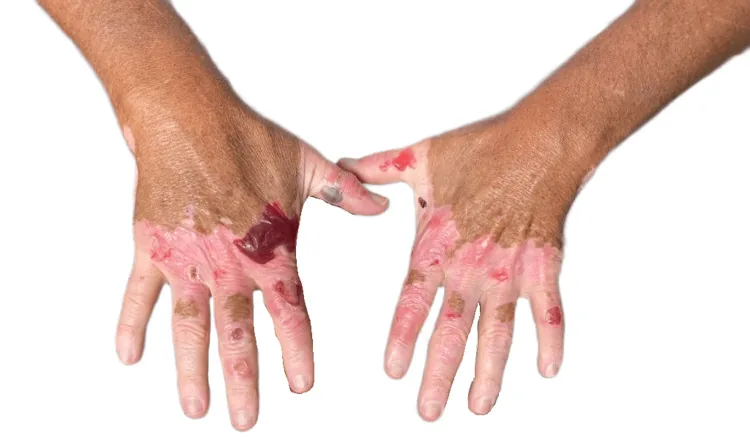
This is a severe case with a different drug from the same family, but it shows why sunscreen, covering up and avoiding sunbeds matter during treatment. Sensitivity varies between tetracyclines and between people, and it's worth being especially careful on holiday or if you work outdoors. A burning or stinging feeling in exposed skin after time outside is a signal to protect it more, and to mention it to your doctor.
Why shorter courses are preferred
Long courses of antibiotics for acne increase bacterial resistance. In a 2026 retrospective study of two hundred and forty patients treated with doxycycline or minocycline, acne returned more often within a year after longer courses, and resistance was also higher, while early response was similar between groups:
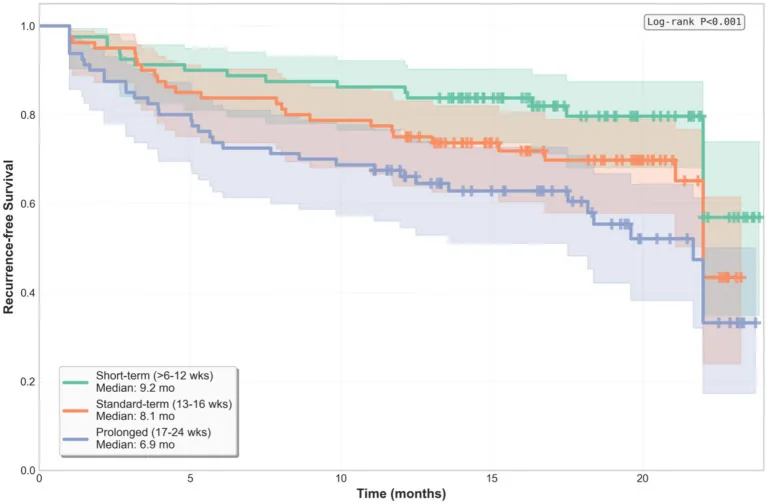
The study was retrospective and from a single centre, so it can't prove that longer courses caused the relapses; people with more stubborn acne may simply have been treated for longer. But it's consistent with general guidance: a limited course set by your doctor, combined with a topical treatment such as benzoyl peroxide or a retinoid that continues after the antibiotic stops, to keep acne from coming back. Benzoyl peroxide is particularly useful alongside an antibiotic because bacteria don't develop resistance to it.
graph TD
  A[Taking Tetralysal] --> B{Severe rash, swelling, or severe headache with visual disturbance?}
  B -->|Yes| C[Stop and see a doctor urgently]
  B -->|No| D{Nausea or stomach upset?}
  D -->|Yes| E[Plenty of water, don't lie down straight after - tell your doctor if it persists]
  D -->|No| F[Continue with sunscreen and topical treatment]
Interactions and cautions
Antacids and iron, calcium and magnesium supplements reduce its absorption if taken at the same time, so ask your pharmacist how to space them. Milk in large amounts may have a smaller effect than with older tetracyclines, but it's still sensible to follow the leaflet. It can interact with blood thinners, lithium and some other medicines, so tell your doctor about everything you take, including supplements. It isn't used in pregnancy or breastfeeding, or in young children, because it can affect teeth and bones. It's never combined with isotretinoin, because both can raise pressure around the brain; see isotretinoin and pigmentation.
mindmap
  root((Tetralysal))
    Common effects
      Stomach upset
      Headache
      Sun sensitivity
      Thrush
    Rare but serious
      Severe rash
      Headache with visual disturbance
    Cautions
      Pregnancy and breastfeeding
      Iron and calcium
      Isotretinoin
Practical tips during treatment
Read the whole leaflet and follow your doctor's and pharmacist's instructions on how to take it and for how long, and don't change anything yourself. Taking the capsule with a full glass of water while sitting or standing reduces irritation of the oesophagus, and waiting before lying down helps too. If you notice heartburn or pain on swallowing, tell your doctor.
Keep a simple skincare routine: a gentle cleanser, a light non-oily moisturiser, and a broad-spectrum sunscreen every morning. The topical treatment your doctor prescribes is a core part of the plan rather than an optional extra, because it reduces resistance and maintains the result after stopping. Avoid scrubbing or using several harsh products at once, which increases irritation and can make inflamed spots look worse.
If you use the contraceptive pill, ask your doctor about extra precautions if you have vomiting or severe diarrhoea, since that can reduce absorption of the pill. Don't share the medicine with anyone else, even if their spots look similar; every case needs its own assessment.
What to expect
Antibiotics for acne work gradually, and your doctor will usually review progress after a set period. Inflamed spots tend to settle before blackheads and marks, and the dark marks that inflamed spots leave behind fade more slowly than the spots themselves. If acne hasn't improved enough by the review, the next step might be a different combination or a referral for other treatments, rather than simply carrying on with the antibiotic. Broader options are covered in acne medicines.
Frequently asked questions
What are the side effects of Tetralysal?
The commonest are nausea, abdominal pain, diarrhoea and headache, along with increased sensitivity to the sun. Oral or vaginal thrush can also occur. Rarely, serious reactions such as a severe rash, facial swelling, or a severe headache with visual disturbance happen; these need you to stop and seek medical advice straight away.
Does Tetralysal make you sensitive to the sun?
Yes, drugs in the tetracycline family can increase the skin's sensitivity to sunlight, so it burns faster or, in severe cases, blisters. Use a broad-spectrum sunscreen, cover up, and avoid sunbeds while taking it.
Can Tetralysal be taken during pregnancy?
No. Tetracyclines aren't used in pregnancy or breastfeeding because they can affect a baby's developing bones and teeth. Tell your doctor straight away if you're pregnant or planning a pregnancy.
How long is Tetralysal used for acne?
Your doctor decides the length. Current practice favours the shortest effective course, combined with a topical treatment such as benzoyl peroxide or a retinoid, because longer use increases bacterial resistance and the chance of acne returning after stopping.
When to see a clinician
Stop the medicine and seek urgent care if you develop a widespread rash with sores or blisters, swelling of the face or lips or difficulty breathing, a severe headache with blurred or double vision, or yellowing of the skin or eyes. See your doctor if diarrhoea is severe or persistent, if you become pregnant, or if your acne hasn't improved by the time agreed for review.
Related articles
- Acne medicines
- Isotretinoin and pigmentation
- Antibiotic ointment for the skin
- Benzoyl peroxide for acne
Further reading
- Tetralysal — Summary of Product Characteristics (emc)
- Long-term impact of antibiotic exposure duration on recurrence and microbial resistance in moderate-to-severe acne — Frontiers in Medicine
- Acne: Diagnosis and treatment — American Academy of Dermatology
Medical disclaimer: This article is for health education only and is not a substitute for professional medical advice. If you have a skin condition that concerns you, please consult a dermatologist.