
The best face cream after 50 isn't a single product but a routine with three pillars: a rich moisturiser to replace lost lipids and water, an ingredient for fine lines such as retinol if your skin tolerates it, and a broad-spectrum sunscreen every day. After menopause, oestrogen falls, collagen declines and skin becomes thinner and drier, so it needs richer and gentler products than it did in your thirties.
The Arabic pages that rank for this search list brand names and prices, without explaining why skin changes after 50 or which ingredients deserve a place in the cream. This article starts with the reason, then moves to choosing.
Why does skin change after 50?
Oestrogen helps maintain collagen, elasticity and moisture in the skin. A 2026 review shows how oestrogen falls sharply around menopause, while collagen and elastin keep declining with age:
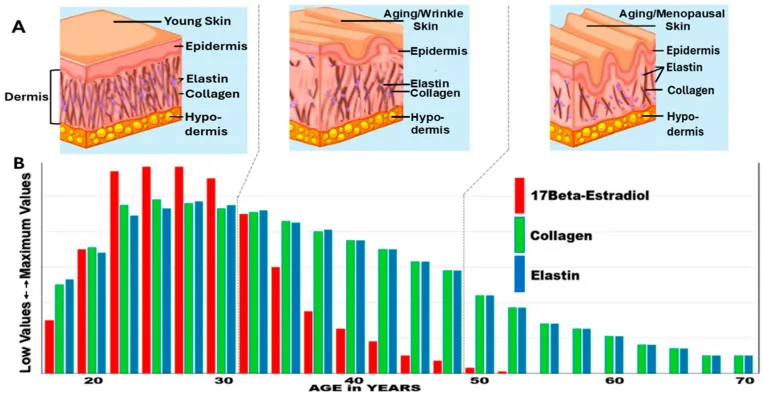
The result is thinner, drier, less elastic skin, in which fine lines and sagging show more clearly. The chart is illustrative of the general trend rather than measurements from any one woman.
Sun matters as much as age
Not everything that shows on the face after 50 is caused by age. Sun, smoking and pollution speed collagen breakdown and cause spots and wrinkles, as the same review summarises:
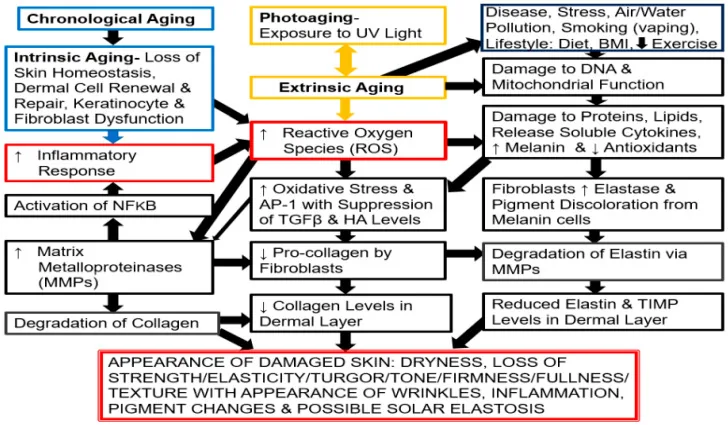
That's why daily sunscreen remains the most important anti-ageing product at any age, even if you start late. It also prevents new sun spots and protects the results of any other treatment you use.
The ingredients that earn their place
| Ingredient | What it helps | Note after 50 |
|---|---|---|
| Ceramides and glycerin | Hydration and barrier repair | Essential for drier skin |
| Retinol | Fine lines and texture | Start slowly with rich moisture |
| Niacinamide | Spots, redness and barrier | Gentle and versatile |
| Vitamin C | Spots and radiance | Mornings under sunscreen |
| Peptides | Texture | Weaker evidence than retinoids |
| Broad-spectrum sunscreen | Preventing ageing and spots | Every morning |
Retinoids: the best-studied ingredients for wrinkles
Retinoids are among the best-studied topical ingredients for improving fine lines. In a 2010 randomised trial in women with wrinkles around the eyes, both a cosmetic regimen containing a retinol derivative, niacinamide and peptides, and a prescription retinoid regimen, improved the appearance of wrinkles:
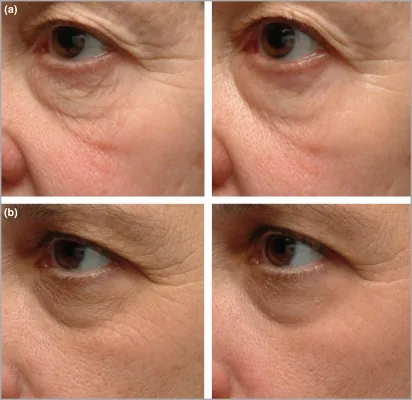
The trial was funded by a cosmetics company, but it illustrates that a well-designed cosmetic routine can come close to a prescription retinoid for fine lines with less irritation, which matters for drier skin after 50. The difference between the options is explained in how retinol works and Acretin cream.
A suggested routine
Morning: a gentle cleanser or just water, then a vitamin C or niacinamide serum if you like, then moisturiser, then sunscreen. Evening: a gentle cleanser, then retinol two or three times a week to begin with, then a rich moisturiser. On nights off retinol, moisturiser alone is enough.
flowchart TD
  A[Skin after 50] --> B{Dryness and tightness?}
  B -->|Yes| C[Rich moisturiser with ceramides]
  B -->|No| D[Medium-weight moisturiser]
  C --> E{Bothered by fine lines?}
  D --> E
  E -->|Yes| F[Retinol introduced slowly]
  E -->|No| G[Sunscreen and moisturiser are enough]
  F --> H{Irritation?}
  H -->|Yes| I[Use less often, moisturise more]
Spots and redness after 50
With age, brown sun spots appear and fine blood vessels on the cheeks and nose become more visible for many women. Niacinamide and vitamin C can help even out tone gradually, and sunscreen prevents new spots. But any new or changing spot needs checking before you try to lighten it, because some skin cancers start as a brown or pink spot that doesn't heal. If your skin reddens easily with products, choose simple fragrance-free formulas and introduce each new product on its own.
Don't forget the neck and hands
The neck and backs of the hands are exposed to the sun just like the face, and their skin is thinner, so signs of age often show there early. Extend moisturiser and sunscreen to the neck, upper chest and backs of the hands every day. Retinol on the neck needs extra care because the skin is more sensitive, so use it less often than on the face. Neck lines are covered in neck wrinkles.
Lifestyle still counts
Creams work on the surface, but the skin also reflects what happens elsewhere. Smoking speeds collagen breakdown and is one of the strongest external causes of wrinkles, so stopping at any age helps. Sleep, a varied diet with enough protein, and staying active all support skin repair, although no food or supplement has been shown to reverse wrinkles. Collagen supplements are heavily marketed, but the evidence that they change facial wrinkles is limited and often industry-funded. Spending on daily sunscreen and a good moisturiser is a safer bet than spending on supplements.
Hormones and the skin
Hormone therapy after menopause can affect the skin, and the review above discusses this, but it's a whole-body medical decision about overall health, not about the skin alone, and is discussed with your doctor. Cosmetic creams claiming to contain "plant hormones" have limited evidence.
Texture, not just ingredients
After 50, many women find that lotions that suited them before now feel thin, and that their skin feels tight by midday. A richer cream, or a light moisturiser followed by a thin layer of something more occlusive at night, often feels more comfortable. Fragrance-free formulas are worth choosing, because mature skin can become more reactive, and fragrance is a common cause of irritation. If you're unsure, a simple, inexpensive ceramide cream is a perfectly good base on which to build.
mindmap
  root((Skin after 50))
    Changes
      Lower oestrogen
      Less collagen
      Drier, thinner skin
    Routine
      Rich moisturiser
      Retinol
      Sunscreen
    Extras
      Niacinamide
      Vitamin C
Frequently asked questions
What is the best face cream after 50?
There isn't one cream but a routine: a rich moisturiser with ceramides or similar ingredients to replace lost lipids, an ingredient for fine lines such as retinol if your skin tolerates it, and a broad-spectrum sunscreen every day. The brand matters less than the ingredients.
Why does skin get drier after menopause?
Oestrogen falls after menopause, so collagen and elasticity decline and the skin's ability to hold water and make oil falls too. Skin becomes thinner and drier, and needs richer moisturising than it used to.
Is retinol suitable after 50?
Usually yes, and it's one of the best-studied ingredients for fine lines. But skin after 50 is drier and more sensitive, so start with a low strength once or twice a week alongside a rich moisturiser.
Are expensive creams better for skin after 50?
Not necessarily. What matters is proven ingredients at a suitable strength, how well your skin tolerates them, and consistency. A simple ceramide cream with sunscreen may do more than a luxury cream without effective ingredients.
When to see a clinician
See a dermatologist if a new spot appears that changes in shape or colour, bleeds or won't heal; regular skin checks matter more after 50. See one too if dryness or itching persists despite moisturising, if retinol causes severe irritation, or if you want a plan for wrinkles or sagging that goes beyond creams.
Related articles
Further reading
- Overview of Aging, Skin Health, Estrogen, Menopause and HRT — Life
- 10 skin care secrets for healthier-looking skin — American Academy of Dermatology
- A randomized, controlled comparative study of the wrinkle reduction benefits of a cosmetic regimen vs. a prescription tretinoin regimen — British Journal of Dermatology
Medical disclaimer: This article is for health education only and is not a substitute for professional medical advice. If you have a skin condition that concerns you, please consult a dermatologist.