
Bioderma is better known for sensitive and oily skin, but it does market products for wrinkles, chiefly the Hydrabio Hyalu+ serum with hyaluronic acid and niacinamide and the Créaline serum with bakuchiol, alongside its Photoderm sunscreens. These products hydrate and reasonably improve texture and fine lines, but the best-evidenced options for wrinkles remain daily sunscreen and retinoids. We found no independent published trials of Bioderma's own products.
The Arabic pages that appear for this search are pharmacy listings, and some confuse Bioderma with products with similar names, such as Derma Pella. This article explains what's in Bioderma's anti-wrinkle products and what actually helps. We have no connection with the manufacturer.
Why wrinkles form
Wrinkles result from collagen and elastin declining with age, accelerated by sun exposure, smoking and pollution. A 2026 review summarises these causes:
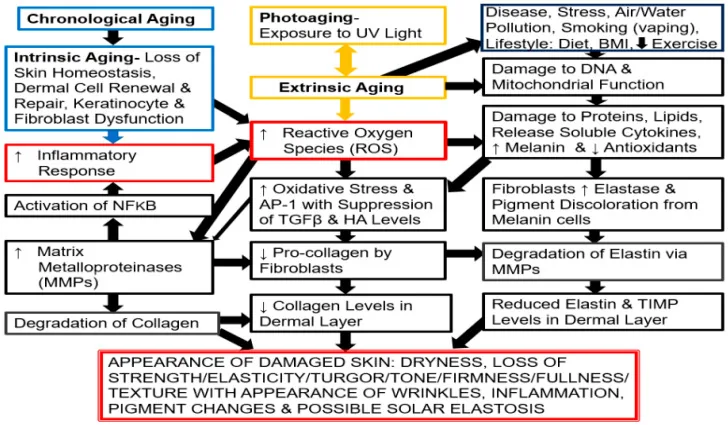
Sun alone accounts for much of the visible ageing on the face, which is why sunscreen is the most important wrinkle-prevention product, whichever brand you choose. Using it every day, not just on beach days, is what protects collagen over the years.
Bioderma's anti-wrinkle products
| Product | Key ingredients, per retailers | What it helps |
|---|---|---|
| Hydrabio Hyalu+ serum | Hyaluronic acid and niacinamide | Hydration, plumping and fine lines |
| Créaline AR serum | Bakuchiol and vitamin E | Sensitive, redness-prone skin |
| Photoderm | Broad-spectrum sun filters | Preventing photoageing |
| Hydrabio moisturisers | Humectants and emollients | Hydrating dry skin |
Names and formulations vary between countries, so read the ingredient list on the pack.
Hyaluronic acid and niacinamide: what does research show?
Hyaluronic acid draws water to the skin's surface so it looks plumper, and niacinamide strengthens the skin barrier and improves texture and tone. In a 2024 study of forty-four women using a formula combining both for two months, radiance, smoothness, plumpness and fine lines improved, and wrinkles improved slightly by the end of the second month:
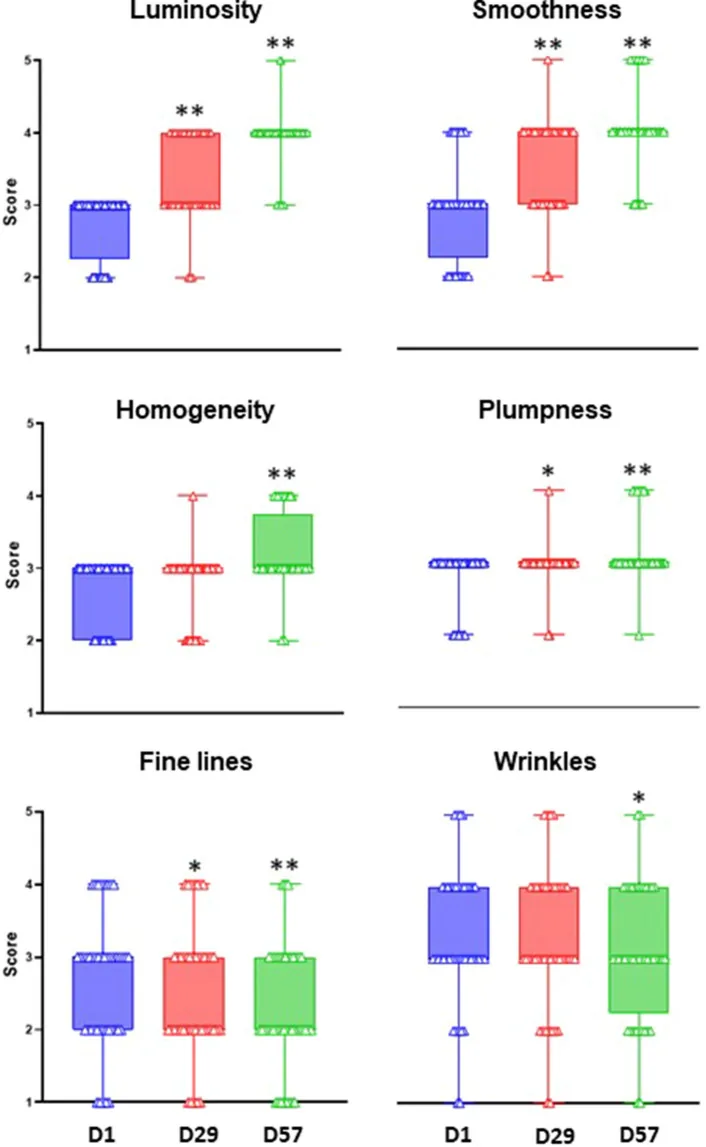
Most of the researchers are employees of a competing company, the study had no comparison group, and the formula tested isn't Bioderma's, but it shows what to expect from these two ingredients: noticeable improvement in texture and fine lines, and less effect on deep wrinkles.
Bakuchiol: a gentle alternative to retinol
Bakuchiol is a plant-derived ingredient marketed as a retinol alternative. In a 2026 randomised, double-blind trial, bakuchiol reduced wrinkle severity and pigmentation compared with a placebo cream. But trials are few and small, and its evidence is much thinner than that for retinoids. It suits sensitive or redness-prone skin and people who can't tolerate retinol, or pregnancy after checking with your doctor.
Retinoids: the best-evidenced option
If your goal is fewer wrinkles, retinoids are the best-proven topical option. In a 2010 randomised trial, wrinkles around the eyes improved with both a cosmetic regimen containing a retinol derivative, niacinamide and peptides, and a prescription retinoid regimen:
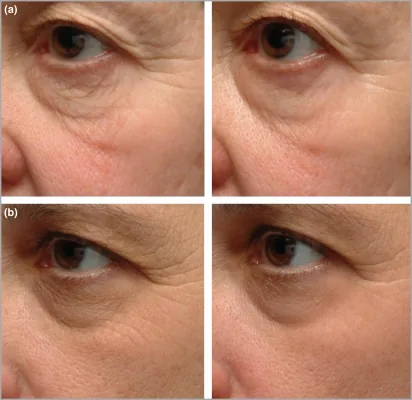
The study was funded by a cosmetics company, but it shows that a well-designed cosmetic regimen can come close to a prescription retinoid for fine lines, with less irritation. More on retinol in how retinol works.
flowchart TD
  A[You want to treat wrinkles] --> B[Daily sunscreen first]
  B --> C{Does your skin tolerate retinol?}
  C -->|Yes| D[Retinol introduced slowly with a moisturiser]
  C -->|No| E[Bakuchiol or niacinamide]
  D --> F{Want hydration and plumping?}
  E --> F
  F -->|Yes| G[A hyaluronic serum such as Hydrabio]
Watch for look-alike names and counterfeits
Arabic pharmacies stock products with names very close to Bioderma, such as Derma Pella, which come from other companies with different formulas. Counterfeit packs of expensive European products also circulate. So read the full company and product name, buy from a reliable pharmacy, and check the barcode where you can. More important than the brand is knowing the active ingredient: retinol or bakuchiol for wrinkles, hyaluronic acid and glycerin for hydration, niacinamide for texture and tone, and sun filters for prevention.
What about wrinkles around the eyes?
The skin around the eyes is thinner and more sensitive, so it's easily irritated by retinol. Start with a light eye cream, or a very small amount of your usual product on the bone under the eye rather than the lid, used less often than on the rest of the face. Sunglasses and sunscreen protect this area more than any cream.
Setting realistic expectations
Skincare can soften fine lines, improve texture and even out tone, but it can't erase deep creases or lift sagging skin. Hydrating serums like Hyalu+ work quickly but temporarily: the plumping effect fades if you stop. Retinoids and bakuchiol work slowly, and their benefits build over months of consistent use. Sunscreen's benefit is mostly invisible, because it shows up as wrinkles and spots that never form. If you keep this in mind, it's easier to choose a small number of products and stick with them, rather than chasing a new serum every few weeks. Photos taken in the same light every month or two are a better way to judge progress than the mirror, which changes with lighting and mood. For deeper lines and loss of firmness, in-clinic treatments can do what creams can't, and a dermatologist can tell you whether they're worth considering.
A simple routine
Morning: a gentle cleanser, then a hyaluronic or niacinamide serum if you like, then a moisturiser, then sunscreen. Evening: a cleanser, then retinol or bakuchiol, then a moisturiser. Don't start lots of products at once. If you also use Bioderma for spots, see Bioderma for acne.
mindmap
  root((Bioderma and wrinkles))
    Foundation
      Sunscreen
    Hydration and texture
      Hyaluronic acid
      Niacinamide
    For sensitive skin
      Bakuchiol
    Best evidence
      Retinoids
Frequently asked questions
Is there a Bioderma cream for wrinkles?
Bioderma is better known for sensitive and oily skin products, but it does market products for wrinkles, chiefly the Hydrabio Hyalu+ serum with hyaluronic acid and niacinamide and the Créaline serum with bakuchiol, alongside its Photoderm sunscreens. Check the full name on the pack, because some products with similar names aren't from Bioderma.
Does hyaluronic acid get rid of wrinkles?
Hyaluronic acid hydrates the skin's surface and plumps it, so fine lines look softer, but it doesn't stimulate collagen as strongly as retinoids. In a study of a formula combining it with niacinamide, fine lines and texture improved over two months, but the study was run by a manufacturer.
Is bakuchiol an alternative to retinol?
Bakuchiol is a plant-derived ingredient that has shown improvement in wrinkles in small trials with less irritation than retinol, so it suits sensitive skin and people who can't tolerate retinol. But its evidence is much thinner than that for retinoids.
What is the most important product for preventing wrinkles?
A broad-spectrum sunscreen every day, because sun is one of the strongest causes of collagen breakdown, wrinkles and spots. After that comes retinol or a retinoid for those who tolerate it, then a suitable moisturiser.
When to see a clinician
See a dermatologist if a new spot appears that changes shape or colour or bleeds, if a new product causes persistent redness or itching, or if you want a plan for deep wrinkles and sagging that goes beyond creams, such as prescription retinoids or in-clinic procedures.
Related articles
Further reading
- Senomorphic activity of a combination of niacinamide and hyaluronic acid — Scientific Reports
- Prospective, Double‐Blind, Vehicle‐Controlled Assessment of Topical Bakuchiol on Photoaging — Journal of Cosmetic Dermatology
- 10 skin care secrets for healthier-looking skin — American Academy of Dermatology
Medical disclaimer: This article is for health education only and is not a substitute for professional medical advice. If you have a skin condition that concerns you, please consult a dermatologist.