
Dark marks where spots used to be are pigmentation that forms after inflammation, and they fade gradually with daily sun protection and tested ingredients such as azelaic acid, niacinamide and retinoids. A mask hydrates and soothes, and may help if it contains a tested ingredient, but it isn't the main treatment. Acidic homemade masks such as lemon can deepen the marks rather than fade them.
The Arabic pages that rank for this search offer homemade masks with lemon, honey, cinnamon, turmeric and toothpaste, and promise to clear marks within days, without separating dark marks from pitted scars or mentioning that irritation itself creates new marks. This article explains why the marks form and what actually fades them, from published research.
Why do spots leave dark marks?
An inflamed spot stimulates the pigment cells in the skin to produce more pigment and pass it to surrounding cells, and some pigment can leak into the deeper layer. A 2025 paper illustrates the process:
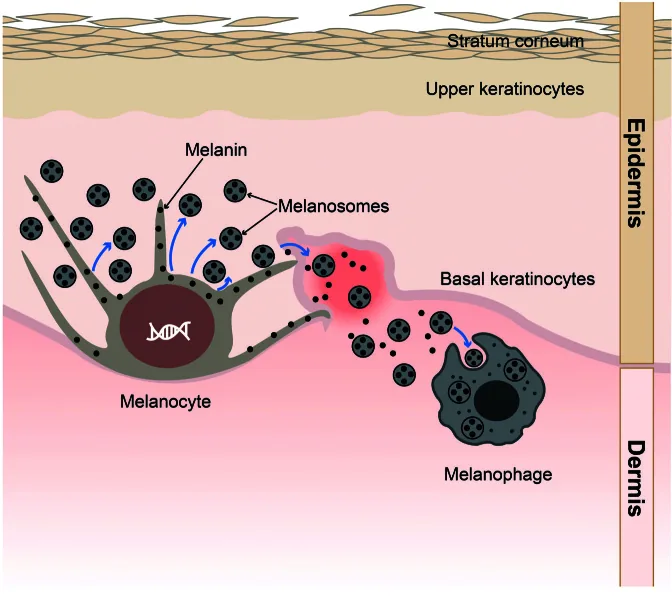
The paper notes that these marks are much more common in brown and dark skin, and can appear even with mild acne. It points to ultraviolet light, visible light and pollution as contributors, which is why sun protection is a core part of treatment. Pigment that reaches the deeper layer takes longer to fade.
You may confuse them with melasma, but acne marks appear where the spots were, while melasma usually appears as symmetrical patches on the cheeks and forehead. The difference matters, because melasma needs a longer-term plan.
| Type of acne mark | What it looks like | What helps |
|---|---|---|
| Dark marks (pigmentation) | Brown or dark, with flat skin | Sunscreen and pigment ingredients |
| Red marks | Red or pink, with flat skin | Time and sun protection; sometimes vascular laser |
| Pitted scars | Dips in the skin surface | In-clinic procedures |
What does a mask do?
Most masks raise skin hydration straight after use because they cover the skin and hold water in it. In a 2025 study of a multi-component face mask, skin hydration rose immediately after use and stayed higher over four weeks:
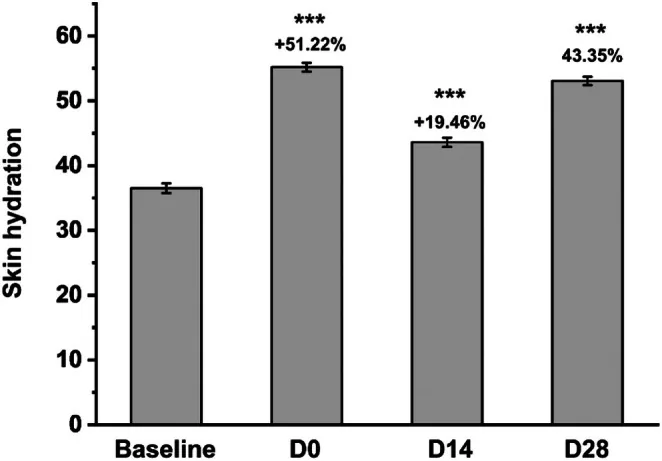
The study tested one mask without a comparison group, and it didn't measure acne marks. Hydration makes skin smoother and brighter, but it doesn't change pigment. So if you'd like a mask, choose a gentle one that contains a pigment ingredient such as niacinamide, and treat it as an addition to your daily routine rather than a replacement.
What actually fades the marks?
Daily products containing an ingredient that slows pigment production or speeds skin renewal. In a 2021 study, participants with dark skin used a product containing an inhibitor of the pigment-making enzyme, or the same product without the active ingredient, for twelve weeks:
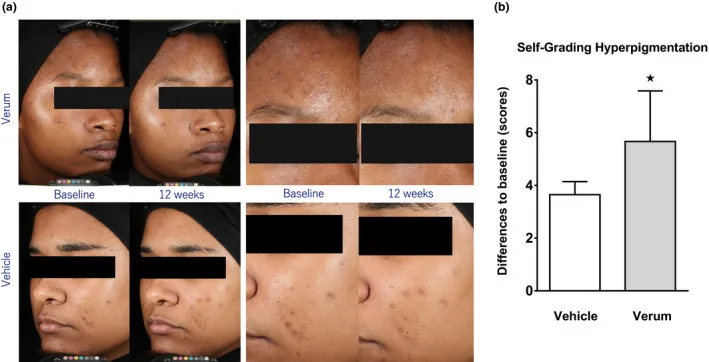
The trial was run by researchers from the manufacturer, and the marks faded in both groups, but more with the active ingredient. The message is that regular daily use of a tested ingredient, with sun protection, is what makes the difference. The role of retinoids for marks is covered in tretinoin for pigmentation.
flowchart TD
  A[Marks where spots were] --> B{Is the skin flat?}
  B -->|No, pitted| C[In-clinic procedures]
  B -->|Yes| D{Brown or dark?}
  D -->|Yes| E[Daily sunscreen and a pigment ingredient]
  D -->|No, red| F[Time and sun protection]
  E --> G[A gentle mask as an extra, not a substitute]
A simple routine for acne marks
Morning: a gentle cleanser, a niacinamide or vitamin C serum if you'd like one, a light non-comedogenic moisturiser, then a broad-spectrum sunscreen, ideally tinted, because tinted formulas also protect against visible light. Evening: cleanser, then the acne treatment your doctor prescribed or a product containing azelaic acid, then moisturiser. Introduce one new product at a time and patch-test it first. If you'd like a mask, keep it to once or twice a week and choose a gentle, fragrance-free one. Most importantly, don't squeeze spots: squeezing increases inflammation and marks.
Treating the acne itself matters as much as treating the marks. Every new inflamed spot is a potential new mark, so a routine that only fades old marks while spots keep appearing will feel like it isn't working. If over-the-counter products aren't controlling your spots, that's the point to see a dermatologist, who can prescribe treatments that both clear acne and help fade marks.
Realistic expectations
Post-acne marks do fade, but slowly, because the excess pigment leaves as the skin renews itself, and pigment in the deeper layer takes longer still. Judge progress with photos taken in the same light every few weeks rather than in the mirror each morning, where small changes are hard to see. Expect marks to lighten unevenly, with newer and shallower marks fading first. And remember that a single day of unprotected sun can darken marks again, so sunscreen isn't optional while you're treating them. If after a long period of consistent treatment the marks haven't changed, a dermatologist can confirm the diagnosis and discuss options such as chemical peels or laser, which need careful settings on brown skin to avoid creating new pigmentation.
Homemade masks that cause harm
Lemon reacts with sunlight and causes inflammation and dark patches; toothpaste and baking soda irritate the skin; cinnamon burns sensitive skin; and turmeric can leave a yellow stain and cause allergy. Any irritation on skin with acne marks can leave new dark spots, trapping the skin in a cycle. Honey and oatmeal are generally gentle, but the evidence that they fade marks is weak. Clay masks can help oily skin feel less greasy, but used too often they dry and irritate, which works against you. If you try any recipe, test it on a small area first and stop at once if it burns.
mindmap
  root((Acne marks))
    Helps
      Sunscreen
      Azelaic acid and niacinamide
      Treating the acne itself
    An extra
      A gentle mask
    Harms
      Lemon
      Toothpaste
      Squeezing spots
Frequently asked questions
Do face masks remove the dark marks left by spots?
A mask on its own usually doesn't. Dark marks after spots are post-inflammatory pigmentation, which fades gradually with sun protection and tested ingredients used daily. A mask hydrates and soothes, and may help if it contains a tested ingredient, but it isn't the main treatment.
What's the difference between dark marks and acne scars?
Dark marks are a change in colour with flat skin, and they fade with time and topical treatment. Pitted scars are a change in the skin surface itself; they don't improve with masks or creams alone and need in-clinic procedures.
Do lemon or toothpaste masks help acne marks?
They aren't recommended. Lemon reacts with sunlight and can deepen marks, and toothpaste irritates the skin. Any irritation on skin with acne marks can leave new dark spots.
How can I stop new marks forming after spots?
By treating the spots themselves early, not squeezing or rubbing them, and using sunscreen every day. The less inflammation and sun exposure, the fewer marks they leave.
When to see a clinician
See a dermatologist if your spots keep coming and leaving new marks, if marks don't fade after long, regular use with sun protection, if you have pitted scars, or if a mask causes burning or irritation. Treating the acne is the first step to preventing marks.
Related articles
- Tretinoin for pigmentation
- Isotretinoin and pigmentation
- Treating pitted acne scars
- Natural ways to brighten your face
Further reading
- Acne-induced Post-inflammatory Hyperpigmentation: From Grading to Treatment — Acta Dermato-Venereologica
- Treatment of Post-Inflammatory Hyperpigmentation in Skin of Colour: A Systematic Review — Journal of Cutaneous Medicine and Surgery
- Acne: tips for managing — American Academy of Dermatology
Medical disclaimer: This article is for health education only and is not a substitute for professional medical advice. If you have a skin condition that concerns you, please consult a dermatologist.