
No vitamin erases wrinkles completely, but topical vitamin A in forms such as retinol is the vitamin with the strongest evidence for improving fine wrinkles, followed by topical vitamin C and niacinamide, which is vitamin B3. Vitamin supplements have no strong evidence for reducing wrinkles in people who aren't deficient, and sunscreen remains the foundation of any routine.
The Arabic pages that rank for this search list many vitamins and describe them all as "eliminating wrinkles", without distinguishing between putting a vitamin on the skin and swallowing it, or between what has evidence and what doesn't. This article ranks them by strength of evidence, from published research.
Why topical versus tablets matters
The skin gets vitamins from the blood through vessels in the dermis, and from outside through what we put on its surface. A 2017 review illustrates both routes:
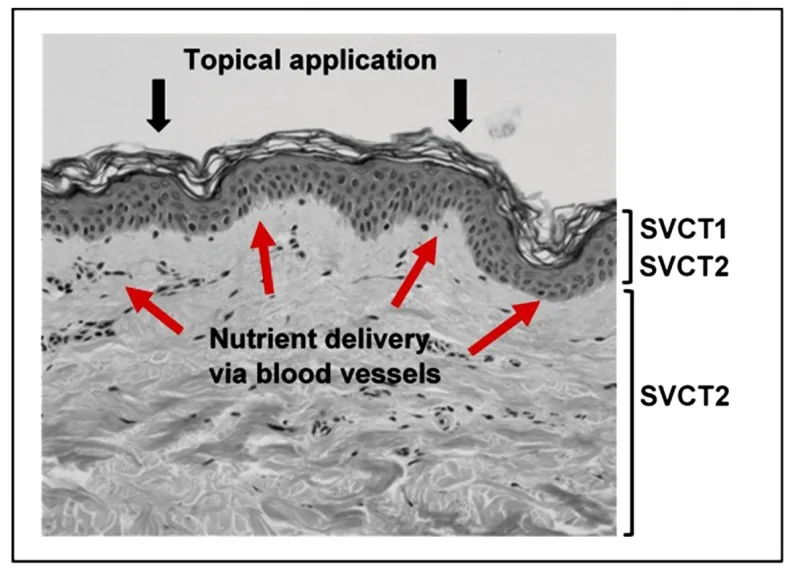
When blood levels of a vitamin are already normal, adding more in tablet form doesn't greatly raise what reaches the skin. That's why most of the evidence on wrinkles comes from topical products rather than supplements. The exception is a genuine deficiency, where correcting it matters for the skin and for the rest of the body.
Vitamins ranked by strength of evidence
| Vitamin | Best form | What it does | Strength of evidence for wrinkles |
|---|---|---|---|
| Vitamin A | Topical retinol or retinoid | Stimulates collagen and cell renewal | Strongest |
| Vitamin C | Topical serum | Antioxidant; supports collagen production | Moderate |
| Vitamin B3 | Topical niacinamide | Strengthens the skin barrier; improves texture | Moderate |
| Vitamin E | In moisturisers with vitamin C | Antioxidant that protects lipids | Weak on its own |
| Vitamin supplements | Only for a deficiency | Correct the deficiency | No strong evidence for wrinkles |
Vitamin A: the strongest evidence
Retinol and the other retinoids are derivatives of vitamin A, and they're the most studied topical ingredients for wrinkles. A 2023 review summarises retinol's effects in aged skin:
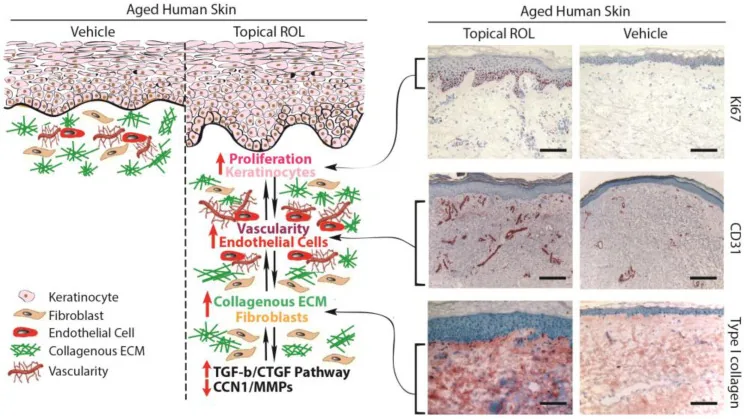
Retinol causes redness and peeling at first in some people, so start with a small amount at night, and don't use it in pregnancy without asking your doctor. Stronger retinoids are prescribed by a dermatologist. Over-the-counter retinol is gentler and slower than prescription retinoids, which is a reasonable trade-off for many people starting out. More in how retinol works.
Vitamins C and E: the antioxidant team
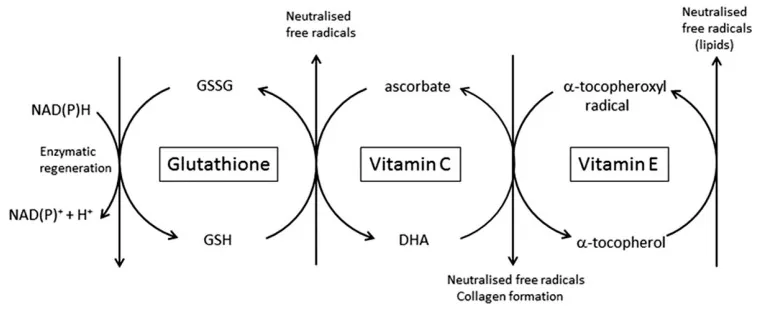
Vitamin C takes part in making collagen, and works with vitamin E to neutralise the free radicals produced by sun and pollution; each helps regenerate the other:
In a 2004 trial on the forearms of thirty-three women, the density of dermal papillae, the small projections that nourish the epidermis and decline with age, increased with a vitamin C cream compared with the same cream without it:
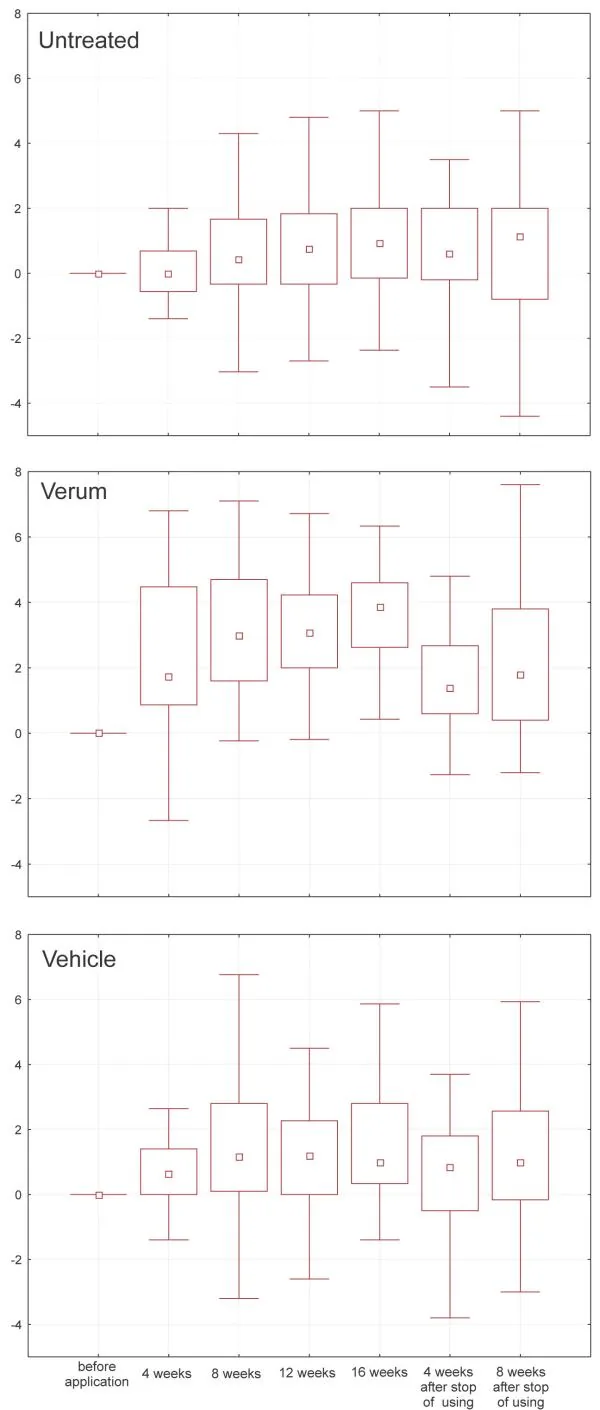
The trial was run by researchers employed by a cosmetics company, and it measured the forearm rather than wrinkles themselves; the effect also faded after the cream was stopped. Vitamin E's evidence on its own for wrinkles is weak, and it can cause skin allergy in some people.
When buying a vitamin C serum, choose an opaque, well-sealed bottle and keep it away from heat and light, because vitamin C oxidises easily and loses its activity. If it turns dark brown, it has probably oxidised. It can sting slightly at first, especially on sensitive skin or after exfoliating.
Niacinamide: vitamin B3
Niacinamide strengthens the skin barrier, improves texture and dark spots, and is tolerated by most skin types. A 2021 review covers its clinical evidence for ageing and pigmentation. It's a good choice if you can't tolerate retinol, or alongside it. Because it's gentle, it combines easily with most other products, including vitamin C and retinol, although very occasionally people notice temporary flushing.
flowchart TD
  A[Looking for a vitamin for wrinkles] --> B{Do you tolerate retinol?}
  B -->|Yes| C[Vitamin A at night]
  B -->|No| D[Niacinamide]
  C --> E[Vitamin C on other mornings if you like]
  D --> E
  E --> F[Sunscreen every morning]
What about vitamin supplements?
Don't start high-dose vitamin A or E supplements on your own for wrinkles: fat-soluble vitamins build up in the body and can cause harm, and high-dose vitamin A is dangerous in pregnancy. A diet rich in colourful vegetables and fruit gives the skin what it needs. If you suspect a deficiency, your doctor can check with a blood test. Other wrinkle treatments are covered in treating facial wrinkles.
You may also see vitamin D, vitamin K or "skin, hair and nails" multivitamins promoted for wrinkles. Vitamin D matters for bones and general health, and some people need a supplement for that reason, but there's no good evidence it reduces wrinkles. Vitamin K creams are mostly marketed for dark circles and bruising rather than lines. And multivitamins aimed at beauty often contain vitamins you already get from food, at a premium price.
Building a simple vitamin routine
A practical routine uses the evidence above without overloading the skin. In the morning, cleanse gently, apply a vitamin C serum if you'd like one (at first, on mornings that don't follow a retinol night), then moisturiser and a broad-spectrum sunscreen. At night, cleanse, then apply a retinol product a few nights a week to begin with, followed by moisturiser; on the other nights, a niacinamide serum or simply a moisturiser. Introduce one new product at a time, a few weeks apart, so that if your skin reacts you know which one caused it. Consistency matters more than the number of products: a simple routine you follow for months does more than an elaborate one you abandon.
mindmap
  root((Vitamins for wrinkles))
    Topical
      Vitamin A
      Vitamin C
      Niacinamide
    In combination
      Vitamin E
    Supplements
      Only for deficiency
    Essential
      Sunscreen
Frequently asked questions
Which vitamin gets rid of wrinkles?
No vitamin removes wrinkles completely. The vitamin with the strongest evidence for improving fine wrinkles is topical vitamin A in forms such as retinol, followed by topical vitamin C and niacinamide, and all of them need daily sunscreen to work.
Do vitamin supplements reduce wrinkles?
There's no strong evidence that vitamin supplements reduce wrinkles in people who aren't deficient. A balanced diet rich in vegetables and fruit supports the skin, while supplements are best used only for a deficiency your doctor has identified, because some are harmful in high doses.
Is vitamin E good for wrinkles?
Vitamin E is an antioxidant that works with vitamin C to protect the skin, and it's useful in moisturisers. But its evidence on its own for wrinkles is weak, and it can cause skin allergy in some people, so patch-test it first.
Can I use vitamin C and vitamin A together?
Yes, in one routine but not at the same time: retinol at night because it's affected by light, and vitamin C in the morning before sunscreen, at first only on mornings that don't follow a retinol night, to limit irritation. If your skin is sensitive, start with one of them.
When to see a clinician
See a dermatologist if a vitamin product causes redness or itching that doesn't settle, if you're pregnant or planning a pregnancy and using retinol, or if you'd like a stronger prescription retinoid. Check with your doctor before taking any high-dose vitamin supplement.
Related articles
Further reading
- The Roles of Vitamin C in Skin Health — Nutrients
- Mechanistic Basis and Clinical Evidence for the Applications of Nicotinamide to Control Skin Aging and Pigmentation — Antioxidants
- 10 skin care secrets for healthier-looking skin — American Academy of Dermatology
Medical disclaimer: This article is for health education only and is not a substitute for professional medical advice. If you have a skin condition that concerns you, please consult a dermatologist.