
Skin pigmentation appears when the amount of melanin in an area of skin rises or falls. The commonest causes of dark patches are sun, hormones as in melasma, inflammation after spots, eczema or wounds, friction, and some medicines. Light patches can be caused by vitiligo, superficial fungal infection, pityriasis alba and inflammation. Knowing the cause is the most important step, because treatment differs from one cause to another.
The Arabic pages that rank for this search list causes without order, mix dark and light patches together, and suggest lightening recipes before any diagnosis. This article sorts the causes by how they work and explains when a patch needs checking, from published research.
How skin colour is made
Skin colour comes from melanin, a pigment made by specialised cells at the base of the epidermis and passed to the surrounding cells. A 2022 review illustrates the process and the signals that control it:
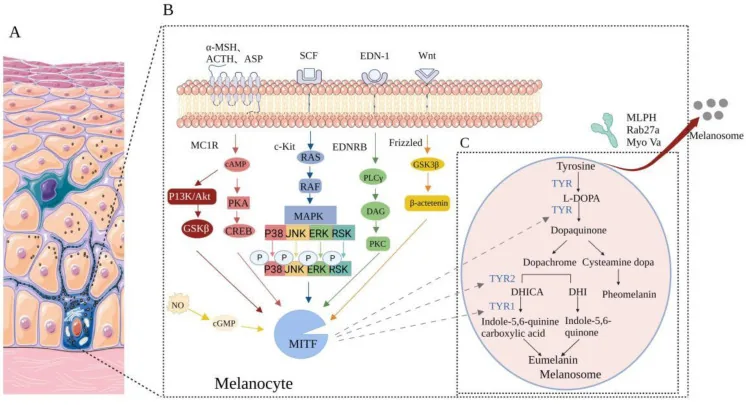
Almost every dark patch means this process has become more active than usual, and every light patch means the pigment cells in that area have decreased or stopped working. Some dark patches also involve pigment that has dropped into the deeper layer of the skin, which explains why certain marks look greyish and take much longer to fade.
Causes of dark patches
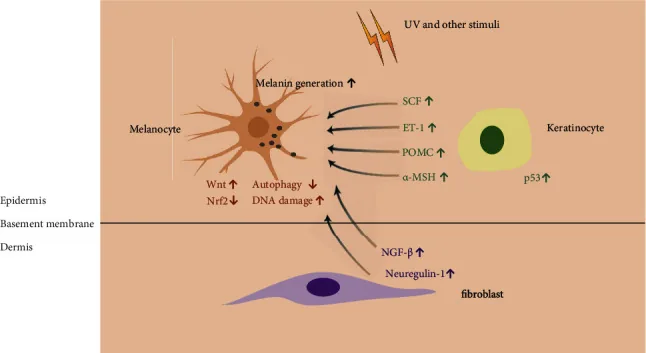
Sun is one of the strongest triggers, as are inflammation and hormones. A 2022 review summarises how ultraviolet light and signals from skin cells and the dermis stimulate pigment cells:
| Cause | Usual appearance | Where |
|---|---|---|
| Sun | Freckles, sun spots and tanning | Face, backs of hands, shoulders |
| Melasma | Symmetrical brown patches | Forehead, cheeks, upper lip |
| After inflammation | Marks where spots, eczema or wounds were | Anywhere |
| Friction | Darkening with thickening | Knees, elbows, forehead |
| Acanthosis nigricans | Velvety dark skin | Neck and armpits; linked to insulin resistance |
| Some medicines | Grey, bluish or brown colour | Varies with the medicine |
Brown skin is more prone to pigmentation after inflammation, because its pigment cells respond strongly, so spots and irritation leave darker, longer-lasting marks. Brown patches on the body are covered in causes of brown spots on the body.
Hormones and pregnancy
Many women develop more pigmentation in pregnancy: melasma on the face, a darker line down the abdomen, and darker nipples and intimate areas. Some of it usually fades after birth, but melasma can persist or return with sun and the contraceptive pill. More in causes of body darkening in pregnancy.
Medicines and chemicals
Some medicines cause grey, bluish or brown pigmentation, and others make skin more sensitive to sun so it tans faster. Some perfumes and cosmetics can also leave pigmentation after sun exposure. If pigmentation appears after starting a new medicine, don't stop it on your own; ask the doctor who prescribed it. Some medicine-related pigmentation fades slowly once the medicine is changed, while some can persist, which is another reason to raise it early rather than wait.
Causes of light patches
Light patches are less common than dark ones but worry many people. Vitiligo is one of the clearest examples: pigment cells disappear from defined areas, as a 2021 review shows:
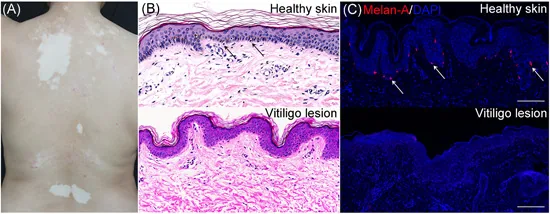
Not every light patch is vitiligo. Superficial fungal infection causes light or slightly darker patches with fine scale; pityriasis alba causes faint pale patches common in children; and inflammation itself can leave temporary light patches. Pityriasis alba often follows dry or eczema-prone skin, and usually improves with moisturising and time. Light patches look more obvious in summer, because the surrounding skin tans while they don't, so they can seem to appear suddenly; sunscreen reduces that contrast. Skin spot types with photos are covered in types of skin spots.
flowchart TD
  A[Pigmentation on the skin] --> B{Darker than the surrounding skin?}
  B -->|Yes| C{Symmetrical on the face?}
  C -->|Yes| D[Probably melasma]
  C -->|No| E[Sun, inflammation, friction or a medicine]
  B -->|No, lighter| F{Milk-white with sharp borders?}
  F -->|Yes| G[Possibly vitiligo: see a dermatologist]
  F -->|No| H[Fungal infection, pityriasis alba or post-inflammatory]
What to do once you know the cause
Daily sunscreen helps almost every type of pigmentation, because sun deepens dark patches and makes light ones stand out by contrast. Treat the cause first: treating acne or eczema prevents new marks, reducing friction lightens darkened joints, and reviewing a medicine with your doctor helps if you suspect it. Avoid irritating recipes such as lemon and baking soda, because irritation itself creates new pigmentation. Photograph a patch every few weeks in the same light to notice any change. Treating facial pigmentation is covered in the fastest way to remove facial pigmentation.
It also helps to describe your pigmentation clearly if you see a dermatologist: when it started, whether it changes with the seasons, whether it itched or was inflamed first, which products and medicines you use, and whether family members have similar patches. Those details often point to the cause before any test. A Wood's lamp examination, which uses ultraviolet light to show how deep pigment lies or to reveal some fungal infections, is quick and painless, and occasionally a small skin sample is needed when the diagnosis isn't clear.
Pigmentation and skin of colour
Pigmentation concerns are among the commonest reasons people with brown and Black skin see a dermatologist, and they deserve to be taken seriously rather than dismissed as cosmetic. Dark marks can affect confidence as much as the original acne or eczema did. The same biology that makes brown skin more resistant to sunburn also makes it quicker to darken after irritation, which shapes treatment: gentler products, slower introduction of actives, and careful laser settings. If a treatment stings or burns, it's working against you rather than for you.
mindmap
  root((Causes of skin pigmentation))
    Dark
      Sun
      Melasma
      After inflammation
      Friction
      Medicines
    Light
      Vitiligo
      Superficial fungus
      Pityriasis alba
    Protect
      Sunscreen
Frequently asked questions
What causes skin pigmentation?
The commonest causes of dark pigmentation are sun exposure, hormonal changes such as in melasma, inflammation after spots, eczema or wounds, friction, and some medicines. Light patches can be caused by vitiligo, superficial fungal infection, pityriasis alba and inflammation.
Is skin pigmentation a serious condition?
Most pigmentation isn't serious, such as freckles, sun spots and marks after spots. But a new spot that changes in size, colour or border, or sudden widespread darkening with general symptoms, deserves examination by a doctor.
Can vitamin deficiency cause pigmentation?
Deficiency of some vitamins, such as vitamin B12, can be linked to changes in skin colour in some people, but it's a less common cause than sun, hormones and inflammation. If a deficiency is suspected, a doctor can confirm it with a blood test before any supplement.
Why does pigmentation show more on brown skin?
Because pigment cells in brown skin respond to inflammation and sun by producing more pigment, so spots, irritation or burns leave darker marks that last longer.
When to see a clinician
See a dermatologist if a new spot appears that changes in size, colour or border or bleeds, if white patches spread, if widespread darkening appears suddenly, especially with tiredness or weight loss, if pigmentation follows a new medicine, or if velvety dark skin appears on the neck and armpits.
Related articles
- Types of skin spots
- Causes of brown spots on the body
- Causes of skin darkening
- The fastest way to remove facial pigmentation
Further reading
- Implications of Oxidative Stress in the Pathogenesis and Treatment of Hyperpigmentation Disorders — Oxidative Medicine and Cellular Longevity
- Mechanisms of melanocyte death in vitiligo — Medicinal Research Reviews
- Melasma: diagnosis and treatment — American Academy of Dermatology
Medical disclaimer: This article is for health education only and is not a substitute for professional medical advice. If you have a skin condition that concerns you, please consult a dermatologist.