
A fruit acid peel is a superficial chemical peel using alpha hydroxy acids, most often glycolic acid, which loosen the bonds between dead cells in the outer layer of the skin so that they shed. It can help mild to moderate acne, superficial pigmentation and rough texture, and is usually done as a series of sessions spaced weeks apart. In olive, brown and dark skin, though, it can leave darkening behind if it's done at too high a strength or without preparation and sun protection.
The Arabic pages that rank for this search present fruit acid peels as completely safe and suitable for everyone, and some suggest home mixtures of lemon and pineapple. This article explains what actually happens in the skin, who benefits, and how to lower the risk of complications.
What are fruit acids?
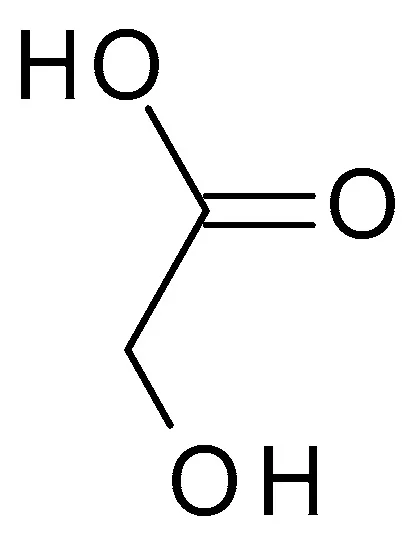
Alpha hydroxy acids are a group of small acids, some of which occur naturally in fruit and milk, which is where the "fruit acid" name comes from. But what's used in a clinic is manufactured at a controlled strength and acidity; it isn't fruit juice. Glycolic acid has the smallest molecule of the group, so it penetrates more easily and works faster:
Lactic and mandelic acid have larger molecules and penetrate more slowly, which is why some dermatologists prefer them for sensitive or darker skin. Lemon juice, on the other hand, has an uncontrolled acidity, irritates the skin and makes it more sensitive to sunlight, so it isn't a home alternative to a peel.
How deep a peel goes depends on the acid, its strength, how long it stays on, how the skin was prepared and how many layers are applied. A superficial fruit acid peel affects only the outermost layers; medium and deep peels use different agents and carry more downtime and more risk.
What can a fruit acid peel help with?
Superficial peels are used for acne because they help unblock pores, for superficial pigmentation and brown marks left by spots because they speed up turnover of the outer layer, and for rough texture and dullness. The American Academy of Dermatology describes superficial peels as having the shortest recovery, with results that build over a series of treatments.
In a clinical trial published in 2025 of twenty young adults with mild to moderate acne, a peel protocol combining glycolic acid, salicylic acid and a multi-acid mask was followed by a clear reduction in inflamed spots after two sessions:
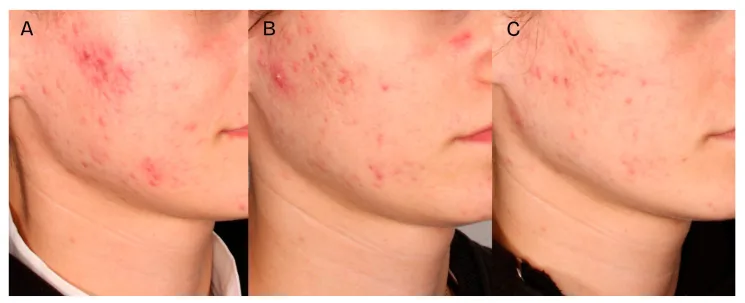
But the study had no comparison group, and its multi-acid protocol was deeper than a superficial fruit acid peel alone, so its results can't be applied to every glycolic session. What it does illustrate is the pattern of gradual improvement over weeks, rather than overnight change.
A superficial peel also has limits. It doesn't reach deep, pitted acne scars or pigment sitting deep in the dermis, which need other options a dermatologist can discuss. The effect of a single session is usually modest; improvement comes gradually with spaced sessions and a consistent home routine, not from one session before an event.
Peels in olive, brown and dark skin
Olive, brown and dark skin responds to any inflammation by making extra pigment, so the risk of darkening after a peel is higher. A 2026 scoping review concluded that superficial glycolic and salicylic acid peels look promising and reasonably safe in these skin types, although the studies are few and small, and one of them documented chemical burns from improper use. The authors also noted that darker skin types remain under-represented in peel research.
So a dermatologist will usually start with a low strength and a short contact time, then increase gradually depending on how your skin responds. They may prepare the skin for a few weeks beforehand with a lightening product and sunscreen, and test the peel on a small area first. If you developed darkening after a previous peel, read darkening after a chemical peel.
What happens during a session?
The dermatologist cleans the skin and removes its oil, then applies the acid for a few minutes while watching the redness. Tingling and mild stinging are expected. If marked redness or white patches appear where the acid is, a sign that it's penetrating deeper, the acid is neutralised or rinsed off straight away, as in this case from a 2024 case series:
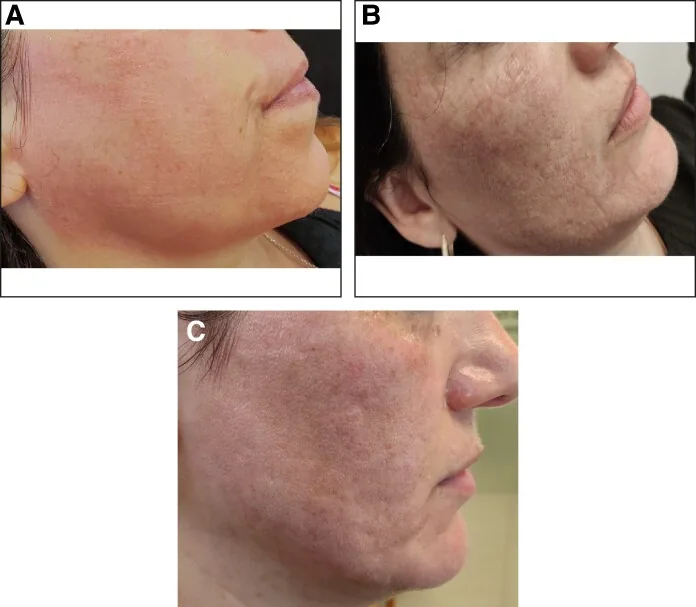
That case combined the peel with microneedling, and the device manufacturer paid the article's publication fee, so it illustrates what the skin reaction looks like rather than an outcome to expect from a standard fruit acid peel. Timing matters because glycolic acid keeps working until it's neutralised or rinsed off, which is exactly why these peels belong in trained hands rather than at home.
Who should avoid or postpone a peel?
| Situation | Why |
|---|---|
| A wound, active inflammation or cold sore on the face | It may become irritated or spread |
| Taking isotretinoin now or recently | The skin is thinner and heals more slowly |
| Sunburn or recent sun exposure | Raises the risk of darkening |
| Previous reaction to acids | Risk of a stronger reaction |
| Pregnancy | Discuss suitable options with your dermatologist |
flowchart TD
  A[Considering a fruit acid peel] --> B{Mild acne, superficial pigmentation or rough texture?}
  B -->|Yes| C{Olive, brown or dark skin, or a history of darkening?}
  B -->|No| D[Deep scars or severe melasma - another option]
  C -->|Yes| E[Prepare the skin and start at a low strength]
  C -->|No| F[Graduated sessions with sunscreen]
  E --> G[Review the response after each session]
  F --> G
Home products versus clinic peels
Many cleansers, toners and serums contain low levels of glycolic or lactic acid. These can smooth texture and help mild clogged pores with regular use, and they suit many people as part of a routine; exfoliants for acne covers how to choose one. They aren't the same as a clinic peel, which uses a higher strength for a set time under supervision. Using several acid products at once, or layering them with retinoids, is a common cause of irritation and the darkening that follows it. If you're booked for a peel, your dermatologist may ask you to stop home acids for a few days beforehand.
Aftercare
After a session the skin is red and may flake lightly for a few days. Use a gentle cleanser and a fragrance-free moisturiser, apply broad-spectrum sunscreen every day, and stop exfoliants and retinoids for as long as your dermatologist advises. Don't pick off flakes, and don't put lemon or home mixtures on freshly peeled skin. Make-up can usually be worn once the skin has settled, but ask first if the skin is still raw.
mindmap
  root((Fruit acid peel))
    Helps with
      Mild acne
      Superficial pigmentation
      Rough texture
    Take care with
      Darker skin
      Isotretinoin
      Sun exposure
    Afterwards
      Gentle moisturiser
      Sunscreen
      No picking
Frequently asked questions
What is a fruit acid peel?
A superficial chemical peel using alpha hydroxy acids such as glycolic, lactic and mandelic acid, which loosen the bonds between dead cells in the outer layer of the skin so that they shed. It's done in a clinic at a higher strength than home products, for a set time, and then neutralised or rinsed off.
Is a fruit acid peel suitable for darker skin?
Superficial peels are among the safer options for olive, brown and dark skin when done carefully, but the risk of darkening after inflammation is higher. That's why a dermatologist starts with a low strength, may prepare the skin beforehand, and stresses sunscreen afterwards.
Does a fruit acid peel remove melasma?
It may improve superficial pigmentation and is sometimes used as part of a melasma plan, but it doesn't treat melasma on its own, and melasma returns if the skin isn't protected from the sun. An unsuitable peel can make melasma worse through irritation.
What should I do after a fruit acid peel?
Use a gentle cleanser and a fragrance-free moisturiser, apply broad-spectrum sunscreen every day, and avoid exfoliants and retinoids for as long as your dermatologist advises. Don't pick at peeling skin, and see your dermatologist if severe redness, blisters or darkening appear.
When to see a clinician
See a dermatologist before any peel if you have olive, brown or dark skin and have darkened after inflammation before, if you're using acne medicines, or if you have melasma. See one after a peel if blisters, thick crusts or worsening pain appear, if redness hasn't settled after several days, if new darkening develops, or if there are signs of infection such as pus or warmth.
Related articles
Further reading
- Chemical peels: FAQs — American Academy of Dermatology
- Chemical Peels in Skin of Color: A Scoping Review of Safety, Efficacy, and Practice Patterns — Cureus
- A Comprehensive Bibliographic Review Concerning the Efficacy of Organic Acids for Chemical Peels Treating Acne Vulgaris — Molecules
Medical disclaimer: This article is for health education only and is not a substitute for professional medical advice. If you have a skin condition that concerns you, please consult a dermatologist.