Melasma treatment for the face isn't one cream but a plan: a broad-spectrum sunscreen, ideally tinted so it blocks visible light too, then a prescription lightening cream such as triple combination cream or azelaic acid, and sometimes tranexamic acid. Your dermatologist chooses between them based on how severe the melasma is, your skin tone, and whether you're pregnant or breastfeeding. Melasma returns easily, so protection after lightening is part of the treatment, not an optional extra.
The Arabic pages that rank for this search mention hydroquinone, lasers and home remedies, but they don't explain the role of visible light, don't warn about long-term hydroquinone, and don't say what has actually held up in studies. This article ranks the options by evidence.
Melasma isn't any brown patch
Melasma is symmetrical brown or grey-brown patches on the cheeks, forehead, upper lip and nose. It is commoner in women of reproductive age and worsens with sun, pregnancy and the contraceptive pill. But other marks look similar: freckles, sun spots and post-inflammatory pigmentation. The first step is for a dermatologist to confirm it is melasma, because each type is treated differently. To tell facial brown spots apart, read what causes brown spots on the face.
Melasma also has a strong link with heat and with hormones, which is why it so often appears in pregnancy or after starting the pill, and why it can flare in a hot kitchen as well as on a beach. That matters for expectations: as long as those triggers continue, the aim is control, not a one-off cure.
The foundation: sunscreen that blocks visible light too
Ultraviolet rays aren't the only thing that darkens melasma; visible light plays a part too, and ordinary sunscreens don't block it well. Tinted sunscreens containing iron oxides block much more of it. In a 2025 randomised trial of forty-two women through a summer in southern France, both sunscreens protected the skin from tanning, but the colour difference between the melasma and the surrounding skin narrowed clearly only in the tinted sunscreen group after five months:
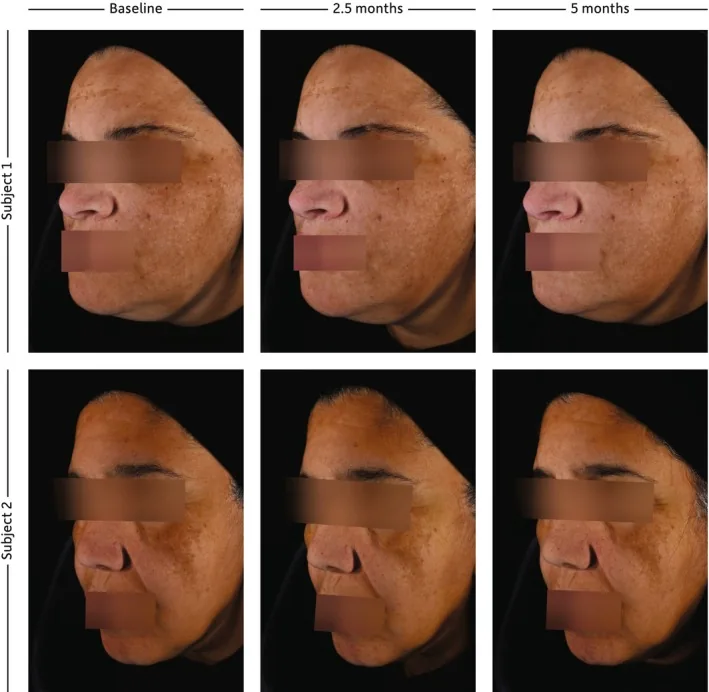
The study was funded by the sunscreen's manufacturer, and the melasma severity score didn't differ between the groups, but the result fits what we know about visible light. Sunscreen needs reapplying through the day, together with a hat and shade.
Triple combination cream: the benchmark cream
Triple combination cream combines three ingredients: hydroquinone, which suppresses pigment production; tretinoin, which speeds skin turnover; and a mild steroid that calms irritation. It is considered the benchmark topical treatment for moderate to severe melasma. In a 2025 randomised trial of fifty-three participants, melasma improved more with two versions of the triple cream than with placebo, but redness and irritation were common:
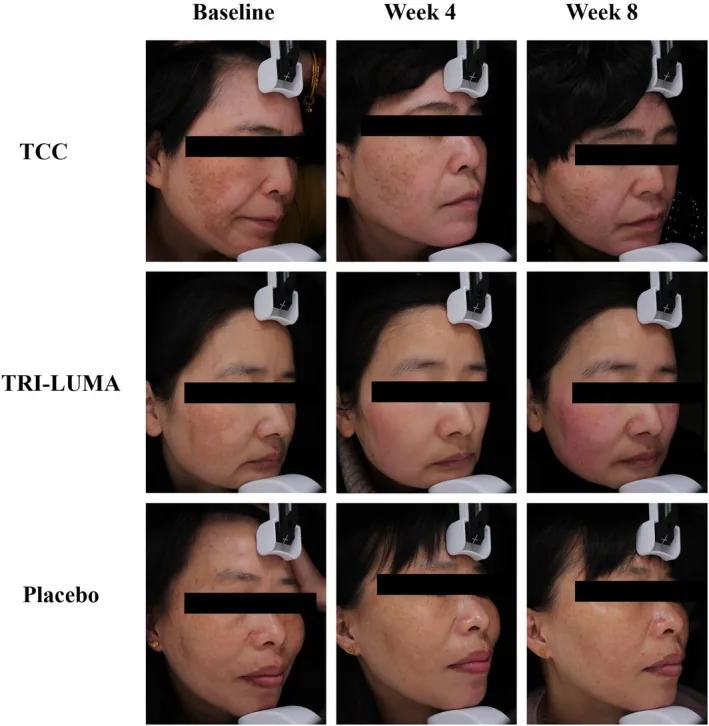
Triple cream is prescription-only and used for a limited period, because the steroid thins the skin with long use, and it isn't used in pregnancy. Many dermatologists then step down to a gentler maintenance cream once the patches have lightened.
The hydroquinone warning: when it gets darker, not lighter
Using hydroquinone for long periods without supervision can cause exogenous ochronosis: a permanent blue-grey discolouration that looks like melasma. In a case published in 2026, a woman with dark skin was diagnosed with melasma and treated with repeated courses of hydroquinone, and the pigmentation darkened instead of fading until it was recognised as ochronosis; hydroquinone was stopped and the pigmentation stabilised with a retinoid and sun protection. If your melasma darkens with treatment rather than fading, see your dermatologist and don't apply more cream. The risk is higher still with lightening creams of unknown origin, which may contain undeclared hydroquinone, steroids or worse.
Tranexamic acid and azelaic acid
Tranexamic acid is a medicine that affects blood clotting and has been found to lighten melasma. In a 2025 randomised trial of fifty women, melasma severity fell with both the oral and the topical forms after twelve weeks. The oral form is prescription-only, after your doctor has asked about blood clots, the contraceptive pill and smoking. Azelaic acid is a gentler option that suits many people; details are in Skinoren (azelaic acid).
| Option | What it does | Notes |
|---|---|---|
| Tinted sunscreen | Blocks UV and visible light | The foundation of every plan |
| Triple combination cream | Suppresses pigment and renews skin | Prescription, limited period; not in pregnancy |
| Azelaic acid | Gently suppresses pigment | Suits many skin types |
| Tranexamic acid | Lightens melasma | Oral form on prescription after a clotting assessment |
| Peels and lasers | Help in selected cases | Can worsen pigmentation in darker skin |
How melasma treatment has evolved
The figure from a 2025 review summarises how treatment has changed over two decades: from hydroquinone alone, to peels and lasers, then tranexamic acid, and today combining treatments:

The lesson of that timeline is that no single agent has "solved" melasma. Combining a protective layer, a lightening agent and, where appropriate, something that works on the deeper drivers gives the best chance of steady improvement, and keeping the protective layer is what holds it.
flowchart TD
  A[Symmetrical brown patches on the face] --> B[Diagnosis confirmed by a dermatologist]
  B --> C[Tinted sunscreen every day]
  C --> D{Pregnant or breastfeeding?}
  D -->|Yes| E[Protection and pregnancy-safe options]
  D -->|No| F[Prescription lightening cream]
  F --> G{Poor response?}
  G -->|Yes| H[Add tranexamic acid or a procedure after assessment]
mindmap
  root((Melasma treatment))
    Protection
      Tinted sunscreen
      Hat and shade
    Creams
      Triple combination
      Azelaic acid
    Tranexamic acid
      Topical
      Oral on prescription
    Warning
      Ochronosis
Frequently asked questions
What is the best treatment for melasma on the face?
No single treatment suits everyone. The foundation is a broad-spectrum sunscreen, ideally tinted because it also blocks visible light. Your dermatologist then chooses a lightening cream such as triple combination cream or azelaic acid, and may add tranexamic acid, depending on how severe the melasma is, your skin tone, and pregnancy.
Does melasma go away permanently?
Melasma is a chronic condition that tends to come back, especially with sun, heat and hormonal changes. Treatment lightens and controls it, but keeping the result needs ongoing sun protection and sometimes maintenance treatment under a dermatologist's supervision.
Is hydroquinone safe for melasma?
Hydroquinone is one of the oldest and best-studied melasma treatments, but it is used on prescription and for limited periods under medical supervision. Long-term unsupervised use can cause a permanent blue-grey discolouration that looks like melasma and worsens with continued use, called exogenous ochronosis.
Do tranexamic acid tablets treat melasma?
Oral tranexamic acid reduced melasma severity in randomised studies, but it affects blood clotting, so it is only taken on prescription after your doctor asks about clots, the contraceptive pill, smoking and other conditions.
When to see a clinician
See a dermatologist before starting any prescription lightening cream, especially if you're pregnant, breastfeeding or planning a pregnancy. See one promptly if the patches darken or turn grey or bluish with treatment, if severe redness and peeling appear, or if a new patch is asymmetrical or changing in shape. If you're taking tranexamic acid and develop leg pain and swelling or breathlessness, seek urgent care.
Related articles
- What causes brown spots on the face
- Skinoren (azelaic acid): for acne, marks and melasma
- Why skin darkens in pregnancy — and what stays
- Getting rid of a sea tan: what fades and what doesn't
Further reading
- Melasma: Diagnosis and treatment — American Academy of Dermatology
- Melasma: Treatment, Causes & Prevention — Cleveland Clinic
- Tranexamic Acid for Hyperpigmentation Disorders: A Literature Review — Journal of Cosmetic Dermatology
Medical disclaimer: This article is for health education only and is not a substitute for professional medical advice. If you have a skin condition that concerns you, please consult a dermatologist.