There's no evidence that frankincense removes eye wrinkles. One small trial of a cream containing boswellic acids from the frankincense tree improved fine lines and skin roughness on the face, but it didn't study the eye area, and it wasn't done with soaked frankincense or its oil. Putting frankincense essential oil near the eye can irritate the thin skin there and cause allergy.
The Arabic pages that rank for this search share home recipes: frankincense soaked in water and dabbed under the eyes, or frankincense oil mixed with other oils, with promises of tighter skin and fewer wrinkles. This article explains what science actually knows about frankincense and the skin, and what helps eye wrinkles.
What is frankincense?
Frankincense, known in Arabic as luban al-dhakar, is an aromatic resin from Boswellia trees, the best known being the Omani frankincense tree that grows in the southern Arabian Peninsula and the Horn of Africa:

The resin contains compounds called boswellic acids, and a 2026 review summarises the research on them in skin disease: they have anti-inflammatory and antioxidant effects in the laboratory and in animals, but the evidence in humans is limited to small, short studies, which vary in tree species and extraction methods. The resin has a long history in traditional medicine across the Arabian Peninsula, India and Africa, which explains its popularity, but tradition isn't the same as tested benefit.
What has research found on wrinkles?
| Type of evidence | What it found | Limits |
|---|---|---|
| Trial of a boswellic acid cream | Improved fine lines and skin roughness on the face | Fifteen women for thirty days; didn't study the eyes |
| Animal studies | Protected collagen from ultraviolet damage | Not in humans |
| Laboratory tests of the essential oil | Inhibited enzymes that break down collagen | Test tubes only |
| Frankincense water or chewing | Effect on wrinkles not studied | No evidence |
According to the same review, the human trial compared the two halves of the face, and no significant side effects were recorded. But it's one small trial of a manufactured cream at a specific concentration, so its result can't be extended to frankincense soaked at home or to its essential oil. The review's authors also note that the best formulation, long-term safety and effects on deeper signs of ageing all remain uncertain.
Why do eye wrinkles form?
Around the eye is a ring-shaped muscle that contracts when you smile and squint, and the skin over it is among the thinnest on the body. As collagen declines with age and sun, this movement starts leaving lines at the outer corner of the eye:
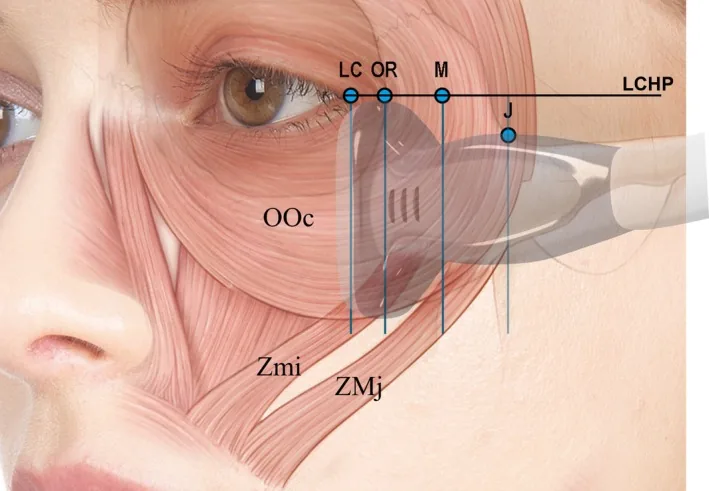
That's why no cream alone is enough for expression lines, because they're caused by muscle movement. Fine lines from dryness and sun are the ones that improve with topical care. Lines that appear only when you smile are normal at every age and don't need treatment unless they bother you, and dryness lines look more obvious in cold, dry weather and air-conditioned rooms.
Why not put frankincense oil near your eyes?
Essential oils are highly concentrated and can cause irritation or allergic contact dermatitis, especially on the thin skin of the eyelids. Getting the oil or frankincense water in the eye causes burning and redness. Resin soaked at home isn't sterile and may carry impurities. If redness, itching or swelling appears around the eye after any recipe, stop it and rinse the area with water. If you want to try a product containing boswellia, choose a manufactured face cream and patch-test it first on a small area of your jaw.
Recipes that mix frankincense with honey, olive oil, lemon or myrrh also circulate. Honey and oil may moisturise temporarily, but lemon irritates the skin and makes it more sensitive to the sun, and the more ingredients a mixture has, the greater the chance of allergy, without adding any evidence. If you have eczema or sensitive skin around the eyes, a simple fragrance-free moisturiser is safer than any recipe.
flowchart TD
  A[Considering frankincense for eye wrinkles] --> B{Home recipe or essential oil?}
  B -->|Yes| C[Not recommended near the eye]
  B -->|No| D{A manufactured face cream?}
  D -->|Yes| E[Patch test away from the eye]
  C --> F[Proven alternatives: sunscreen, moisturiser, gentle retinol]
  E --> F
Which alternatives have evidence?
Daily sunscreen, including around the eyes, sunglasses to reduce squinting, and a moisturiser suited to the area. A gentle retinol improves fine lines if your skin tolerates it, used in a small amount away from the lash line. Among home devices, a 2025 trial of sixty participants tested a red and near-infrared light mask:
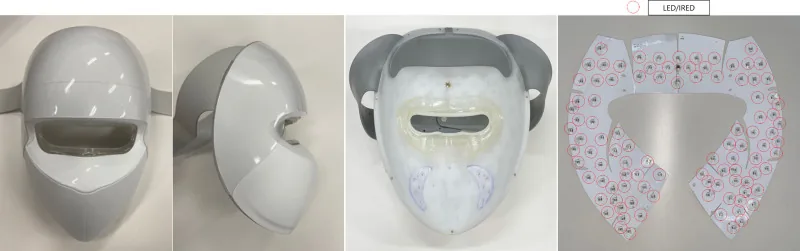
Crow's feet improved more with the mask than with a sham device, but the trial tested one mask in participants of Asian descent. Deep lines need assessment by a dermatologist. More in exercises for eye wrinkles.
A gentle eye-area routine
Because the skin around the eyes is thin, it rewards a light touch. Use your ring finger to pat products in rather than rubbing, and apply eye products to the bone around the eye rather than right up to the lash line, since products spread as they warm. In the morning, a moisturiser and a sunscreen that doesn't sting your eyes; mineral sunscreens are often better tolerated there. At night, a moisturiser, and a gentle retinol a few nights a week if your skin tolerates it. Introduce one new product at a time so that if your eyes become irritated you know the cause. And if you wear eye makeup, remove it gently with a mild remover rather than scrubbing, because repeated rubbing irritates the skin.
mindmap
  root((Frankincense and eye wrinkles))
    What we know
      Boswellic acid cream
      One small trial
    What we don't know
      The eye area
      Frankincense water
    Be careful
      Essential oil
      Getting it in the eye
    Alternatives
      Sunscreen
      Gentle retinol
Frequently asked questions
Does frankincense get rid of eye wrinkles?
There's no evidence that it does. One small trial of a cream containing boswellic acids from the frankincense tree improved fine lines and skin roughness on the face, but it didn't study the eye area specifically, and it wasn't done with soaked frankincense or its oil.
Can I put frankincense oil around my eyes?
It isn't recommended. Essential oils are concentrated and can irritate the thin skin around the eyes and cause allergy, and getting them in the eye causes burning and redness. If you want to try a product containing boswellia, choose a manufactured face cream and patch-test it away from the eye first.
Does frankincense water or chewing frankincense help wrinkles?
No published trial has studied the effect of drinking frankincense water or chewing frankincense on wrinkles. These are traditional habits with no proven link to collagen in the skin, and sunscreen and topical retinoids have far stronger evidence.
What's a proven alternative for eye wrinkles?
Daily sunscreen and sunglasses to reduce squinting, a suitable moisturiser, and a gentle retinol if your skin tolerates it, kept away from the lash line. Deep lines need assessment by a dermatologist for in-clinic options.
When to see a clinician
See a dermatologist if redness, swelling or itching around the eye after a recipe or product doesn't improve once you stop it, if oil gets in your eye and burning or blurred vision persists, or if you want a plan for deep eye wrinkles.
Related articles
Further reading
- Therapeutic potential of Boswellia-derived compounds in skin conditions — Frontiers in Pharmacology
- Clinical study to evaluate the efficacy and safety of home-used LED and IRED mask for crow's feet — Medicine
- 10 skin care secrets for healthier-looking skin — American Academy of Dermatology
Medical disclaimer: This article is for health education only and is not a substitute for professional medical advice. If you have a skin condition that concerns you, please consult a dermatologist.