
Eye masks and patches hydrate the thin skin under the eyes, and chilled ones ease puffiness for a while, but they mostly don't remove dark circles caused by inherited pigmentation or a hollow under the eye. The useful first step is working out what's causing your circles, then choosing what suits it: sunscreen and a pigment product, measures for puffiness, or an in-clinic assessment for a hollow.
The Arabic pages that rank for this search offer homemade masks with cucumber, coffee, potato and honey, and promise to clear dark circles within days, without distinguishing between types of dark circle. This article explains what masks actually do, and when they help, from published research.
Why a mask isn't enough: dark circles have different causes
Dark circles aren't one condition. They can be brown pigmentation, blood vessels showing through thin skin, or a shadow cast by a hollow under the eye, shaped by bone structure or by ageing. A 2024 paper proposes a stepwise way to assess them:
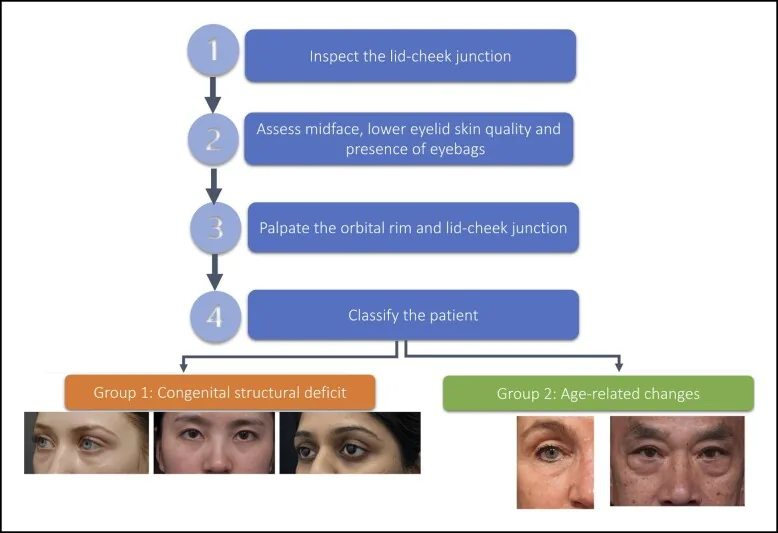
Circles caused by bone shape or a hollow are out of reach of any mask, because the cause lies beneath the skin, not on its surface. Circles from dryness, puffiness or mild pigmentation are the ones that may improve with topical care. Most people have a mix, which is why the same mask can seem to work for a friend and do nothing for you.
| Type of dark circle | What it looks like | Does a mask help? | What helps more |
|---|---|---|---|
| Pigmentation | Brown; doesn't fade when the skin is stretched | A little, if it contains a brightening ingredient | Sunscreen and a pigment product |
| Visible vessels | Blue or purple; fades when stretched | A little, temporarily | Sleep; easing allergy and congestion |
| Puffiness | Worse in the morning, after salt or crying | Yes, temporarily, especially chilled | Sleep, raising the head, less salt |
| Hollow or shadow | Changes with lighting | No | In-clinic assessment |
What do masks actually do?
Most face and eye masks raise skin hydration noticeably straight after use, because they cover the skin and hold water in it. In a 2025 study of a multi-component face mask, skin hydration rose immediately after use and stayed higher over four weeks of regular use:
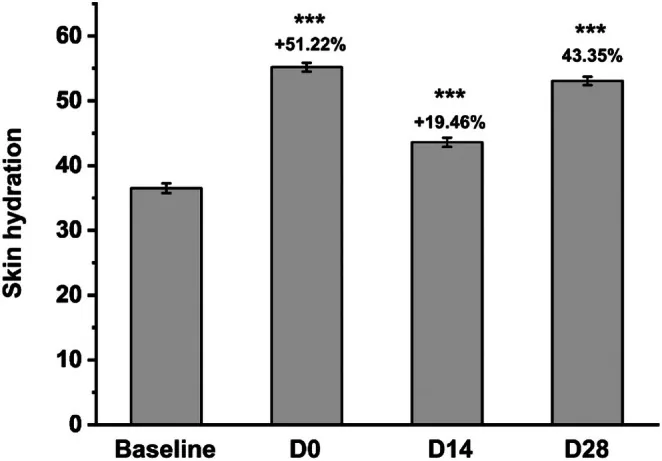
The study tested one mask without a comparison group, and it didn't measure dark circles. But it illustrates that a mask's main benefit is hydration, and well-hydrated under-eye skin looks smoother with fewer fine lines, so circles caused by dryness look lighter. Hydrogel patches work on the same principle, holding water against the skin while they're on.
Does a regular topical product help?
A 2021 randomised trial tested a cosmetic product for dark circles on one side of the face, leaving the other side untreated, in fifty-eight participants over eight weeks:
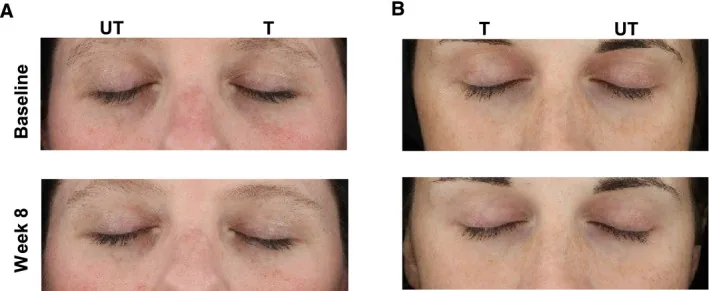
The grade of dark circles improved more on the treated side than on the untreated side, gradually over the eight weeks:
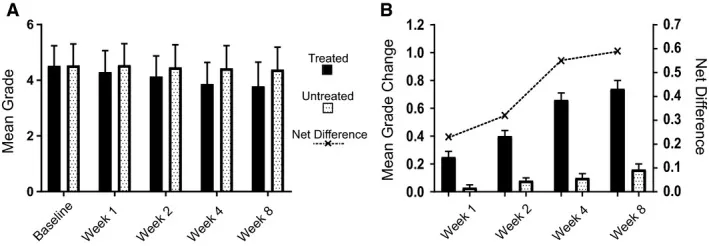
The trial was run by researchers employed by the product's maker, and the improvement was modest. But its message is useful: what improves dark circles a little is regular use of a suitable product, not a mask once a week.
flowchart TD
  A[Dark circles under the eyes] --> B{Do they fade when the skin is gently stretched?}
  B -->|No, and brown| C[Pigmentation: sunscreen and a pigment product]
  B -->|Yes, and bluish| D[Visible vessels: sleep and ease congestion]
  A --> E{Worse in the morning with puffiness?}
  E -->|Yes| F[A chilled mask helps temporarily]
  A --> G{A shadow that changes with lighting?}
  G -->|Yes| H[In-clinic assessment]
Homemade masks: which are safe?
Chilled cucumber, two cold spoons, or a clean cold compress ease puffiness for a while through their coolness. Ground coffee is rough on eyelid skin and can get into the eye. Lemon and bicarbonate of soda irritate the skin and can leave dark marks, which is the opposite of what you want. Potato and honey are generally harmless, but there's no evidence they remove dark circles. If you use ready-made patches, place them on the bone below the eye rather than at the lash line, and keep to the time on the pack. Treating dark circles in more depth is covered in dark circle treatment.
What a mask does for a few hours, daily habits do over weeks: regular sleep, raising your head slightly at night if the puffiness is worst in the morning, treating nasal allergy if it makes you rub your eyes, avoiding rubbing, and sunscreen and sunglasses, because sun deepens pigmentation around the eyes.
Choosing an under-eye product
If you'd like something more than a mask, look for a product that matches your type of circles. For brown pigmentation, ingredients aimed at pigment and a daily sunscreen matter most. For puffiness, a light, fragrance-free gel kept in the fridge can feel soothing. For fine lines and dryness, a gentle moisturiser, and a mild retinol away from the lash line if your skin tolerates it. Patch-test any new eye product on your jaw for a few days first, because the eyelids are among the most reaction-prone skin on the body. And be wary of products promising to "erase" dark circles: as the trial above shows, even a well-designed product brings gradual, modest change.
mindmap
  root((Eye masks for dark circles))
    Helps
      Hydration
      Easing puffiness
    Doesn't help
      Inherited pigmentation
      Hollows
    Avoid
      Rough coffee scrubs
      Lemon
    Essentials
      Sunscreen
      Sleep
Frequently asked questions
Do eye masks get rid of dark circles?
Mostly not. Masks and patches hydrate the thin skin under the eyes, and chilled ones ease puffiness for a while, so the area looks fresher for a few hours. But dark circles caused by inherited pigmentation or a hollow under the eye don't disappear with a mask.
Do cucumber or coffee masks help dark circles?
Chilled cucumber mostly helps through its coolness, easing puffiness temporarily. Ground coffee is rough on the thin eyelid skin and can irritate it or get into the eye, so scrubbing with it isn't recommended. Neither has evidence that it removes dark circles themselves.
How can I tell what type of dark circles I have?
Brown circles that don't change when you gently stretch the skin are usually pigmentation; bluish or purple ones that fade when stretched are usually blood vessels showing through thin skin; and a shadow that changes with lighting is usually a hollow under the eye. Types often overlap, and a dermatologist can assess them accurately.
How often should I use under-eye patches?
Follow the pack instructions, because most are applied for a short time and then removed. Don't leave them on overnight unless they're designed for that, and stop if redness, itching or burning appears around the eye.
When to see a clinician
See a dermatologist if dark circles appear suddenly or on one side only, if they come with persistent swelling, itching or flaking around the eye, or if a mask causes redness or burning that doesn't settle. See your doctor if dark circles come with marked tiredness or paleness, as you may need general tests.
Related articles
Further reading
- Lower Eyelid Dark Circles (Tear Trough and Lid-Cheek Junction): A Stepwise Assessment Framework — Aesthetic Surgery Journal
- A validated photonumeric scale for infraorbital dark circles — International Journal of Cosmetic Science
- How to get rid of dark circles under your eyes — American Academy of Dermatology
Medical disclaimer: This article is for health education only and is not a substitute for professional medical advice. If you have a skin condition that concerns you, please consult a dermatologist.